




The Unsung Hero in Your Exhaust
Every time you drive, a small, unassuming box in your car’s exhaust system is hard at work. This is the catalytic converter, a device mandated for decades to reduce air pollution. Its job is to take harmful gases produced by the engine—like carbon monoxide
and nitrogen oxides—and transform them into less harmful substances such as carbon dioxide and water vapor before they exit the tailpipe. The magic ingredient that makes this possible is a coating of precious metals, with platinum playing a starring role. Platinum is an incredibly efficient catalyst, meaning it speeds up these chemical reactions without being consumed. It is particularly effective at oxidizing pollutants, a key reason it is indispensable in modern vehicles. But this valuable metal is exceptionally rare on Earth, which begs the question: where did it all come from?
The Cosmic Puzzle of Heavy Elements
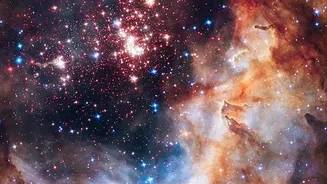
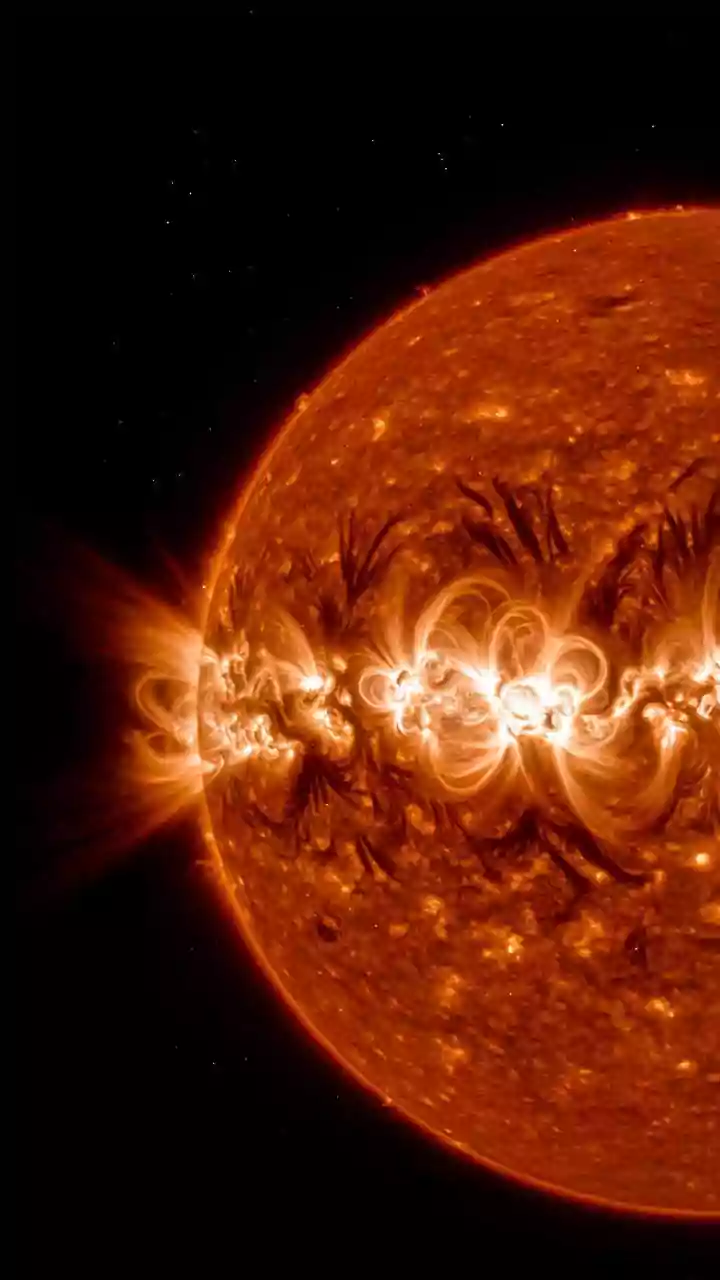
To understand platinum’s origin, we have to look to the stars. Stars are cosmic furnaces, fusing lighter elements into heavier ones. Our own sun, for example, fuses hydrogen into helium. Larger stars can create elements up to iron in their cores. However, this process stops at iron. Creating elements heavier than iron, like gold, uranium, and platinum, requires an enormous input of energy and a massive supply of particles called neutrons. For decades, scientists believed that supernova explosions—the dramatic deaths of massive stars—were the primary source of these heavy elements. While supernovae do create some, models suggested they couldn't account for the sheer abundance of heavy elements we find in the universe. The universe needed a more violent, more neutron-rich event to forge the cosmos's most precious materials. The answer, it turns out, was not in the death of a single star, but in the collision of two.
Forged in a Kilonova
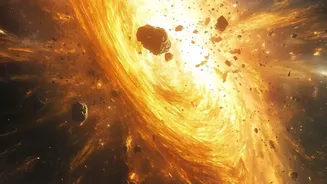
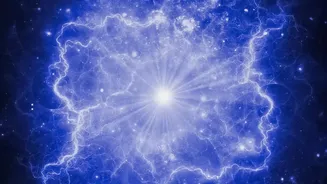
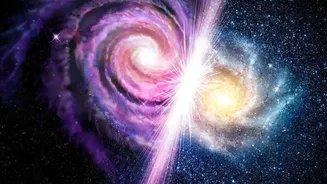
The leading theory now points to the cataclysmic merger of two neutron stars. Neutron stars are the ultra-dense collapsed cores left behind after massive stars go supernova. They are so dense that a teaspoon of their material would weigh billions of tons. Occasionally, two of these stellar remnants, locked in a binary orbit, spiral into each other and collide. This event, known as a kilonova, is one of the most powerful explosions in the universe. The collision unleashes an almost unimaginable torrent of energy and matter, creating the perfect conditions for a process called rapid neutron capture, or the "r-process". In the seconds during and after the merger, atomic nuclei are bombarded with so many neutrons that they swell into the heaviest elements on the periodic table before they have a chance to decay. In 2017, astronomers directly observed both gravitational waves and light from a neutron star merger, confirming that these events produce vast quantities of heavy elements, including gold and platinum.
From Stardust to Your Driveway
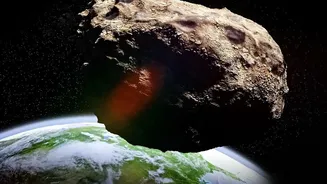
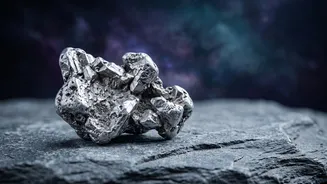
The platinum created in these ancient, violent collisions was blasted across space. Over billions of years, this cosmic shrapnel seeded the clouds of dust and gas that eventually coalesced to form new star systems, including our own. When Earth formed, these heavy elements were incorporated into its makeup. Much of the planet's initial endowment of precious metals likely sank to the core during its molten phase. The accessible platinum we mine today, close to the surface, is thought to have been delivered later by meteorite impacts during a period called the Late Heavy Bombardment. Today, we mine this stardust from the Earth's crust, refine it, and put it into our cars. The same platinum atom that helps clean your car’s exhaust fumes may have been born billions of years ago in a stellar crash, hundreds of millions of light-years away.