


The Squeeze of the Supply Chain
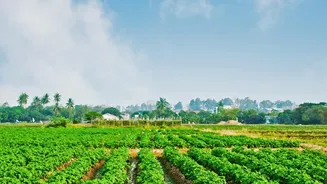
For many small-scale strawberry growers in India, the journey from farm to market is fraught with economic peril. The traditional agricultural supply chain is a complex web of intermediaries: commission agents, wholesalers, and distributors all stand
between the farmer and the final consumer. While each plays a role, they also take a significant share of the profit. Reports suggest that farmers often receive only 30-40% of the final retail price for their produce. This leaves the primary producer, who bears all the risk of cultivation—from unpredictable weather to rising input costs—with the slimmest of margins. For a perishable and delicate fruit like a strawberry, the pressure is even more intense. Delays in this long chain can lead to spoilage, and a lack of bargaining power forces many small farmers to accept whatever price is offered at the local mandi.
A Sweeter Deal: The Direct Approach
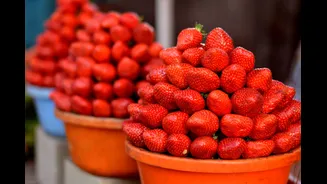
In response to this squeeze, a powerful shift is underway. Farmers are increasingly exploring direct-to-consumer (D2C) models, effectively cutting out the layers that eat into their income. These methods take several forms. Some set up simple roadside stands, a classic form of direct sales that provides immediate cash flow. Others participate in farmers' markets in urban and semi-urban areas, where they can command better prices and build relationships with customers. More recently, technology has become a game-changer. Digital platforms and farm-to-fork startups are creating direct links between growers and consumers, handling logistics and marketing, and allowing farmers to focus on what they do best: farming. Some enterprising farmers even create their own brands, selling not just fresh fruit but value-added products like jams and juices.
The Fruits of Their Labour
The benefits of this direct model are significant and flow in two directions. For farmers, the most immediate impact is a healthier bottom line. By eliminating intermediary commissions, which can be substantial, growers can increase their earnings by 25-40%. This additional income is transformative, allowing them to reinvest in their farms, adopt better technology, and achieve financial stability. They also gain greater control over their produce and pricing. For consumers, the advantages are just as compelling. Produce bought directly is almost always fresher, having travelled a much shorter distance. It also fosters a deeper connection to the food system, giving buyers a chance to know where their food comes from and support local agriculture directly. In many cases, by cutting out markups, the final price can be more competitive too.
The Challenges on the Direct Path
However, the path of direct selling is not without its own set of hurdles. Shifting to a D2C model requires farmers to wear many new hats. They must become marketers, salespeople, and logistics managers—skills that are not part of traditional farming. This is especially challenging for farmers with limited education or access to digital tools. Infrastructure remains a major barrier. Poor road connectivity, a lack of cold storage facilities, and inefficient transport can make it difficult to get perishable goods like strawberries to customers quickly and in good condition. These challenges mean that while direct sales offer a powerful opportunity, they also demand new skills, significant effort, and in many cases, investment in infrastructure that individual small farmers can struggle to afford on their own.