


An Unlikely Place for Life
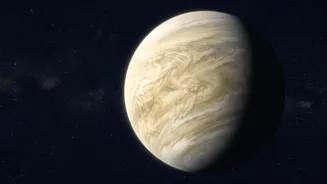
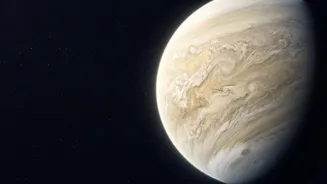
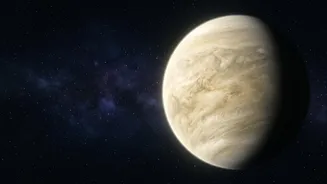
For decades, the search for extraterrestrial life has largely focused on finding worlds with liquid water, like Mars or the moons of Jupiter and Saturn. Venus, despite being our closest planetary neighbour, was mostly written off. Its surface is a scorching
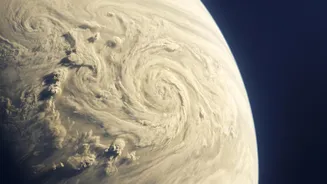
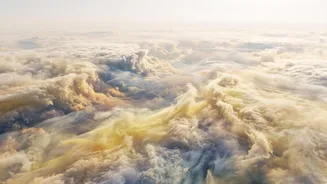
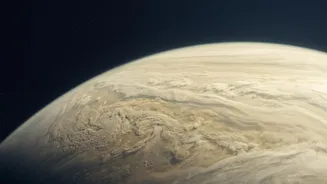
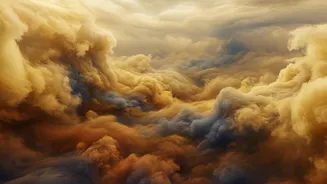
wasteland, hot enough to melt lead, under an atmosphere so thick it would crush a submarine. Higher up, however, in a cloud layer 48 to 64 kilometres above the surface, temperatures are far more moderate. The catch? These clouds are made of droplets of concentrated sulfuric acid, a substance so corrosive it can dissolve most biological molecules on Earth. This extreme acidity has long been considered a non-starter for life as we know it.
A Surprising Laboratory Result
A team of researchers, primarily from MIT, decided to challenge that assumption directly. They wanted to see what would happen to peptides—short chains of amino acids that are fundamental building blocks of proteins—if they were placed in conditions mimicking Venus's clouds. Using nuclear magnetic resonance (NMR) spectroscopy to monitor the molecules, they submerged several different peptides in solutions of up to 98% sulfuric acid. The results were stunning. Not only did the peptides remain stable for weeks, but they didn't break down. The reason, scientists believe, is the extreme lack of water in the concentrated acid, which prevents hydrolysis—the chemical reaction that normally breaks peptide bonds.
More Than Just Survival
Even more significant than their survival was what the peptides did in the acid. Instead of just floating intact, they folded themselves into stable, well-defined three-dimensional shapes. Specifically, they formed structures known as omega loops, which are also found in some proteins on Earth and are important for their function. A molecule's shape dictates its function. The fact that peptides can achieve a stable, folded structure in such a harsh environment is a crucial finding. It suggests that these molecules could, in theory, perform complex biological functions, even in a solvent other than water. “Before this, people thought that peptides couldn't survive in sulfuric acid, so showing peptides are not only stable, but also fold, is a really big deal,” said Dr. Sara Seager, an MIT professor and co-author of the study.
Expanding the Definition of Habitable
It is critical to be clear: this study has not found life on Venus. What it has done is demonstrate that a key chemical barrier once thought to make Venus's clouds completely inhospitable might not be so absolute. This research follows earlier work from the same team which found that 19 of the 20 common amino acids, as well as components of DNA, could also remain stable in concentrated sulfuric acid. Together, these findings suggest that complex organic chemistry might be possible in environments we've long dismissed. It forces astrobiologists to think outside the water-based box and consider that life might find a way in solvents we consider toxic. The results broaden the range of planetary environments worth investigating in our search for life beyond Earth.
What Comes Next for Venus
This laboratory success story provides a compelling reason to go and look. The findings will help inform future missions designed to probe the Venusian atmosphere. Instead of just searching for simple gases, probes could be equipped with instruments designed to look for these complex, stable organic molecules. While the 2020 claim of detecting phosphine gas in Venus's atmosphere remains heavily debated, it sparked renewed interest in our neighbouring planet. This new research on peptides provides a more durable and fundamental reason to be curious. The next step for the research team is to study longer peptides and other molecules like peptide nucleic acid (PNA), a synthetic analogue of DNA, to see if even more complex structures can form and remain stable in the acid.