





A Flying Testbed for Astronaut Safety
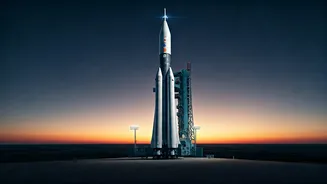
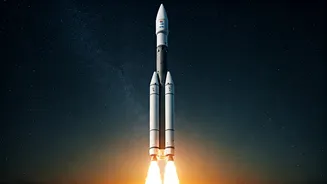
The SOLVE rocket, which stands for Sub-Orbital Launch Vehicle for Experiments, is a new vehicle created by ISRO with a very specific job. Its primary purpose is to act as a flying laboratory to validate the systems that will ensure the safe return of
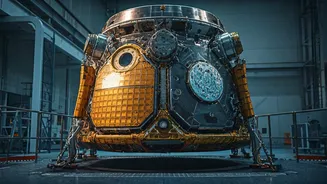
Indian astronauts from space. The main focus is testing the complex parachute-based deceleration system for the Gaganyaan crew module. Before astronauts strap into the capsule, ISRO needs absolute confidence that this system will work flawlessly under a variety of real-world scenarios. The SOLVE rocket provides a way to conduct these critical tests in a controlled, repeatable, and cost-effective manner.
How the SOLVE Mission Works
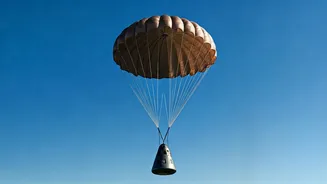
Unlike its larger cousins, such as the PSLV or GSLV, the SOLVE rocket is not designed to reach orbit. Instead, it will perform sub-orbital flights, carrying a prototype of the Gaganyaan crew module to an altitude of between 10 and 17 kilometres. Once it reaches the target altitude, the crew module will separate from the rocket. This will trigger a meticulously choreographed sequence where a series of 10 different parachutes deploy to gradually slow the capsule's descent. The mission ends with the capsule splashing down safely in the sea, where it can be recovered and its performance data analysed. This process allows engineers to simulate the conditions the capsule will face when returning to Earth from orbit and verify that the recovery systems are reliable.
Building on Proven Technology
To develop the SOLVE rocket, ISRO engineers cleverly adapted existing, flight-proven hardware. The solid propulsion stage of the rocket is derived from the powerful strap-on booster motors used on India's workhorse PSLV rocket. However, several significant modifications were necessary to meet the specific testing requirements of the Gaganyaan mission. These changes include developing a propellant with a slower burn-rate to achieve the desired flight path, a straight nozzle, and a secondary injection thrust vector control system, which helps steer the rocket more precisely during its short flight. This approach of modifying proven technology helps accelerate development and enhances the reliability of the new test vehicle.
A Major Milestone for Gaganyaan
In early July 2026, ISRO successfully conducted the first static ground test of the solid motor that will power the SOLVE rocket. The test, which took place at the Satish Dhawan Space Centre in Sriharikota, saw the motor fire as expected, with all its performance parameters meeting mission requirements. This successful ground test is a crucial milestone, building on a series of other qualification trials for the Gaganyaan program, including integrated air-drop tests of the parachute system. It validates the design of the SOLVE motor and clears the path for future flight tests. These efforts are all part of a phased approach to ensure every component of the Gaganyaan system is thoroughly tested before India sends its astronauts into low-Earth orbit, a feat that will make it only the fourth nation to achieve human spaceflight independently.