



NASA's plan to return astronauts to the lunar surface with Artemis IV is one of the most exciting ventures in modern space exploration. But while the 2028 target is ambitious, it is far from certain. A series of immense technical challenges loom.
A New Rocket and a New Tower
The Artemis
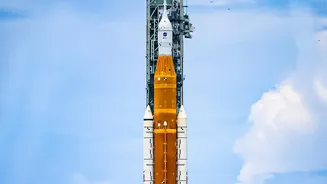
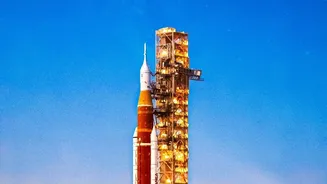
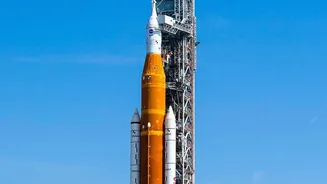
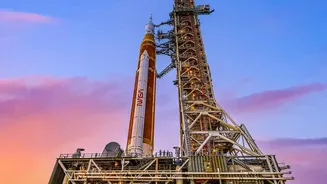
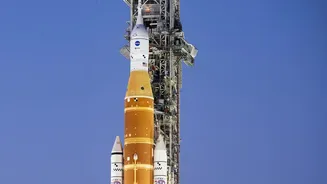
IV mission depends on the Space Launch System (SLS) Block 1B rocket, a more powerful version of the rocket that flew on earlier missions. This upgraded vehicle features a larger Exploration Upper Stage (EUS) designed to carry both the Orion crew capsule and heavy cargo, like components for a lunar outpost, in a single launch. However, this new rocket requires an entirely new launch platform, Mobile Launcher 2 (ML-2). The construction of ML-2, managed by contractor Bechtel, has faced significant delays and massive cost overruns. Originally slated for completion in March 2023 at a cost of $383 million, estimates now place its readiness in late 2027 for a cost that could exceed $1.8 billion, leaving almost no margin for the planned 2028 launch. A NASA Inspector General report projects the launcher may not be ready until spring 2029, which would directly delay the Artemis IV mission.
The Great Lander Race
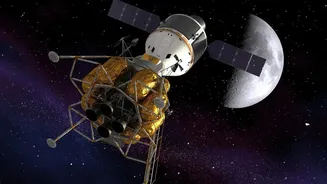
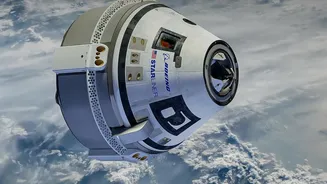
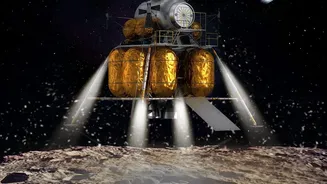
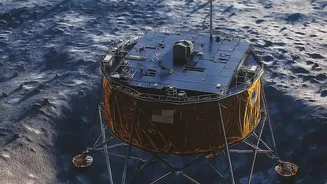
To get from lunar orbit to the surface, astronauts will rely on a Human Landing System (HLS) provided by a commercial partner. NASA is running a competition between SpaceX's Starship and Blue Origin's Blue Moon lander. The plan was restructured in early 2026, making Artemis IV the first landing attempt, preceded by an Earth-orbit test mission, Artemis III, in 2027. During Artemis III, astronauts will practice docking and other procedures with test versions of both landers to see which, if any, is ready. However, both landers face their own development hurdles. NASA's safety advisors and government watchdog reports have repeatedly raised concerns that neither system may be ready in time for a 2028 landing.
Starship's Refueling Challenge
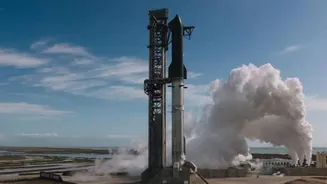
SpaceX's Starship lander presents a particularly complex operational challenge: in-space refueling. Before it can journey to the Moon, a Starship HLS must be fully fueled in low Earth orbit. This requires launching a series of separate Starship 'tanker' missions to transfer super-cold cryogenic propellant to the lander. This critical technology has never been demonstrated on this scale. NASA's Aerospace Safety Advisory Panel (ASAP) has highlighted this as a major risk. While SpaceX CEO Elon Musk suggests 6-8 tanker flights will be needed, some NASA estimates have gone as high as 22, an unprecedented launch cadence that introduces numerous potential points of failure before the crewed mission even begins. An uncrewed test landing is planned for late 2027, but the entire refueling and landing architecture remains unproven.
Shifting Mission Architecture
The overall plan for the Artemis program has been in flux. In early 2026, NASA announced a major shift, pausing the development of the Lunar Gateway—a planned mini-space station in orbit around the Moon—to focus instead on a lunar surface base. Artemis IV was originally supposed to deliver a key habitation module to the Gateway. While the new plan simplifies the mission by having the lander meet Orion in Earth orbit, it represents a significant architectural change mid-program. These constant adjustments, while intended to streamline the process and reduce risk, create a moving target for engineers and contractors, complicating the already tight timeline.
The Tyranny of the Schedule
Ultimately, the greatest challenge is the unforgiving nature of the schedule itself. All these moving parts—the SLS Block 1B rocket, Mobile Launcher 2, and at least one of the human landing systems—must not only work, but they must be ready and tested in perfect sequence. A delay in one component can create a domino effect, pushing back the entire program. With the Artemis III test mission slated for 2027 and the Artemis IV landing in 2028, there is virtually no room for error or further delays. Even the specialized spacesuits being developed by Axiom Space have faced potential delays that could impact the 2028 target. This highstaked choreography of brand new unproven systems is why the 2028 date remains a goal not a guarantee.