

The Problem We Can’t Ignore
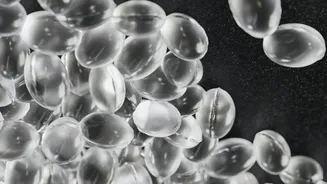
Our planet has a serious plastic problem. Every year, we produce millions of tonnes of plastic, and a huge portion of that is polyethylene terephthalate, or PET—the clear, lightweight material used for soda and water bottles. Globally, around 50 million metric
tons of PET waste are generated annually. While some of it gets recycled, the process often results in lower-quality materials, like fibres for carpets or clothing, which eventually end up as waste themselves. This linear model of produce, use, and discard has led to staggering environmental and economic losses. This global challenge has pushed scientists to think outside the box, not just about recycling plastic, but about upcycling it—transforming low-value waste into something more valuable.
A Sweet Solution from Unlikely Origins
Enter a team of scientists with a truly innovative idea. Researchers, most notably from the University of Edinburgh, proposed a radical solution: what if we could use biology to convert plastic waste into a valuable chemical? They focused on vanillin, the compound responsible for the distinct flavour and aroma of vanilla. Vanillin is in high demand, used in everything from food and cosmetics to pharmaceuticals and cleaning products. However, the world's appetite for vanilla far outstrips the supply from natural vanilla beans, meaning about 85% of vanillin is synthesized from chemicals derived from fossil fuels. The scientists saw a dual opportunity: to create a more sustainable source of a high-demand product while finding a new purpose for plastic pollution.
From Plastic Bottle to Vanilla Flavour
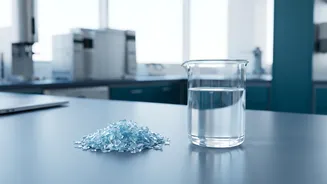
This is where the science gets really clever. The process doesn't involve melting plastic and mixing it into dough. Instead, it's a multi-step biological transformation. First, the PET plastic is broken down into its basic chemical unit, a molecule called terephthalic acid (TA). Then, the researchers introduced genetically engineered E. coli bacteria. These microbes were specifically programmed to perform a series of chemical reactions, essentially “eating” the TA and converting it into vanillin. In a landmark study, the team successfully demonstrated the technique by taking a used plastic bottle, breaking it down, and using their engineered bacteria to produce vanillin. The study reported a conversion rate of about 79%, a significant achievement in the field of synthetic biology.
So, Are the Cookies Made of Plastic?
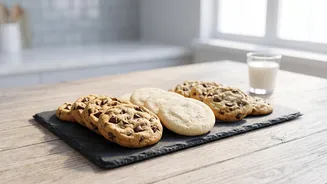
This is the most important clarification. No, the cookies are not made of plastic. The headline-grabbing “cookie prototypes” come from more recent research, including work at Southern Illinois University, that builds on this concept. These projects use the vanillin derived from plastic as a flavouring agent in a proof-of-concept recipe. In some cases, researchers are also using engineered microbes to convert parts of the plastic and agricultural waste into other useful components like proteins and vitamins. These ingredients are then mixed with traditional food components like starch and fiber to create a dough, which has been 3D-printed into a cookie shape in the lab. The plastic itself is entirely transformed on a molecular level. You are not eating plastic; you are eating a food ingredient that began its life as a different chemical structure.
The Road From Lab to Larder
Before you start seeing “upcycled vanilla” on ingredient lists, there are several hurdles to overcome. Scientists say that while the vanillin produced is theoretically fit for human consumption, extensive testing is still needed to ensure its safety and purity. Beyond safety, the biggest challenge is scalability. The current process is confined to the lab and producing it at an industrial level that is also cost-effective presents a major engineering challenge. And then there's the court of public opinion. Convincing consumers to embrace a food ingredient that originated from a plastic bottle may be a significant marketing challenge, even if the science is sound. Early feedback on the aroma of these prototypes has been encouraging, but the journey to a consumer-friendly product is long.