

A Tale of Two Trailblazers
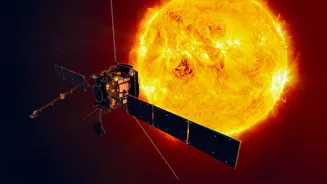
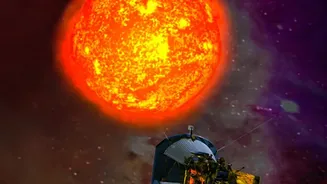
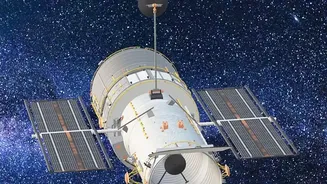
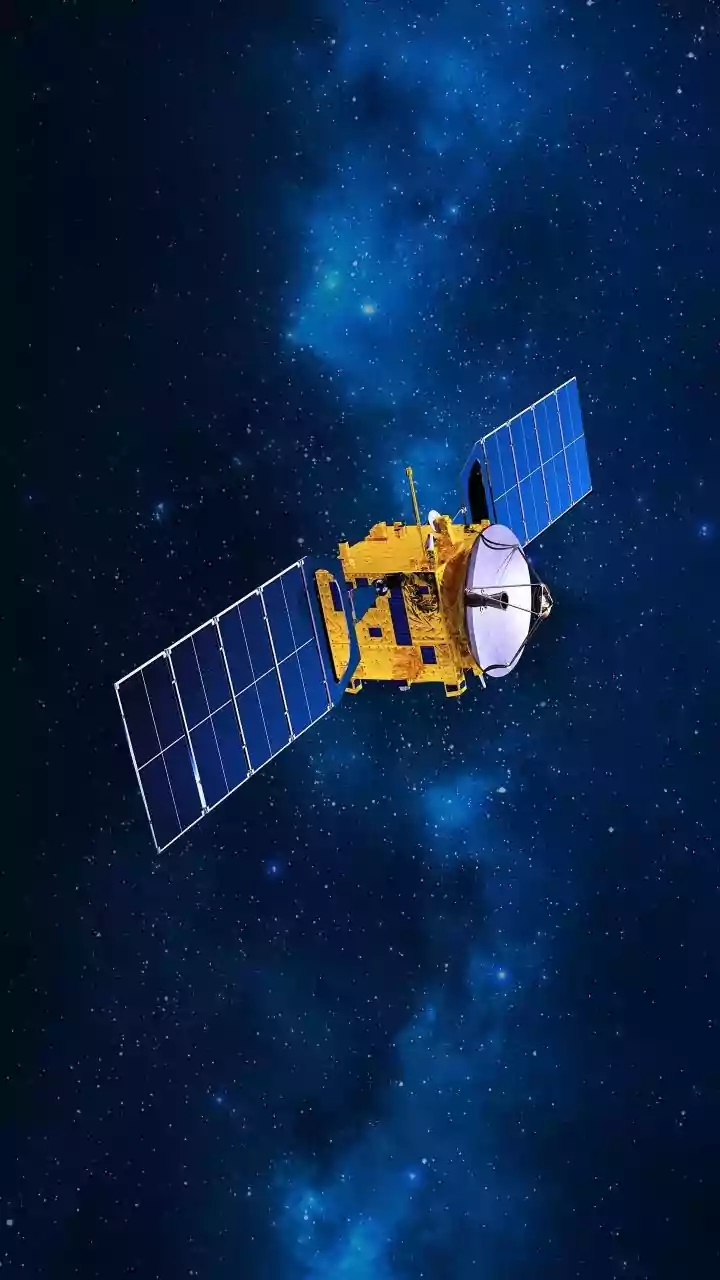
At the heart of this international effort are two highly sophisticated space missions. Representing India is Aditya-L1, the nation's first dedicated solar observatory, launched by ISRO on September 2, 2023. It is strategically positioned at the Sun-Earth
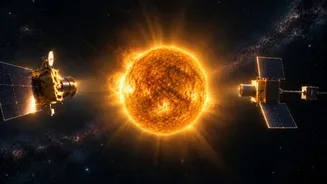
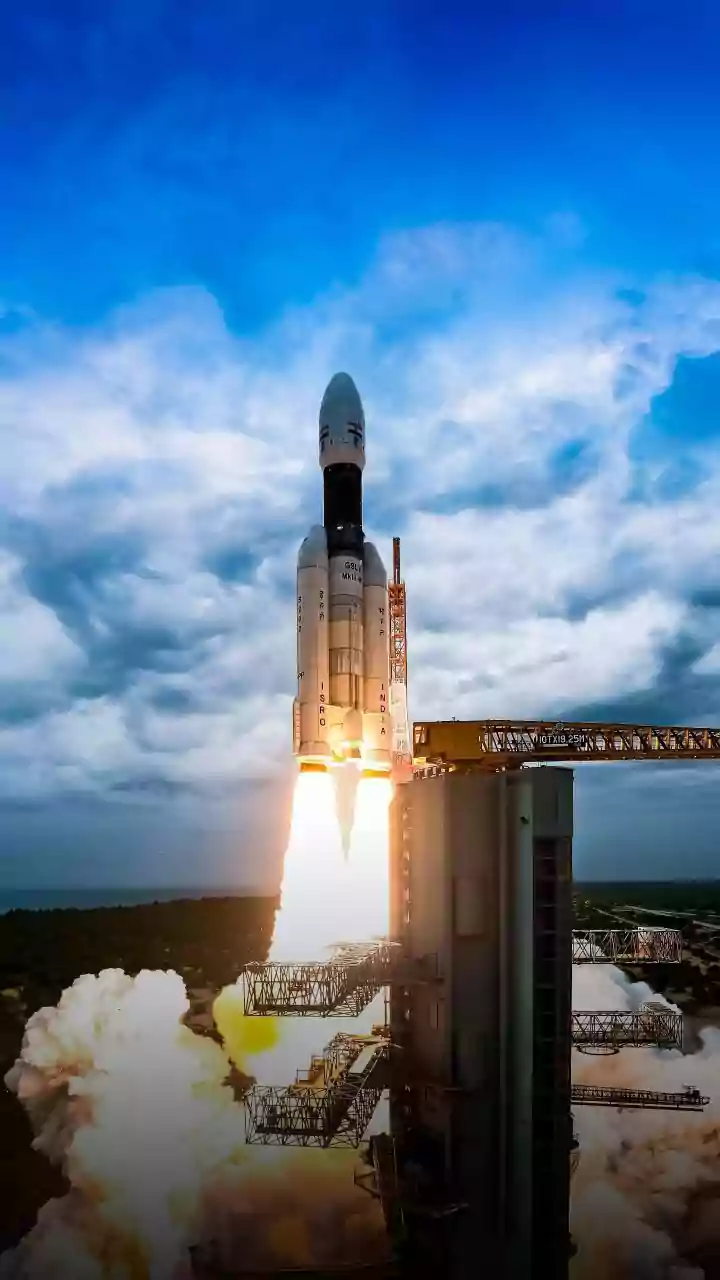
Lagrange Point 1 (L1), a spot in space that allows for a continuous, uninterrupted view of the Sun. Its key instrument for this study is the Visible Emission Line Coronagraph (VELC), designed to perform spectroscopy on the Sun’s corona, analysing light to determine the properties of solar plasma.Its partner is the European Space Agency’s (ESA) Proba-3, a groundbreaking mission launched aboard an Indian PSLV rocket in December 2024. Proba-3 is unique; it consists of two satellites flying in precise formation, about 150 metres apart, to create a prolonged artificial solar eclipse. One satellite blocks the bright face of the Sun, allowing the other, equipped with a coronagraph called ASPIICS, to capture incredibly detailed images of the faint, super-hot corona right next to the solar limb.
The Challenge of the Sun's Glare
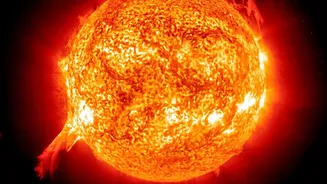
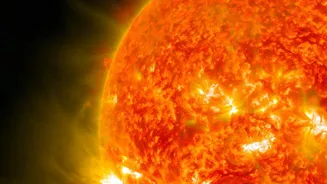
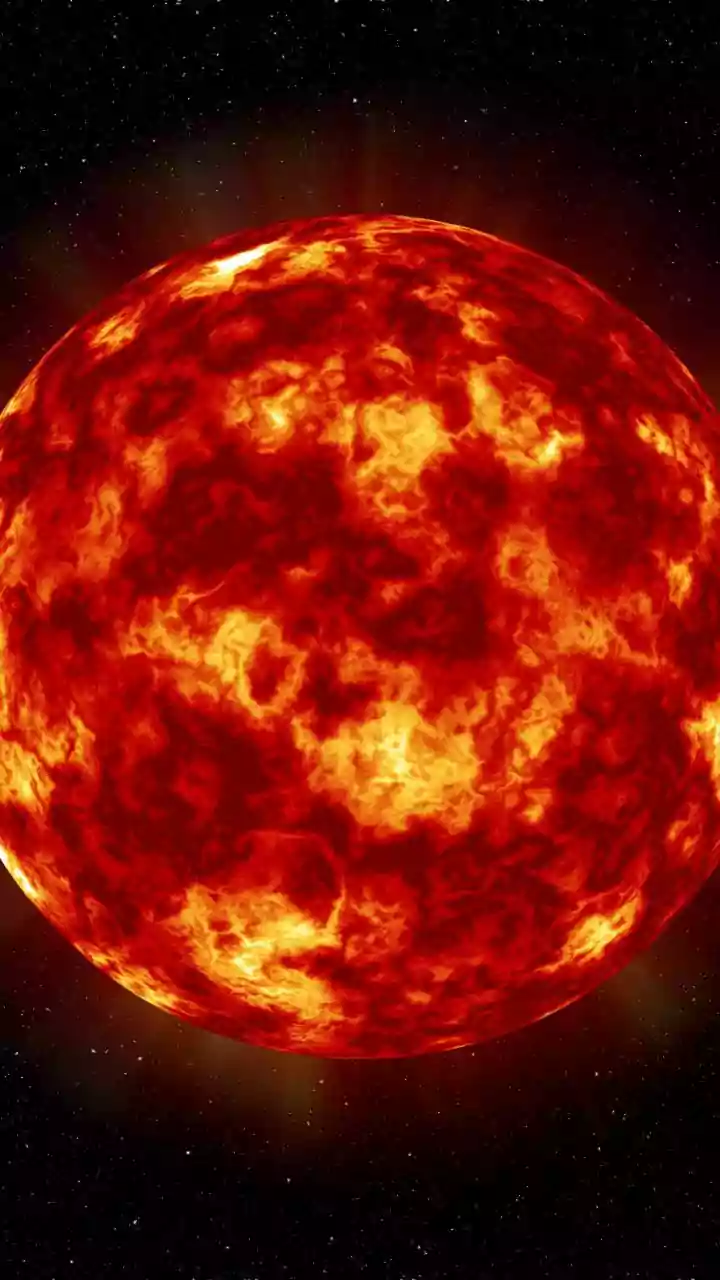
Observing the Sun’s corona, its outermost atmosphere, presents a fundamental problem that has long frustrated solar physicists. The corona is more than a million times dimmer than the Sun's visible surface, the photosphere. This extreme difference in brightness makes it nearly impossible to see the region where solar eruptions, known as Coronal Mass Ejections (CMEs), are born. It is akin to trying to spot a candle flame next to a blinding searchlight. Natural solar eclipses offer a brief, perfect glimpse, but they are rare and last only a few minutes. Traditional space-based coronagraphs, which use an internal disc to block the Sun's light, suffer from issues like stray light that can obscure the crucial inner corona. This has left a significant gap in our understanding of how these massive explosions of plasma and magnetic fields begin their journey into space.
A Powerful Scientific Synergy
The collaboration between Aditya-L1 and Proba-3 provides a clever solution to this observational challenge. Proba-3’s formation-flying technique produces a near-perfect artificial eclipse lasting for hours, revealing the inner corona with exceptional clarity. This allows its ASPIICS instrument to capture sharp images of a CME's shape, structure, and movement as it erupts.Simultaneously, Aditya-L1’s VELC instrument studies the same region using a different technique: spectroscopy. By analysing the light from the eruption, VELC provides crucial data on the temperature, density, and velocity of the super-hot gas (plasma) within the CME. In essence, Proba-3 provides the 'what' and 'where' through its crisp images, while Aditya-L1 delivers the 'how' and 'why' through its detailed physical measurements. This combined approach allows for a more complete and cross-verified picture of an eruption's birth than either mission could achieve alone.
Unlocking the Secrets of Space Weather
This joint study is already yielding significant results. For the first time, scientists have analysed the same CMEs using both imaging and spectroscopic data close to the Sun. An early study, published in the journal Astronomy & Astrophysics, examined two separate eruptions and measured their mass, density, and energy distribution in unprecedented detail. One eruption travelled more than four times faster than the other, offering vital clues about the physical processes driving them.Understanding these initial moments is critical for improving space weather forecasts. CMEs are a primary driver of geomagnetic storms on Earth, which can disrupt satellites, communication networks, and power grids. By accurately measuring a CME’s properties at its origin, scientists can better predict its potential impact if it is headed toward our planet. This research marks a significant step toward moving from simply observing space weather to predicting it with greater accuracy.
A Landmark International Collaboration
The scientific potential of this synergy was a central theme at a joint ISRO-ESA workshop held in India in early 2026, which brought together experts from around the world to plan collaborative data analysis. The fact that ESA’s advanced Proba-3 mission was launched on an Indian rocket already underscored the growing partnership between the two space agencies. Now, the joint analysis of data from Aditya-L1 and Proba-3 solidifies this relationship, showcasing a powerful model for future international space science. It not only validates the high-quality data from India’s flagship solar mission but also places it at the forefront of global efforts to understand our star.