



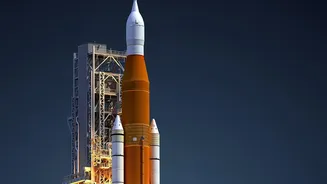
The High Cost of a Single Trip
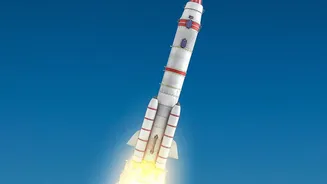
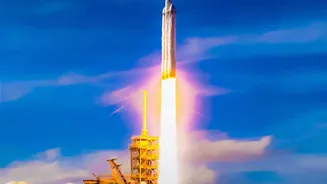
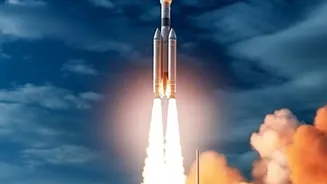
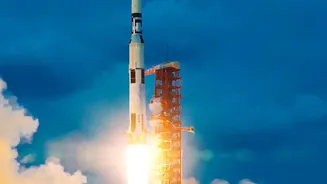
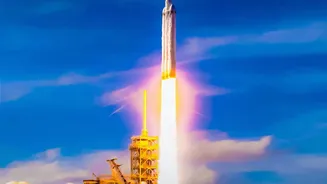
Historically, rockets were designed to be used just once. Like throwing away an aeroplane after a single flight, every component—from the powerful engines to the massive fuel tanks—was discarded after delivering its payload to orbit. This expendable model
made space access incredibly expensive. A single launch could cost anywhere from $60 million to over $160 million, depending on the rocket. For the scientific community, this presented a major bottleneck. Securing a spot for a research satellite or a climate-monitoring instrument often meant years of waiting for funding and a limited number of available launches. The high cost also meant there was little room for error; a launch failure could set a research programme back by a decade. This economic reality limited the scope and pace of space-based science, reserving it for only the most well-funded government and institutional projects.
A Paradigm Shift in Launch Economics
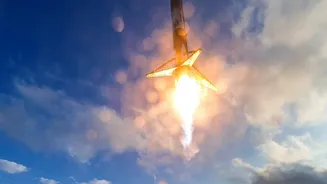
The advent of reusable rocket technology, pioneered by companies like SpaceX, has completely upended this economic model. By designing the first stage of the rocket—the most expensive part—to land safely back on Earth, it can be refurbished and flown again. This seemingly simple change has a dramatic impact on cost. A reusable Falcon 9 launch, for instance, costs around $67 million, significantly less than its expendable competitors. This has been proven to reduce launch costs by as much as 70%. The ability to reuse hardware means that the massive upfront manufacturing and engineering costs can be spread over multiple missions. This shift is turning rockets from single-use products into reusable assets, much like commercial aircraft, fundamentally restructuring the business of spaceflight.
More Launches, More Science
For researchers, cheaper and more frequent launches are a game-changer. The dramatically lower costs democratise access to space, allowing universities, smaller research groups, and even startups to send their own experiments into orbit. Instead of one large, decade-long mission, scientists can now consider launching a series of smaller, more iterative satellites. This allows them to gather data more quickly, test new instruments, and even take more risks. If one small satellite in a constellation fails, it's a manageable setback, not a catastrophic loss. This increased launch frequency supports everything from Earth observation and climate science to astronomical discovery and in-orbit experiments. It accelerates the cycle of scientific discovery, enabling researchers to answer questions faster than ever before.
India's Push Towards Reusability
The Indian Space Research Organisation (ISRO) is also making significant strides in this domain with its own ambitious programme. Known as the Reusable Launch Vehicle-Technology Demonstrator (RLV-TD), the project aims to develop a two-stage-to-orbit reusable launch vehicle. ISRO has already conducted a series of successful experiments, including multiple autonomous landing tests of its winged prototype, named 'Pushpak'. These tests, conducted at the Aeronautical Test Range in Chitradurga, Karnataka, have successfully demonstrated critical technologies needed for a vehicle to land precisely on a runway after returning from space. By developing its own reusable launch capabilities, ISRO aims to significantly reduce the cost of launching satellites, which will not only enhance its commercial launch services but also provide a massive boost to India's own scientific community, offering more frequent and affordable access to space for domestic research and development.