







A Major Shift in Strategy
NASA has fundamentally restructured its plan to land astronauts on the Moon. The mission previously known as Artemis III, which was intended to be the first lunar landing since the Apollo era, has been repurposed. Now slated for 2027, Artemis III will
be an ambitious test flight in low-Earth orbit. During this 14-day mission, a crew of four astronauts will practice critical procedures with test versions of the lunar landers being developed by private partners SpaceX and Blue Origin. The actual lunar landing is now planned for 2028 under the Artemis IV mission name. This Apollo 9-style 'test before you land' approach is designed to reduce risk and validate the new hardware close to home before venturing 240,000 miles away.
The New Mission Architecture
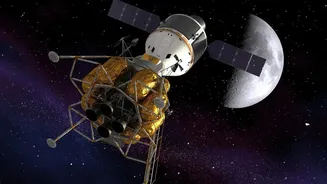
The updated plan streamlines the complex choreography required to get to the lunar surface. Originally, NASA's Orion spacecraft was supposed to rendezvous with its lander in a distant lunar orbit. The new approach simplifies this significantly. For a mission with SpaceX's Starship, the two craft will now dock in Earth orbit before the Starship performs the burn to send both vehicles toward the Moon. Blue Origin's Blue Moon lander has a different plan that uses multiple transfer stages to reach lunar orbit, a method that avoids complex in-space refuelling. These architectural changes were made to ease the technical burden on the commercial providers and accelerate their development. Both companies are still required to complete successful unpiloted moon landings before they will be cleared to carry astronauts.
Competition and Urgency
This accelerated timeline is driven by several factors, including a renewed sense of a global space race, this time with China. NASA officials have noted that China is developing its own capabilities for crewed lunar missions. By fostering a competitive environment between its two commercial partners, SpaceX and Blue Origin, NASA hopes to spur innovation and ensure it has a viable lander ready for 2028. The agency plans to wait as long as possible before selecting which provider will perform the historic Artemis IV landing. This dual-provider approach also creates redundancy, giving NASA an alternative path if one company encounters significant delays.
The Commercial Partners' Role
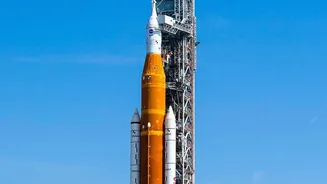
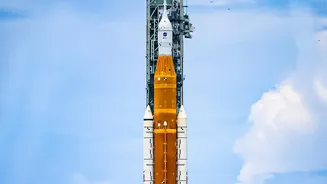
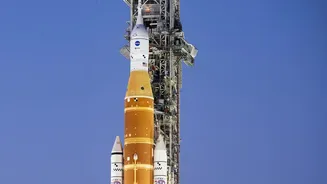
The success of this new strategy rests heavily on the shoulders of SpaceX and Blue Origin. The Artemis III mission in 2027 will be a complex dance requiring three separate launches in quick succession: Blue Origin's New Glenn, SpaceX's Super Heavy-Starship, and NASA's own Space Launch System carrying the Orion crew capsule. The Orion crew will first dock with the Blue Moon lander to test its systems, then perform a separate docking maneuver with the Starship. This in-orbit rehearsal is essential, but relies on hardware that is still in development. SpaceX's Starship has only recently achieved orbit, and Blue Origin's New Glenn rocket has not yet performed a test flight. Both companies are racing to meet the demanding schedule.
Challenges on the Fast Track
While NASA Administrator Jared Isaacman has expressed confidence in the new plan, the 2028 deadline leaves little room for error. External experts and even former astronauts have expressed skepticism, noting the immense technical hurdles that remain. The plan assumes both SpaceX and Blue Origin can demonstrate reliable, rapidfire launches, master new docking procedures, and, in SpaceX's case, perfect large scale in space refueling. NASA Associate Administrator Amit Kshatriya acknowledged the risks, stating, 'It's not that I don't recognize that if you go fast, you can make mistakes... But you can go fast and be careful'. The goal is to recapture the urgent, focused spirit of the Apollo program to meet the challenges of this new era.