


Putting the Number in Context
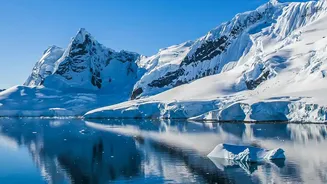
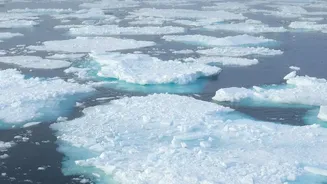
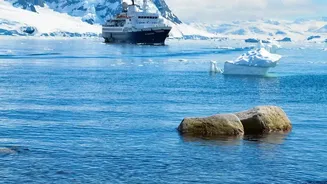
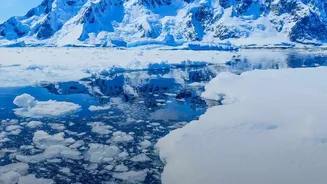
Scientists at the US National Snow and Ice Data Center (NSIDC) confirmed that on September 14, 2026, the floating sea ice around Antarctica reached its maximum annual coverage at 17.59 million square kilometres. While this area is vast—larger than the entire
continent itself—the number is deeply concerning when placed in historical context. This peak is the third-lowest winter maximum since satellite records began in 1979. More alarmingly, it is approximately one million square kilometres below the long-term average for the winter peak, an area roughly twice the size of Spain. This isn't an isolated event; it marks the continuation of a worrying pattern. The four lowest winter maximums ever recorded have all occurred in the last four years.
A Shift in a Volatile System
For decades, Antarctic sea ice behaved differently from its Arctic counterpart. While Arctic ice has been in a clear, steep decline, Antarctica’s sea ice was more variable and even showed periods of slight expansion. However, that stability appears to have ended. Since 2016, the continent has experienced a sharp shift, with record-breaking lows in both summer and winter becoming the new norm. Scientists are now concerned that the system has flipped into a new, less stable state. They point to factors like warming ocean waters, which make it harder for ice to form, and changing wind patterns, potentially influenced by climate phenomena like El Niño, which can break up ice and prevent it from expanding.
Sea Ice vs. Land Ice: What’s the Difference?
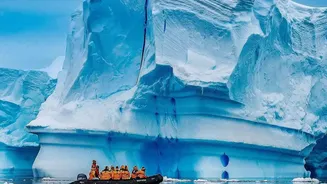
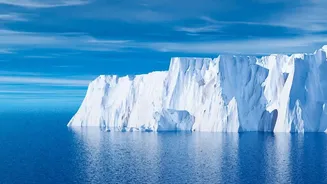
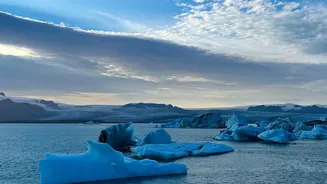
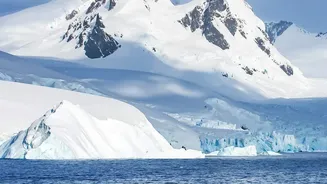
It’s crucial to distinguish between sea ice and land ice. Sea ice is frozen ocean water that floats on the sea surface. Its melting doesn't directly contribute much to sea-level rise, as the ice is already in the water. Land ice, found in Antarctica's massive ice sheets and glaciers, is the real driver of rising sea levels when it melts and flows into the ocean. However, sea ice plays a vital protective role. It acts as a bright, white shield, reflecting the sun's energy back into space—a phenomenon known as the albedo effect. When sea ice vanishes, the darker ocean below absorbs more heat, creating a feedback loop that accelerates warming. It also acts as a buffer, protecting the edges of the land-based ice sheets from erosion by ocean waves.
Why Antarctica Matters to India
What happens in Antarctica doesn't stay in Antarctica. The continent is a critical engine for global climate regulation. The formation of sea ice helps drive the world's ocean currents, often called the global ocean conveyor belt. This massive circulation system transports heat, carbon, and nutrients around the planet, influencing weather patterns everywhere, including the Indian monsoon. A disruption to this system could have long-term, unpredictable consequences. Furthermore, the loss of the protective sea ice barrier exposes the continent's massive land ice sheets to warmer ocean waters, accelerating their melt. The West Antarctic ice sheet alone holds enough water to raise global sea levels by several metres, a direct threat to India’s extensive and densely populated coastlines.