

The Scientific Basis of the Warning
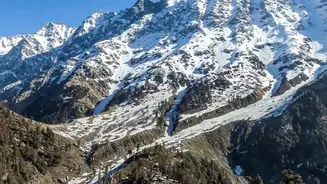
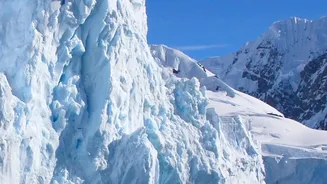
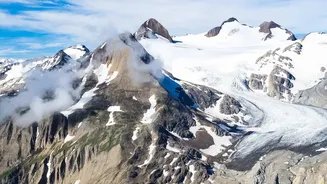
The stark prediction comes from a study published in the journal 'Nature' which conducted a comprehensive inventory of glaciers in the Alaknanda basin, a major river system in the Garhwal Himalayas. Researchers identified 219 'hanging glaciers'—masses
of ice perched precariously on steep mountain slopes. As global temperatures rise, these glaciers are becoming increasingly unstable. The study projects that this instability will lead to a greater frequency of ice and rock avalanches. The 17% increase in population exposure is calculated based on development and population growth in downstream areas that lie in the potential path of these destructive events.
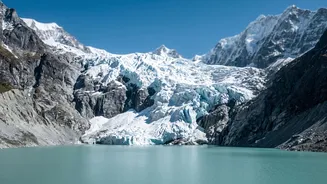
What Are Hanging Glaciers?
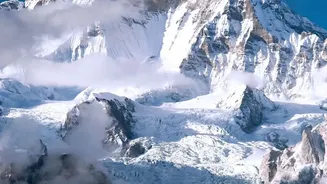
Unlike the vast, slow-moving valley glaciers, hanging glaciers are smaller ice masses that cling to steep, high-altitude slopes. Climate change is a key driver of their instability. Warmer temperatures cause glaciers to melt faster than they can accumulate new snow, leading to retreat and thinning. This process can weaken the bond between the ice and the rock beneath it. Furthermore, the degradation of permafrost—permanently frozen ground that acts as a mountain's glue—further destabilizes these slopes. When a hanging glacier detaches, it can trigger a devastating rock and ice avalanche that travels miles downstream at high speed.
More Than Just People at Risk
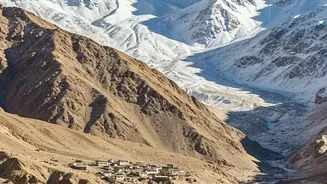
The threat extends beyond the immediate risk to human life. The study also projects a staggering 120% increase in the land area occupied by buildings and infrastructure that is vulnerable to these hazards by 2030, compared to the year 2000. This includes homes, roads, and, critically, numerous hydropower projects that are vital to the region's energy supply. Simulations from the study indicated that potential avalanche flows in some sectors, like Badrinath-Mana, could exceed 50 metres in height, an event that could easily overwhelm major settlements and infrastructure. These avalanches can also trigger secondary disasters, such as creating temporary dams on rivers that later burst, causing Glacial Lake Outburst Floods (GLOFs).
Echoes of Past Tragedies
For the residents of Uttarakhand, this is not an abstract threat. The memory of the February 2021 Chamoli disaster is still fresh. In that event, a massive wall of rock and ice collapsed, triggering a flash flood in the Rishiganga and Dhauliganga rivers. The disaster destroyed two hydropower plants and killed over 200 people. That event was a tragic real-world example of the cascading hazards that originate from unstable high-altitude slopes. Such events demonstrate that the danger is not just the initial avalanche but the chain reaction of floods and debris flows that follows.
The Path Forward: Monitoring and Mitigation
The study's authors stress that while the risk is growing, it is not unmanageable. The key lies in proactive measures. This includes the systematic identification and continuous monitoring of the most high-risk glaciers. Advances in satellite technology and on-the-ground sensors can provide early warnings. In Switzerland, for example, a similar threat to the village of Blatten was successfully managed through robust monitoring and a clear evacuation protocol, saving lives when an avalanche did occur. Experts argue for similar risk-informed land-use planning in the Himalayas to prevent further development in the most hazardous zones and to establish clear evacuation routes for existing communities.