
The Unseen Weather of Mars
When we think of weather, we often picture clouds, rain, or wind. Mars has its own version of these, but much of its atmospheric action is driven by invisible forces, including something called atmospheric gravity waves. Not to be confused with gravitational
waves from space, these are ripples of pressure and temperature that travel through the air, much like waves spreading across a pond. On Earth, these waves are common, often forming when wind flows over mountains. They play a role in transferring energy and momentum through the atmosphere, influencing weather patterns on a larger scale. For a long time, scientists suspected they were also important on Mars, but their full impact remained unclear.
A Planet of Extremes
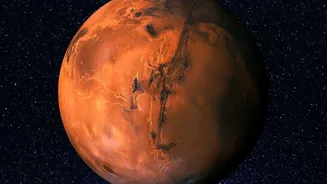
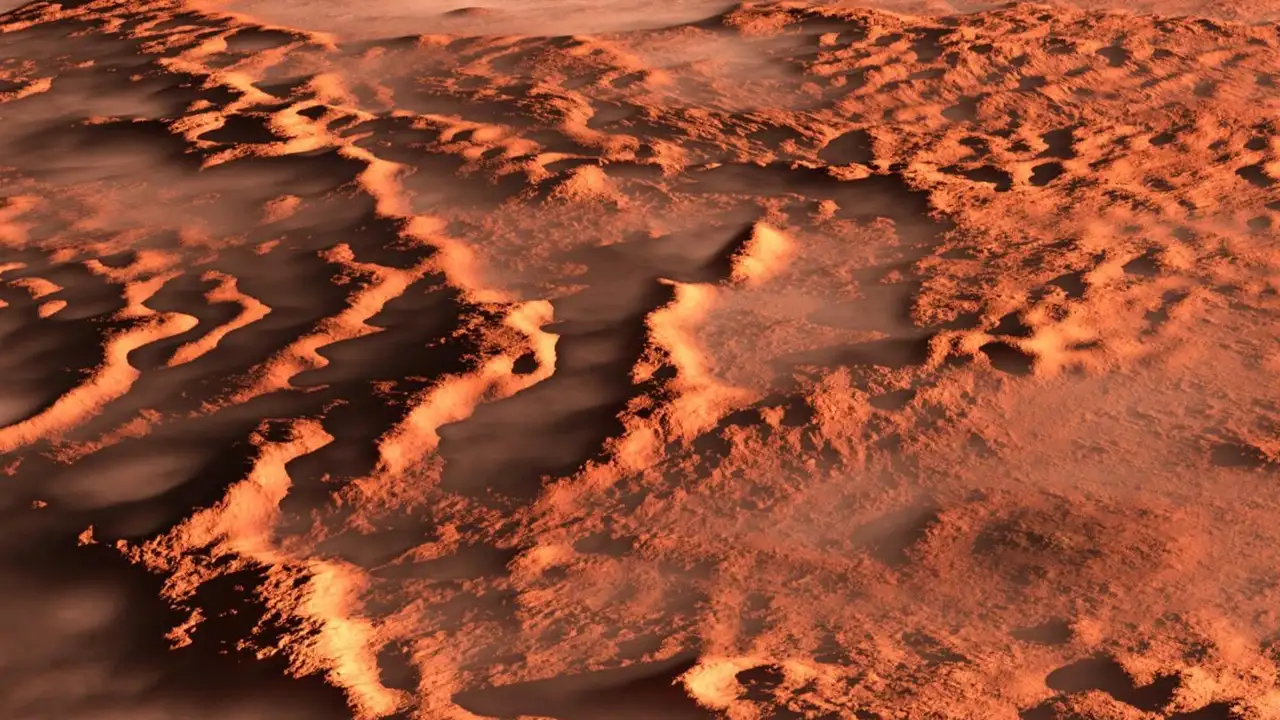
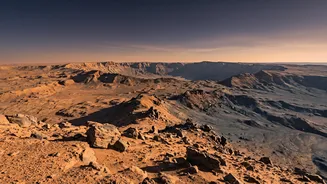
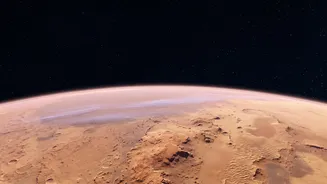
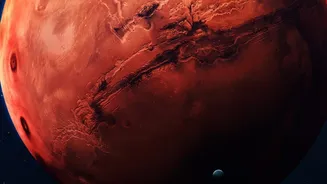
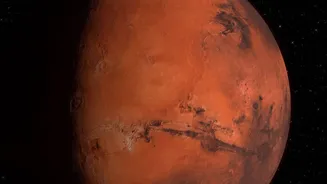
Mars is a world of dramatic topography. It is home to Olympus Mons, the tallest volcano in the solar system, which stands nearly 22 kilometers high—almost two and a half times the height of Mount Everest. It also features Valles Marineris, a canyon system that dwarfs the Grand Canyon, stretching for thousands of kilometers. These immense geological features are not just static landmarks; they actively interfere with the thin Martian atmosphere as it flows over them. The sheer scale of these mountains and valleys provides the perfect conditions for generating powerful atmospheric waves, as wind is forced up and over these massive obstacles. The atmospheric pressure at the top of Olympus Mons is a mere 12% of the average surface pressure, highlighting how significantly it juts into the upper layers of the atmosphere.
What the New Study Found
Recent research, using data gathered over several Martian years from orbiters like the Mars Reconnaissance Orbiter, has provided the clearest picture yet of this phenomenon. A study led by researchers at the University of Tokyo utilized the Ensemble Mars Atmosphere Reanalysis System (EMARS) to analyze atmospheric movements. They discovered that gravity waves are a dominant force in Mars's middle atmosphere, especially at mid to high latitudes. These waves are responsible for significant north-south air circulation, a pattern that more closely resembles Earth's upper mesosphere than its stratosphere, where different types of waves are more influential. The findings show a direct link between topographic features and the generation of these powerful waves, confirming that the planet's geology is a primary driver of its atmospheric circulation.
From Ripples to Global Impact
The impact of these topographically generated waves is profound. They transport energy and momentum vertically through the thin Martian air, influencing temperature and even dust distribution. During major dust storms, for instance, the activity of these waves changes noticeably. By understanding how and where these waves form, scientists can build more accurate models of the Martian climate. Previous models may have underestimated the influence of these small-scale gravity waves, but this new research suggests they are a key piece of the puzzle. This more detailed understanding is not just academic; it has practical implications for future exploration.
Why This Matters for Future Missions
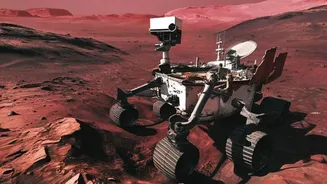
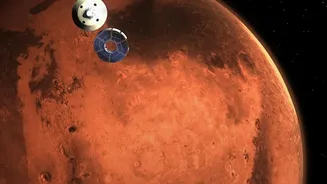
Accurately forecasting Martian weather is essential for the safety and success of future robotic and human missions. A better grasp of atmospheric circulation helps mission planners predict wind patterns for landing spacecraft, anticipate dust storms that can affect solar-powered rovers, and understand the overall climate system. This research provides a crucial update to our knowledge of Martian meteorology. It reveals a world where the ground and the sky are intimately connected, with ancient volcanoes and canyons actively shaping the weather patterns of today. By mapping the influence of these atmospheric waves, we get a more complete and dynamic view of the Red Planet, helping us prepare for the challenges of exploring it.