



An Idea From Another Desert
The unlikely story began not in India, but in Israel. During a visit in 2006, then-Chief Minister of Rajasthan, Vasundhara Raje, saw olive farms thriving in the Negev Desert. She recognised the climatic similarities between the Israeli desert and Rajasthan's
own arid landscape and saw an opportunity. Despite a previous failed attempt to grow olives in Himachal Pradesh in the 1980s, the Rajasthan government decided to move forward with this ambitious plan. The vision was to introduce a lucrative cash crop for farmers struggling with traditional crops like wheat and mustard, which yielded lower returns and consumed vast amounts of water.
An International Partnership
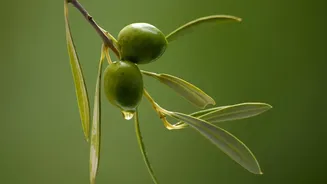
To bring this vision to life, a public-private partnership was formed in 2007, creating Rajasthan Olive Cultivation Ltd. (ROCL). This joint venture brought together the Rajasthan State Agriculture Marketing Board, Israeli firm Indolive for its desert-farming expertise, and Finolex Plasson Industries, an Indian company specializing in micro-irrigation. Between 2008 and 2009, over 112,000 saplings of seven different olive varieties—including Barnea, Arbequina, and Picual—were imported from Israel. These were planted across 182 hectares of government land in seven different agro-climatic zones, from Sri Ganganagar to Jaipur, to test their viability.
Overcoming Arid Challenges
Growing a Mediterranean crop in the Thar Desert came with significant hurdles. The region's extreme temperature swings and water scarcity were major concerns. However, the project leveraged Israeli technology, particularly drip irrigation, to deliver water and nutrients directly to the plants' roots with maximum efficiency. While olives are drought-tolerant, they do require specific chilling hours in winter to fruit properly, a condition that parts of Rajasthan could surprisingly meet. The careful selection of hardy varieties and advanced farming techniques were crucial to overcoming the harsh environmental stressors.
Harvesting 'Liquid Gold'
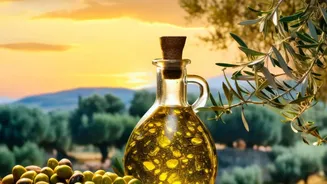
The experiment began to bear fruit, quite literally, around 2012. The success of the pilot farms encouraged the government to expand the project to private farmers, offering subsidies on saplings and irrigation systems to drive adoption. The economic incentive was powerful, with olives promising returns up to five times higher than traditional wheat cultivation. This led to the establishment of India's first olive oil refinery in Bikaner district, which began processing the local harvest. In November 2016, the state officially launched 'Raj Olive,' the country's first indigenously produced olive oil brand, marking a major milestone.
Beyond the Oil
The project's success has inspired further innovation. The state has since explored other olive-based products, including pickles and, notably, olive leaf tea. A processing plant was established in Bassi to produce olive tea, which is promoted for its health benefits, containing more antioxidants than green tea. This diversification is creating new value chains and economic opportunities from a single crop. The experiment in Rajasthan has also inspired other Indian states, including Punjab, Himachal Pradesh, and Uttar Pradesh, to explore olive cultivation, with ROCL supplying saplings and expertise.