







Thinking Beyond a Single Goal
In a world of complex challenges and finite resources, the most effective strategies are often those that achieve multiple objectives simultaneously. For a nation like India, this means designing ambitious projects that don't just solve one problem but
create a cascade of benefits across different sectors. Instead of viewing scientific research, national safety, and economic planning as separate silos, integrated national missions weave them together. This approach ensures that a breakthrough in a research lab can also enhance a community's safety and eventually create new jobs. It is a smarter, more efficient way to build a resilient and prosperous future, where every rupee invested works harder and delivers broader value to the nation.
A Case Study from the Ocean Depths
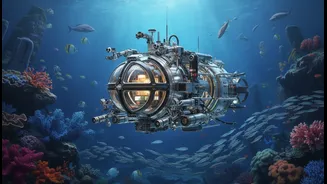
A perfect illustration of this integrated approach is India's ambitious Deep Ocean Mission. Launched by the Ministry of Earth Sciences, this initiative is not just about sending a vessel to the bottom of the sea; it's a comprehensive vision for India's future. With a budget of over ₹4,000 crore, the mission aims to explore and harness the vast, untapped resources of the deep ocean that fall within India's Exclusive Economic Zone. This includes developing technologies like the 'MATSYA 6000' manned submersible, which will carry three aquanauts to depths of 6,000 metres. By venturing into this final frontier, India joins an elite group of nations with the capability for manned deep-sea exploration, but the real value lies in how the mission connects research, safety, and economics.
The Frontiers of Scientific Research
At its core, the Deep Ocean Mission is a massive scientific undertaking. Its primary research goal is to explore and map the seabed, particularly in the Central Indian Ocean Basin, where India has been allocated a 75,000 sq. km site by the International Seabed Authority. This area is rich in polymetallic nodules — potato-sized rocks containing valuable minerals like nickel, cobalt, copper, and manganese. These minerals are critical for developing green technologies, including electric vehicle batteries and solar panels. Beyond minerals, the mission will study deep-sea biodiversity, discovering new species and ecosystems that can lead to breakthroughs in biotechnology and medicine. This exploration provides invaluable data for understanding climate change and the origins of life, pushing the boundaries of human knowledge.
Strengthening National Safety and Security
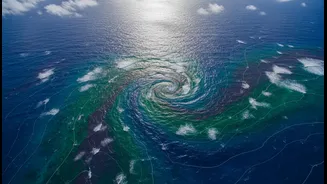
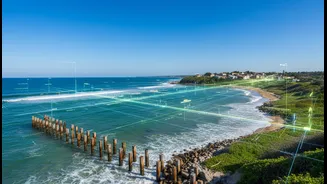
The mission's benefits extend directly to national safety. Developing a better understanding of ocean dynamics is crucial for improving climate advisory services. The data collected will help in more accurately forecasting monsoons and providing early warnings for natural disasters like tsunamis and cyclones, which is vital for India's long coastline and coastal communities. Furthermore, mapping the seabed and securing access to strategic resources addresses long-term resource security. As land-based mineral reserves dwindle globally, securing a sustainable supply of critical minerals from the ocean floor is a strategic imperative that reduces dependency on imports and strengthens national self-reliance, or Atmanirbhar Bharat.
Fuelling the Future Blue Economy
The economic planning aspect of the Deep Ocean Mission is arguably its most transformative. The entire initiative is a cornerstone of India's 'Blue Economy' policy, which aims to sustainably use ocean resources for economic growth. The mission is projected to help grow this sector into a more than $100 billion powerhouse. Developing indigenous technologies for deep-sea mining and exploration will not only make India a leader in the field but also create a new high-tech industrial ecosystem. This will generate jobs in marine engineering, robotics, and oceanography. By fostering innovation and encouraging private sector and MSME participation, the mission is laying the groundwork for new commercial ventures, from sustainable mining to marine biotechnology, ensuring that scientific exploration translates into tangible economic prosperity for the country.