



A Fiery Ascent into Orbit
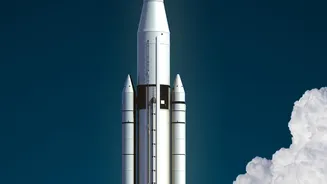
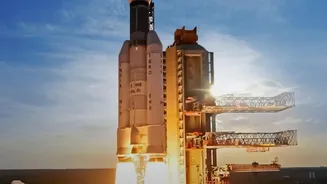
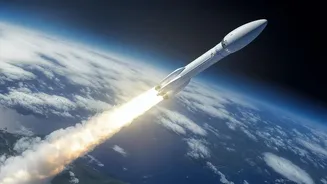
Lifting off from its Starbase facility in Texas, the 40-story Starship rocket embarked on its fourteenth and most ambitious test flight. The mission plan was simple in concept but immense in execution: achieve orbit. After a powerful ascent, the Super
Heavy booster separated from the Starship upper stage and performed a controlled splashdown in the Gulf of Mexico. The Starship stage then ignited its own engines, pushing through the upper atmosphere. Despite an early shutdown of one engine, mission controllers pressed ahead, and Starship successfully performed its final burn to enter a stable low Earth orbit, a first for the program. The moment confirmed that the world's most powerful launch vehicle could indeed reach the velocity required to circle the planet. The flight was not flawless and was cut short from its planned ten hours to just under three, but its primary objective was met.
Why Orbit is a Game-Changer
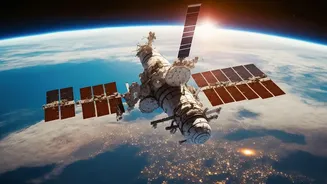
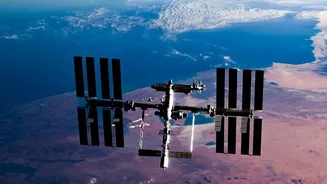
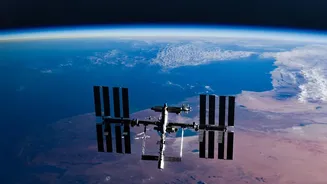
Previous Starship tests were suborbital, meaning the vehicle flew high and fast but on a trajectory that would inevitably bring it back to Earth without circling the globe. Reaching orbit is a fundamentally different and more difficult challenge. It requires achieving a speed of over 26,000 kilometres per hour, allowing the spacecraft to continually 'fall' around the curvature of the Earth. This successful orbital flight demonstrates that Starship has crossed a critical threshold. It proves the vehicle can perform all the necessary steps to become an operational spacecraft, capable not just of quick hops but of sustained flight in space. This opens the door to its intended functions: deploying satellites, servicing space stations, and eventually, embarking on long-duration interplanetary journeys. During this flight, Starship successfully deployed 26 next-generation Starlink satellites, marking its first operational payload delivery and proving its commercial utility.
The Gateway to the Moon and Mars
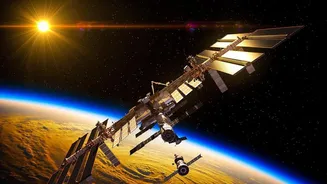
Achieving orbit is not the end goal but rather the starting line for SpaceX's grander ambitions. Starship was designed from the ground up to make humanity a multi-planetary species. NASA has selected Starship to serve as the human landing system for its Artemis program, which aims to return astronauts to the lunar surface for the first time in over 50 years. Missions to the Moon and beyond will require in-orbit refuelling, where multiple Starship 'tanker' flights top up a Moon-bound Starship in Earth orbit. This orbital flight is the first step in proving that such complex operations are feasible. Beyond the Moon, the ultimate destination for Starship is Mars. The sheer size and reusability of Starship are intended to make it possible to transport the hundreds of people and millions of tons of cargo needed to establish a self-sustaining city on the Red Planet.
The Economics of Full Reusability
The core innovation of Starship is its design for full and rapid reusability. Both the Super Heavy booster and the Starship upper stage are intended to be recovered, refurbished, and flown again quickly. This is a radical departure from traditional rocketry and even an evolution of SpaceX's own Falcon 9, which only reuses its first stage. By recovering both stages, SpaceX aims to drastically reduce the cost of launching mass into orbit. Projections suggest Starship could lower launch costs by a factor of 100 compared to expendable rockets, potentially bringing the cost per kilogram to orbit down to a few hundred dollars. This dramatic cost reduction could transform the space economy, enabling massive satellite constellations, private space stations, and large-scale scientific missions that are currently cost-prohibitive. The goal is to make spaceflight more like air travel, where the vehicle's cost is spread over many flights.
What Happens Next?
While reaching orbit is a monumental success, the work is far from over. The next major hurdle is demonstrating routine and reliable recovery of both the booster and the ship. SpaceX has already successfully caught Super Heavy boosters with the giant 'chopstick' arms of its launch tower, but has yet to attempt this with the Starship upper stage. Future flights will focus on perfecting the atmospheric re-entry and landing of both vehicles, with the goal of catching them at the launch site for rapid turnaround. Engineers will also be analysing the data from this flight to understand the performance of the heat shield and the engine anomaly. Getting Starship certified to carry astronauts for NASA's Artemis missions will be another key focus, with the first crewed landings on the Moon targeted for the late 2020s.