




The City of Palaces
To understand the nickname, one must go back to when Kolkata, then Calcutta, was the capital of British India from 1772 to 1911. During this era, the British East India Company and later the British Raj embarked on a massive building spree. Their goal
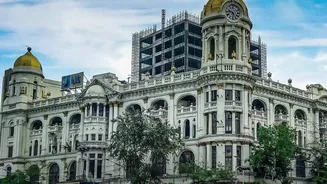
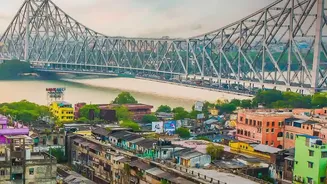
was to create a capital that reflected the power and permanence of the empire, a 'home away from home' that mirrored the grandeur of London. The city's location on the Hooghly River, a major trade artery, was also compared to London's position on the Thames, further cementing the connection. The result was a stunning collection of buildings in Neoclassical, Gothic Revival, and Victorian styles, earning Kolkata another moniker: the 'City of Palaces'.
Victoria Memorial: An Imperial Icon
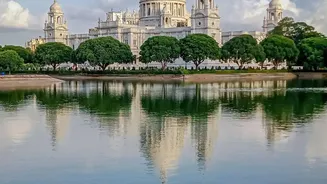
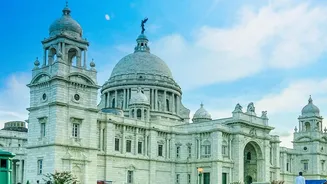
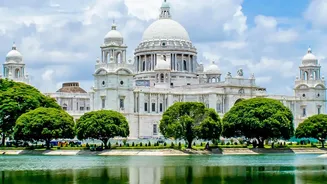
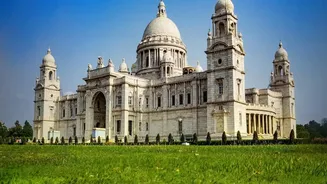
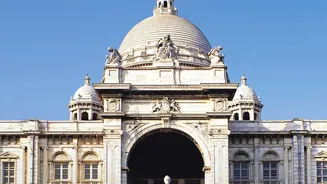
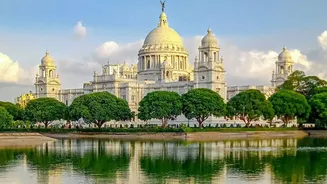
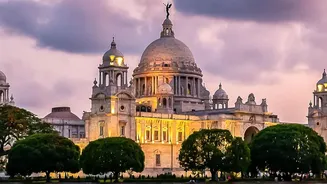
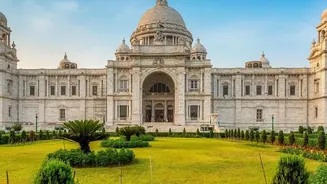
Perhaps no single structure embodies this legacy more than the Victoria Memorial. Conceived by Lord Curzon after Queen Victoria's death in 1901, this breathtaking white marble monument was intended as a grand tribute to the Empress. Built between 1906 and 1921, its design, created by architect William Emerson, is a blend of British and Mughal architectural styles known as the Indo-Saracenic style. Its soaring dome, sprawling gardens, and use of Makrana marble—the same material used for the Taj Mahal—make it one of Kolkata's most recognized landmarks and a powerful symbol of the colonial era.
Dalhousie Square: The Administrative Heart
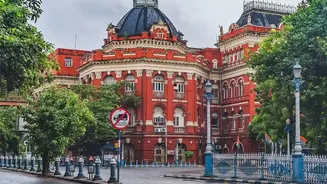
The epicentre of British administrative power was Dalhousie Square, now known as B.B.D. Bagh. This area hosts a dense concentration of colonial buildings that once served as the nerve centre of the Raj. The most prominent is the Writers' Building, a massive Greco-Roman structure with a distinctive red brick facade that originally housed the junior clerks, or 'writers', of the East India Company. Nearby stands the General Post Office (GPO), with its towering Corinthian columns and majestic dome, and the former Town Hall, built in a Doric style for public gatherings. Walking through this square feels like stepping back in time, with each building telling a story of imperial governance and commerce.
Architectural Echoes Across the City
The architectural similarities to London extend beyond the major monuments. St. Paul's Cathedral, an imposing example of Gothic Revival architecture, evokes the great churches of England. The Calcutta High Court's neo-Gothic design was inspired by a building in Belgium but fits seamlessly into the city's European aesthetic. Grand mansions, stately clubs like the Bengal Club, and even the tram system—the only one still operating in India—all contribute to an old-world charm that strengthens the comparison to the British capital. These aren't just isolated buildings; they form a cohesive architectural landscape that gives entire districts a distinctly European feel.
A Complicated But Enduring Legacy
Today, the nickname 'London of India' is viewed with a mix of pride and complexity. For some, it's a recognition of the city's unique, world - class architectural heritage. For others, it's a reminder of a painful colonial past. Yet, unlike some places that erased physical remnants of colonialism, India and Kolkata have largely preserved this heritage. These buildings are not just relics; they are living parts of the city, housing government offices, museums, and places of worship. They stand as witnesses to history, representing the city's evolution from a colonial capital to a vibrant, modern Indian metropolis that has absorbed its past without being entirely defined by it.