


The Planet Zoo Is Getting Crowded
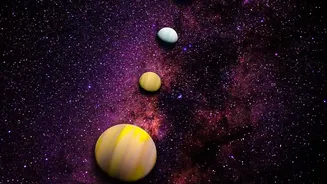
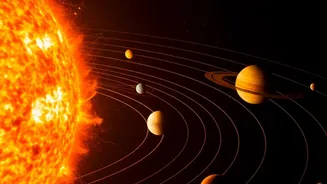
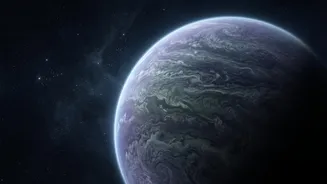
For decades, astronomers have been discovering thousands of exoplanets—worlds orbiting stars other than our Sun. To make sense of this cosmic menagerie, they are sorted into broad categories. We have gas giants like Jupiter, smaller ice giants like Neptune,
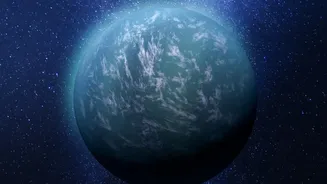
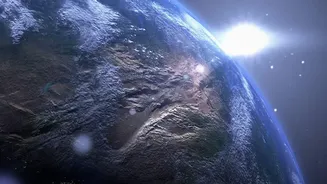
and rocky, terrestrial planets like our own Earth. A common and fascinating category is the 'super-Earth'. These are planets more massive than Earth but lighter than Neptune, a class of world that, curiously, doesn't exist in our own solar system. This category has become a catch-all for a wide variety of planets, from those that could be larger, rocky versions of our world to others that are likely shrouded in thick gas.
When 'Super' Isn't Enough
The problem is that the 'super-Earth' label has become too broad. As we discover more planets, we're finding some that are technically the size of a sub-Neptune but are far too dense to have the thick, puffy gas envelope we'd expect. Standard theories of planet formation suggest that once a planetary core reaches a certain mass, its gravity should be strong enough to pull in huge amounts of lightweight gases like hydrogen and helium from the dust and gas disk it formed in. This process should create a gas giant or a mini-Neptune. Yet, astronomers keep finding baffling exceptions: planets with the mass of Neptune or even more, but packed into a much smaller, solid body. These worlds are so dense they challenge everything we thought we knew.
Defining the Mega-Earth
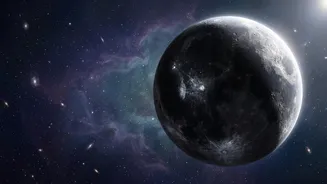
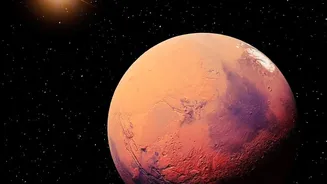
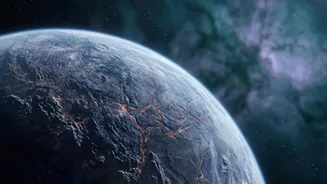
To solve this classification problem, astronomers have proposed a new category: the mega-Earth. While the term has been used informally for about a decade, a recent push seeks to give it a formal definition. According to a 2026 proposal, a mega-Earth is a planet with a radius between 2.1 and 5 times that of Earth, but with a density greater than Earth's (5.5 grams per cubic centimetre). This distinguishes them from gassy sub-Neptunes of a similar size. One such candidate, GJ 523b, is about 2.5 times wider than Earth but a staggering 23.5 times more massive. Its density is far higher than what existing models predict for a planet of its size, suggesting it is almost entirely rock and iron with very little gas.
How Do You Make a Mega-Earth?
The existence of these ultra-dense worlds poses a major puzzle. If they are too big to have avoided accumulating a massive gas atmosphere, how did they form? Scientists have a few dramatic theories. One idea is that these are the stripped cores of former gas giants. Perhaps the planet formed close to its star, and the intense radiation and stellar winds blasted away its gaseous envelope over millions of years, leaving only the dense core behind. Another violent possibility is that they are the product of colossal planetary collisions. Imagine two or more smaller planets smashing into each other, merging their heavy cores while the impact blows their lighter atmospheres out into space. This would result in a single, extraordinarily dense and massive new world.
Why New Labels Matter in Science
Creating a new category like 'mega-Earth' isn't just about organising the planetary zoo. It's a crucial step in advancing our understanding of the universe. By formally grouping these strange, ultra-dense worlds, scientists can study them as a distinct population. This allows them to test formation theories and refine computer models. Are mega-Earths rare freaks of nature, or do they form under specific conditions that we haven't understood yet? Answering this question helps us piece together the complex and often violent story of how planetary systems, including our own, come to be. Each new class of planet reveals another pathway nature can take, expanding our knowledge of what’s possible in the cosmos.