






A Global Stage for a National Mission
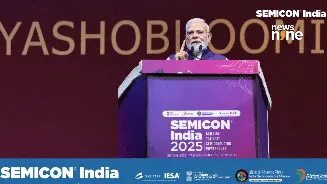
The event at the heart of this focus is SEMICON India 2026, scheduled to take place from September 17-19. This isn't just another industry conference; it's the fifth and largest edition of India's premier semiconductor event, jointly organised by the India Semiconductor
Mission (ISM) and the global industry association SEMI. Its inauguration by Prime Minister Narendra Modi underscores its national importance. The venue choice, Yashobhoomi—India's largest convention centre—is symbolic. Hosting an event of this scale, expected to draw over 500 exhibitors and delegations from over 40 countries, sends a clear message: India is ready to compete on the world stage. The theme, "Silicon to Systems: Building the Ecosystem," signals a strategic shift from simply attracting investment to creating a fully integrated value chain.
The High-Stakes World of Semiconductors
Semiconductors, or chips, are the brains behind every modern electronic device, from smartphones and cars to data centres and advanced medical equipment. For decades, their manufacturing has been concentrated in a few countries, creating supply chain vulnerabilities. India, which currently imports the vast majority of its chips, has launched an ambitious national strategy to change this. The India Semiconductor Mission (ISM) is a multi-billion-dollar government initiative designed to attract global players and nurture domestic champions in chip manufacturing, packaging, and design. The goal is two-fold: to achieve technological self-reliance ('Atmanirbhar Bharat') and to establish India as a trusted and resilient hub in the global supply chain. With India's own chip demand projected to double from roughly US$100 billion to US$200 billion, the economic stakes are immense.
From Policy to Production Lines
SEMICON India 2026 arrives at a crucial moment. The initial phase of the government's program has already yielded tangible results. Twelve projects have been approved under the first iteration of the mission, with three already starting commercial production in Sanand, Gujarat. Major global names like Micron have set up facilities, alongside domestic players like Tata Electronics and CG Power, turning Gujarat into a burgeoning semiconductor hub. Prime Minister Modi is also scheduled to host a high-level roundtable with global semiconductor CEOs just before the event, aiming to secure fresh investments and strengthen partnerships. The government has expressed confidence that five to six semiconductor projects could be in commercial production by the end of 2026, marking a significant acceleration of its plans.
Building an Entire Ecosystem
The conference's focus extends beyond just manufacturing plants, known as 'fabs'. A key objective is to build the entire support system around them. This includes fostering companies that supply semiconductor-grade materials, specialty chemicals, and advanced manufacturing equipment. The event will feature dedicated platforms for startups, innovation, and workforce development, acknowledging that a skilled talent pool is as critical as the physical infrastructure. With one of the world's largest pools of chip design engineers, India has a strong foundation. The next phase of the mission, dubbed Semicon 2.0, aims to expand support for research, design, and talent development to create a self-sustaining cycle of innovation and production.
The Road Ahead: Challenges and Opportunities
Despite the significant momentum, the path to becoming a semiconductor powerhouse is challenging. Chip manufacturing is incredibly complex and capital-intensive, requiring uninterrupted power, vast amounts of pure water, and a highly skilled workforce. Competition for investment is fierce globally. However, the government's sustained policy push and the growing interest from global giants like ASML, Applied Materials, and IBM Research, all expected at the event, signal strong confidence in India's potential. An immersive exhibition at SEMICON India, titled the "Sand to Silicon to Systems" Value Chain Experience, is designed to demonstrate that India is progressing from merely having a plan to possessing real capability across the entire production chain.