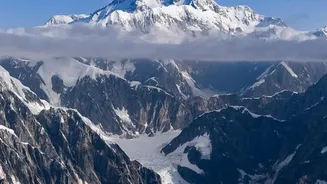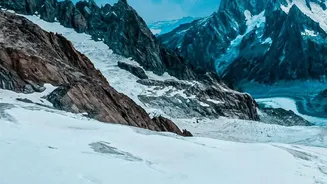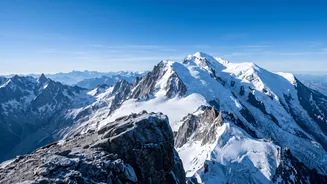





An Expedition with a Purpose
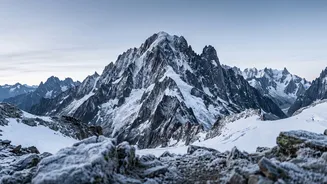
Every couple of years since 2001, a team of expert surveyors embarks on a challenging expedition to the summit of Mont Blanc. This isn't a trip for leisure; their goal is to measure the precise height of Western Europe's tallest peak. The group, primarily
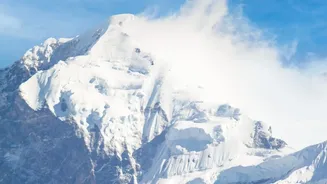
from the Haute-Savoie departmental chamber of surveyors, carries nearly 30 kilograms of high-tech measuring equipment to the top. The mission's purpose is to gather crucial data on the mountain's ice and snow cap, creating a long-term record to help scientists understand the impacts of climate change on the Alps. While the mountain's rock summit is stable at about 4,792 metres, the thick layer of ice and snow on top is in constant flux, influenced by wind, precipitation, and temperature.
From Satellites to Drones: The Technology
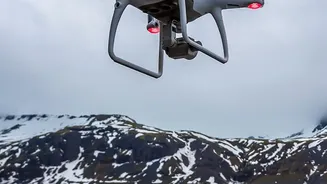
The days of simple triangulation are long gone. Today's surveyors use a suite of sophisticated tools to achieve centimetre-level accuracy. The core of the operation relies on the Global Navigation Satellite System (GNSS), which includes GPS, as well as European, Russian, and Chinese satellite networks for ultra-precise positioning. A surveyor places a receiver at the highest point of the snowpack for a prolonged period to get an exact reading. In recent expeditions, the team has also deployed drones and ground-penetrating radar. Drones help create a detailed 3D model of the summit's ice cap, while the radar allows them to measure the thickness of the snow and ice, providing a clearer picture of the mountain's overall health beyond just its peak height.
The Latest Measurement: A Surprising Result
In a press conference on October 14, 2026, surveyors announced the latest official height: 4,807.47 metres, measured in September. This was a surprising increase of 1.88 metres from the 4,805.59 metres recorded in 2023, which was the lowest measurement since modern surveys began. The height of Mont Blanc has fluctuated over the years, reaching a high of 4,810.90 metres in 2007 before a general downward trend. The 2026 result reverses this recent trend, bringing the summit closer to the historical height recorded in the late 19th century.
What Does a Rising Peak Mean for Climate Change?
It might be tempting to see a taller Mont Blanc as good news, but the experts urge caution. Jean des Garets, chief surveyor for the region, emphasised that 'the summit is constantly shifting' and that a single measurement is not conclusive evidence against climate change. Glaciologists explain that the height of the ice cap is heavily influenced by short-term weather, like wind and heavy snowfall, which can pile snow onto the summit even during a warm year. They distinguish between the summit's surface altitude and the overall ice mass of the mountain. Experts state that the increase in height does not contradict the well-documented retreat of Alpine glaciers at lower altitudes, which are melting at an alarming rate due to climate change. The data is for tracking long-term trends, not for drawing conclusions from year-to-year fluctuations.