

Gullfoss: The Golden Giant
One of the cornerstones of Iceland’s famous Golden Circle route, Gullfoss, or 'Golden Falls', is a sight to behold. The Hvítá river, fed by glacial meltwater, thunders down in two majestic tiers—first a shorter 11-metre drop, followed by a dramatic 21-metre
plunge into a deep canyon. The sheer volume of water creates a powerful roar and a constant cloud of mist, which on sunny days produces vibrant rainbows. Its name comes from the golden-brown hue the water takes on in the sunlight, a result of glacial sediment. Viewing platforms are strategically placed to offer breathtaking perspectives of its scale, though the lower path can be closed in winter due to ice. Its accessibility and raw power make it a quintessential Icelandic experience.
Skógafoss: The Classic Powerhouse
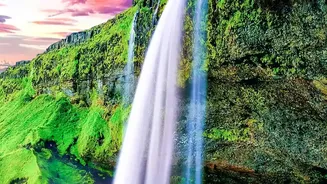
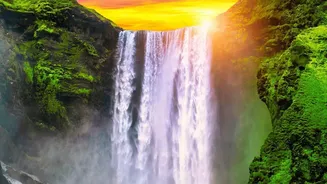
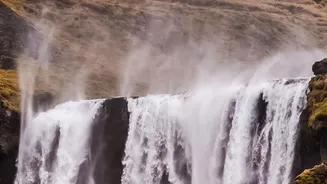
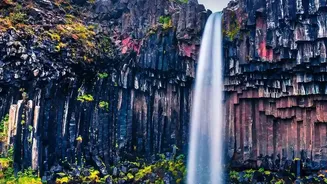
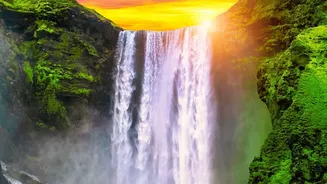
Located on the South Coast and easily visible from the main Ring Road, Skógafoss is the definition of a classic waterfall. It’s a perfect, wide curtain of water, 25 metres across, that drops 60 metres from cliffs that were once Iceland's coastline. The ground beneath it is flat, allowing you to walk right up to the base, though you should be prepared to get soaked by its powerful spray. This spray consistently creates single or even double rainbows on sunny days, making it a photographer's dream. For a different perspective, a steep staircase next to the falls leads to a viewing platform at the top, offering panoramic views and marking the start of the famous Fimmvörðuháls hiking trail.
Seljalandsfoss: The One You Can Walk Behind
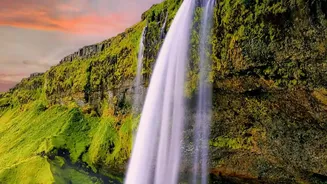
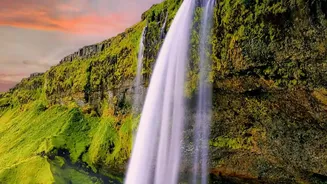
Also on the South Coast and just a short drive from Skógafoss, Seljalandsfoss offers a truly unique experience. While its 60-metre drop is impressive, its main attraction is the path that allows visitors to walk completely behind the cascading water. This provides an incredible 360-degree view and a thrilling sensory experience, feeling the roar and spray from within a cavern carved out by the water itself. The waterfall is fed by the Seljalandsá river, which originates from the Eyjafjallajökull glacier volcano. Remember to wear waterproof gear, as you will get wet, and be cautious on the slippery path. Nearby, the hidden gem Gljúfrabúi waterfall is tucked away inside a canyon, rewarding those who make the short walk.
Dettifoss: Europe's Raw Power
Situated in Northeast Iceland, Dettifoss is renowned for being one of the most powerful waterfalls in Europe by volume. With an average flow of 193 cubic metres per second, the grey, sediment-rich water of the Jökulsá á Fjöllum river crashes 44 metres down into a rugged canyon. The ground here literally vibrates from the force, and the roar can be heard from a kilometre away. Unlike the clearer falls of the south, Dettifoss has a raw, almost menacing character that showcases the untamed power of nature. It can be viewed from both an east and west bank, each offering different perspectives of its immense scale.
Goðafoss: The Waterfall of the Gods
Located in North Iceland, Goðafoss is not only one of the most beautiful waterfalls but also one steeped in history. This elegant, horseshoe-shaped waterfall is 12 metres high and 30 metres wide. Its name, 'Waterfall of the Gods', comes from a pivotal moment in Icelandic history in the year 1000. According to legend, the lawspeaker Þorgeir Þorkelsson made Christianity the official religion of Iceland and symbolically threw his statues of the old Norse gods into the falls. Visitors can admire its beauty from viewing platforms on both sides of the river, connected by a bridge.
Kirkjufellsfoss: The Most Photographed View
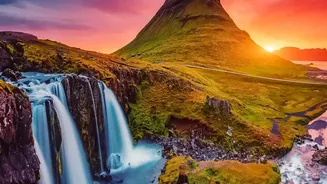
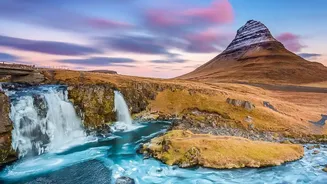
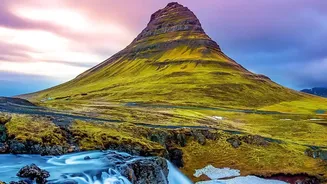
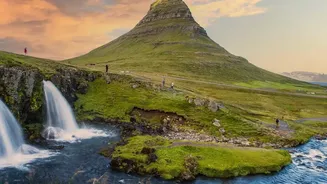
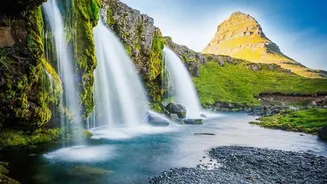
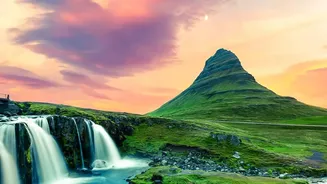
On the Snæfellsnes Peninsula, Kirkjufellsfoss itself is a relatively modest, multi-tiered cascade. However, its fame comes from its picture-perfect composition with the distinctively shaped Kirkjufell ('Church Mountain') rising behind it. This iconic view has become one of Iceland's most photographed scenes, famously appearing as 'Arrowhead Mountain' in the TV series Game of Thrones. The waterfall’s charm lies not in its size but in its harmonious relationship with the surrounding landscape. A small bridge and walking paths allow photographers and visitors to easily find the classic vantage point for a truly unforgettable image, especially at sunrise or under the Northern Lights.