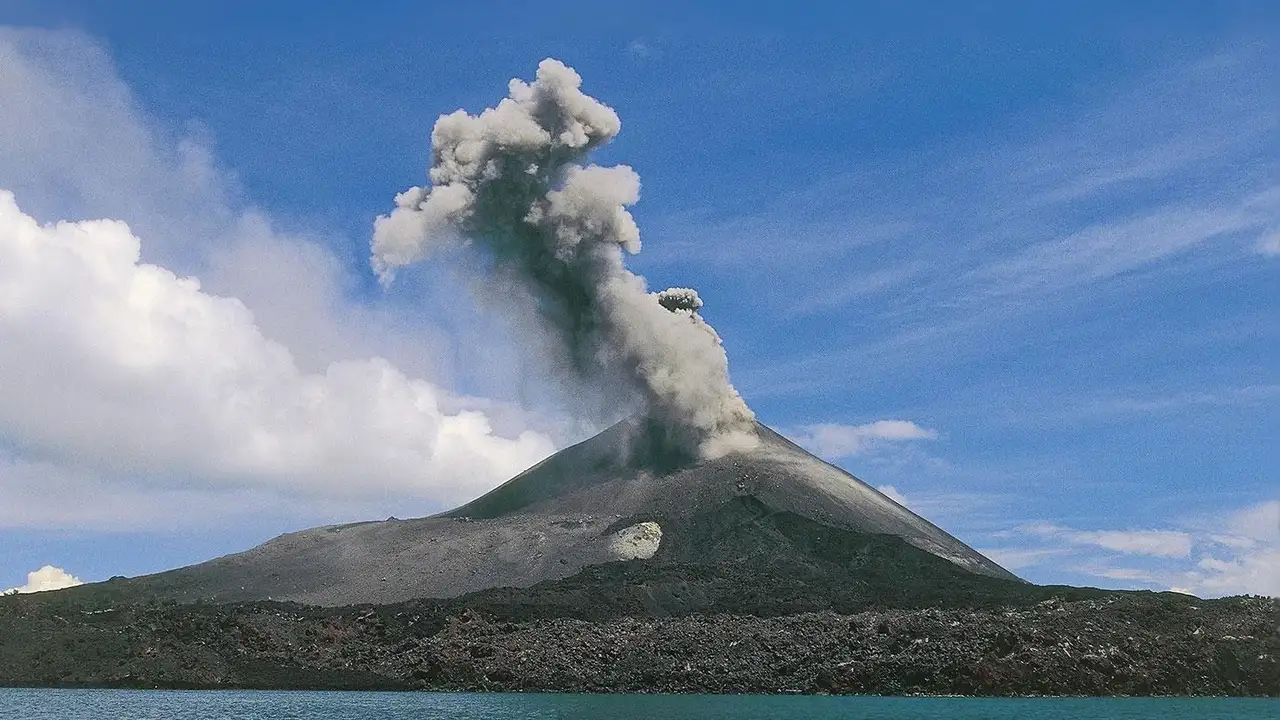


Mount Etna, Italy
Dominating the skyline of eastern Sicily, Mount Etna is one of Europe's most active volcanoes and a major tourist draw. Its frequent eruptions are both a spectacle and a regular source of disruption. In early August 2026, a fresh eruption sent a plume
of volcanic ash into the sky, forcing the temporary suspension of flights at Sicily's main airport in Catania. This recurring issue highlights the direct impact Etna has on travel logistics. While authorities are adept at managing the situation and tour operators offer guided excursions to its lunar-like landscapes, the volcano's activity is a constant, tangible force that can ground planes and alter travel plans with little warning.
Kīlauea, Hawaii, USA
Located in Hawaiʻi Volcanoes National Park, Kīlauea is one of the world's most active and accessible volcanoes, offering a front-row seat to the planet's creation. Since late 2024, it has been erupting episodically. As of mid-August 2026, the volcano is in a pause, but scientists at the Hawaiian Volcano Observatory are forecasting the next episode of lava fountaining to begin between August 13 and 17. While these events provide breathtaking viewing opportunities from safe distances, they also come with necessary restrictions. Areas of the park can be closed due to hazards like volcanic gases and unstable ground, reminding visitors that even in a highly monitored environment, safety is paramount and access is never guaranteed.
Reykjanes Peninsula, Iceland
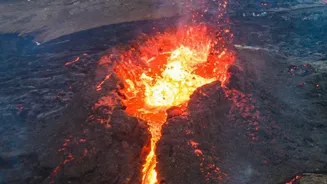
Iceland, the 'Land of Fire and Ice', has lived up to its name with a dramatic series of eruptions on the Reykjanes Peninsula since 2021, awakening a volcanic system that had been dormant for centuries. The activity, particularly near the town of Grindavík, has become a significant travel story, leading to evacuations and the temporary closure of world-famous attractions like the Blue Lagoon. While the most recent major eruption ended in August 2025, scientists report that magma is once again accumulating beneath the surface, indicating another event is likely. This ongoing cycle has transformed the landscape and serves as a stark example of how volcanic activity can reshape not just the land, but also access to it.
Fuego Volcano, Guatemala
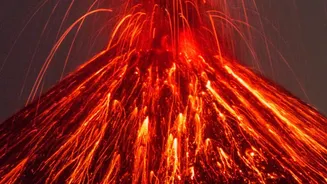
Volcán de Fuego, meaning 'Volcano of Fire', is one of Central America's most consistently active volcanoes. Its proximity to the popular tourist hub of Antigua makes it a common sight, but its power demands respect. In early August 2026, Fuego entered a more intense eruptive phase, sending down dangerous pyroclastic flows and prompting authorities to issue a nationwide orange alert. Evacuations were ordered for nearby communities, and a major highway was closed as a precaution. This event was a sobering reminder of Fuego's potential danger, which in 2018 caused a devastating eruption. For travellers, it underscores the reality that watching from a distance is one thing, but local communities live with a constant, and sometimes immediate, threat.
Popocatépetl, Mexico
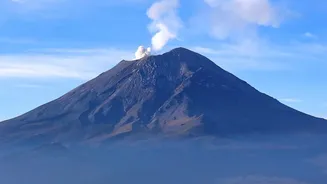
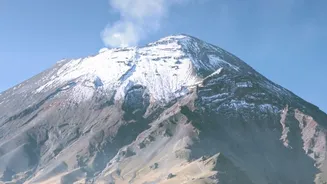
Affectionately known as 'El Popo', this towering stratovolcano is a constant presence on the horizon for millions, including residents of Mexico City just 70 kilometres away. As one of Mexico's most active volcanoes, it regularly emits plumes of gas and ash. In early August 2026, Popocatépetl again showed increased activity, with ash emissions keeping it under a 'Yellow Alert, Phase 2'. This alert level serves as a recommendation for the public not to approach the crater due to the risk of falling fragments. While it has not caused major widespread disruption recently, its constant low-level activity is a simmering reminder of the immense power being monitored just outside one of the world's largest metropolitan areas.
Stromboli, Italy
Known for millennia as the 'Lighthouse of the Mediterranean', the island volcano of Stromboli provides one of the most reliable volcanic shows on Earth. Its near-constant, small-scale explosions have long drawn travellers who climb its slopes on guided tours for a glimpse of the fireworks after dark. Yet, this familiarity can breed a false sense of security. Stromboli is capable of much larger, more violent explosions, as demonstrated by a significant event in June 2026. These paroxysms serve as a powerful reality check, proving that even the most predictable volcanoes are fundamentally untamed. Access is strictly controlled by authorities based on current activity, reinforcing the fact that nature, not the tourist, has the final say.