

Meet NASA’s New Cosmic Detective
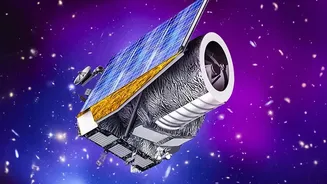
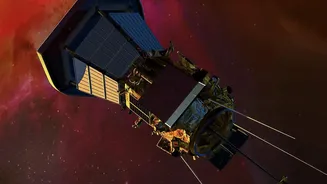
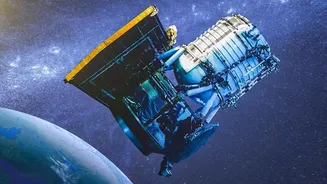
NASA recently announced it is moving forward with the PRobe far-Infrared Mission for Astrophysics, or PRIMA. The decision puts the mission on a path for further design and development, with a potential launch as early as 2033 for a five-year survey of
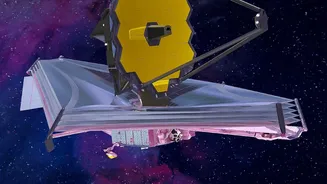
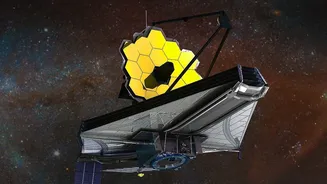
the sky. Managed by NASA's Jet Propulsion Laboratory, PRIMA is not just another telescope; it represents the first in a completely new class of mission called Probe Explorers. These missions are strategically designed to be more ambitious than smaller projects but more focused and cost-effective than flagship observatories like the James Webb Space Telescope (JWST), with a project cost capped at around $1.2 billion. This new category was recommended by the scientific community to tackle high-priority questions without the massive budget of a flagship mission. PRIMA was selected for its immense scientific promise and its technical feasibility, making it a cornerstone of NASA's next decade of cosmic exploration.
The Universe’s Hidden Light
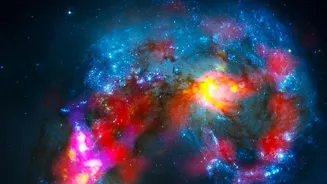
So, what makes PRIMA so special? It’s all about the light it will see. The universe communicates in a vast spectrum of light, much of which is invisible to the human eye. While observatories like JWST are masters of the near and mid-infrared, and radio arrays like ALMA excel at longer radio waves, there’s a crucial blind spot in between: the far-infrared. This 'wavelength gap' has left a significant hole in our understanding of the cosmos. Far-infrared light is emitted by very cold objects—things that are too cool to shine brightly in the wavelengths Webb can see. Think of it as a missing color in the rainbow of cosmic information. This light can pass through the thick clouds of cosmic dust that obscure other views, giving astronomers a direct line of sight into some of the most hidden and crucial processes in the universe. PRIMA, with its 1.8-meter mirror cooled to incredibly low temperatures, is specifically designed to finally fill this gap and capture this elusive light with unprecedented sensitivity.
Peering into Cosmic Nurseries
By tuning into the far-infrared, PRIMA will address some of the biggest questions in astrophysics. One of its primary goals is to study the very beginnings of stars and planets. The dense, dusty clouds where stars are born are opaque to most telescopes, but far-infrared light can pierce the veil. PRIMA will be able to map these stellar nurseries and even trace the distribution of water vapor within protoplanetary disks—the spinning clouds of gas and dust where planets form. This could provide fundamental clues as to how Earth got its water. Furthermore, PRIMA will investigate how galaxies and the supermassive black holes at their centers grow and evolve over billions of years. It will also trace the buildup of cosmic dust and heavy elements, helping to explain why the universe we see today looks the way it does. Scientists are excited because many of these key questions simply cannot be answered with current technology; the necessary spectral signatures exist only in the far-infrared.
A New Strategy for Discovery
The selection of PRIMA as the first Probe Explorer marks a strategic shift for NASA. For decades, the agency has relied on its long-running Explorers Program, which has launched over 100 missions since 1958, to conduct focused scientific research. However, there has been a growing need for missions that fall between the smaller Explorer-class projects and the colossal, decade-spanning flagship programs. The Probe-class missions are the answer. They provide a predictable, medium-cost pathway for tackling major scientific goals outlined by the National Academies' Decadal Survey, which represents a consensus from the astrophysics community. This approach allows NASA to maintain a steady cadence of high-impact missions, ensuring a consistent pipeline of discovery. By launching premiere-class missions like Webb and the Roman Space Telescope, and now kicking off the next decade with PRIMA, NASA is building a comprehensive and complementary fleet of observatories to create a more complete picture of the cosmos.