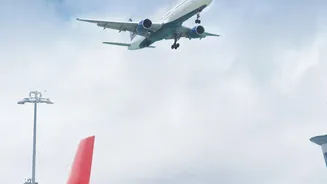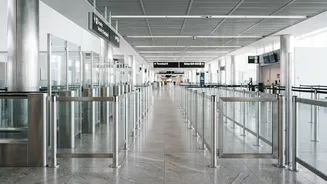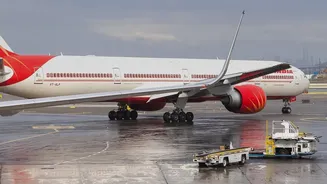






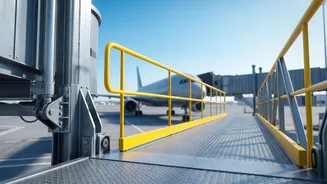

Ever wondered why you're left waiting on the tarmac or at the gate, even when the plane is right there? The answer lies in a complex dance between stringent security protocols and the high-pressure race to get aircraft ready for its next flight.
The Race Against Time: What is Aircraft Turnaround?
In aviation,
'turnaround time' is the critical period from when an aircraft parks at the gate to when it pushes back for its next departure. It's a highly coordinated process involving disembarking passengers, unloading baggage, cleaning the cabin, refuelling, loading new catering, and conducting safety checks before new passengers can board. For low-cost carriers, this entire sequence can be as short as 25-40 minutes, while larger, long-haul flights may take 90 minutes or more. The goal is to keep expensive aircraft in the air, generating revenue, rather than sitting idle on the ground. Any delay in this sequence—from late passengers to a slow baggage loader—can have a ripple effect on the flight schedule.
India's Unseen Shield: The Role of BCAS
The primary guardian of aviation security in India is the Bureau of Civil Aviation Security (BCAS). Established as an independent body, BCAS sets the standards for security at all Indian airports, for airlines, and even for ground handling agencies. Its rules govern everything from the specifications of screening equipment to who is allowed to access restricted areas of the airport, known as the 'airside'. Every person, from a pilot to a cleaner, needs a verified Aerodrome Entry Permit (AEP) to enter these zones. These multi-layered rules are designed to prevent 'unlawful interference', ensuring the safety of aircraft, passengers, and crew. During periods of heightened alert, such as around Independence Day, these security measures are often enhanced, leading to advisories about longer processing times.
Where Speed and Safety Collide
The conflict arises when the need for speed clashes with the necessity of security. Access to the aircraft itself is strictly controlled under BCAS and DGCA (Directorate General of Civil Aviation) regulations. For example, an aircraft operator is responsible for controlling all access from the security check to departure. This includes security searches of the aircraft before it enters a restricted area and before passengers board. Ground handling staff, who perform many turnaround tasks, must be regular employees with verified backgrounds, and they require clearance to work airside. A seemingly simple task like refuelling while passengers are on board requires specific safety procedures and supervision. If there's a mismatch between the passenger manifest and those who have boarded, the flight can be held while the missing passenger—or their checked baggage—is located and removed, a strict security requirement.
The Impact on Ground Staff and Crew
The rules don't just affect passengers. Flight and cabin crew access to the aircraft is also tightly managed. Even who can enter the cockpit is governed by specific DGCA circulars, limiting access to authorised personnel only. All staff entering the airside must have their permits and identification visible at all times. Any procedural lapse can deny access, halting the turnaround process. For instance, if a catering truck or a maintenance engineer is delayed at a security checkpoint, it has an immediate knockon effect. With multiple teams—fuelling, baggage, cleaning, catering—working in parallel under immense time pressure, a delay in one area forces others to wait, jeopardising the ontime departure.
When Systems Fail: The Domino Effect
The reliance on technology adds another layer of vulnerability. As seen in a recent network disruption at Mumbai's airport, when automated systems like egates and checkin counters fail, operations must switch to manual processing. This significantly slows down passenger flow, causing queues and delays even before anyone gets near the aircraft. A delay in passenger security screening means boarding is delayed, which in turn means the aircraft misses its scheduled departure slot. In response to long delays after boarding, BCAS has even issued guidelines allowing passengers to be deplaned back into the terminal, which requires another set of coordinated security procedures.