







A Nation Divided, A Leader Resolved
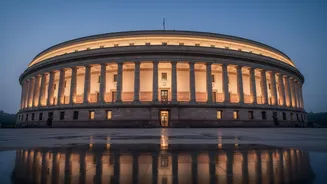
While Jawaharlal Nehru delivered his iconic "Tryst with Destiny" speech to a jubilant Constituent Assembly, Gandhi was in Calcutta (now Kolkata). He had no interest in the official ceremonies, viewing the day with sorrow as much as joy. The freedom he had fought
for his entire life had arrived, but at the brutal cost of Partition, which he had vehemently opposed. For Gandhi, the division of the subcontinent into India and Pakistan, and the horrific communal violence that ensued, was a deep personal and political failure. He saw little reason to celebrate political freedom when the people were being consumed by mutual hatred.
The Mission in Calcutta
Gandhi's original plan was to travel to Noakhali in East Bengal (now Bangladesh), a region scarred by anti-Hindu violence the previous year. However, upon his arrival in Calcutta on August 9, 1947, a delegation of local Muslim leaders pleaded with him to stay. They feared that with Partition, the Hindu majority would seek revenge for past violence. Gandhi agreed, but on one condition: that H.S. Suhrawardy, the former Muslim League Premier of Bengal who was widely blamed for the 'Great Calcutta Killings' of 1946, would live and work alongside him. They took up residence in a derelict house called Hydari Manzil in Beliaghata, a riot-torn, Muslim-majority area, placing themselves at the epicentre of the conflict.
The 'One-Man Boundary Force'
Initially, their presence was met with hostility. Angry Hindu crowds demonstrated against Gandhi, shouting "Go back Gandhi" upon his arrival. But Gandhi's approach was unwavering. He held daily prayer meetings, reading from the scriptures of all religions, and walked through the riot-affected streets with Suhrawardy, appealing directly to the people. This unlikely alliance had a profound effect. The sight of Gandhi and the man many held responsible for their suffering working together for peace began to calm the city. The transformation was so dramatic that by August 15th, Hindus and Muslims were celebrating Independence together on the streets of Calcutta. Lord Mountbatten, the last Viceroy, famously wrote to Gandhi, paying tribute to his "One-Man Boundary Force" in Bengal, which had achieved what 55,000 soldiers could not in Punjab.
A Fast to Restore Sanity
The peace, however, was fragile. By the end of August, violence erupted once more. On September 1, a distressed Gandhi declared he would begin a fast unto death, to end only "if and when sanity returns to Calcutta". The fast lasted 73 hours. As his condition weakened, the city was gripped with anxiety. Leaders from all communities, including former rioters, came to his bedside, pleading with him to stop. They laid down their weapons at his feet and signed a collective pledge to maintain peace. Convinced of their sincerity, Gandhi broke his fast on September 4, with Suhrawardy handing him a glass of sweet lime juice. The violence in the city ceased.
A Statement on True Freedom
Gandhi's absence from Delhi's celebrations was not a boycott but a powerful, deliberate statement. He believed that true freedom, or 'Swaraj', was not merely the transfer of political power from British to Indian hands. It was about self-rule, self-restraint, and the ability of Indians to live together in harmony. In his own words, peace between Hindus and Muslims was more important than the proclamation of independence. By choosing to be on the frontlines of communal hate rather than in the halls of power, he demonstrated that the work of building a nation was far from over. It had to be done not in palaces, but in the hearts of its people.