


The So-Called 'Third Pole' Is Melting
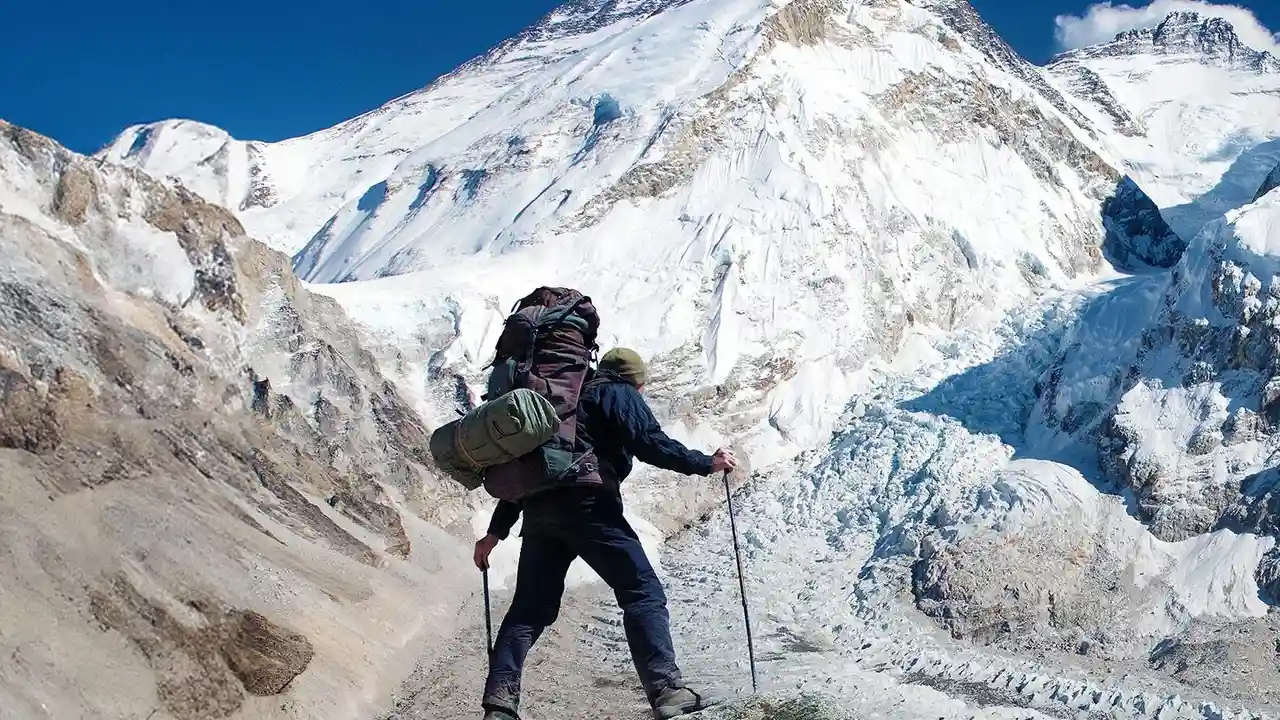
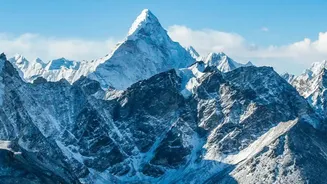
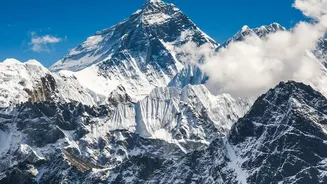
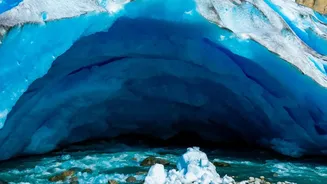
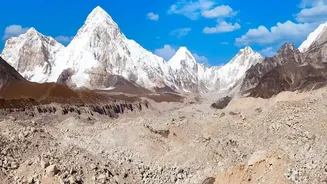
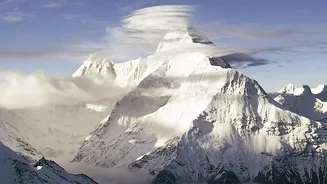
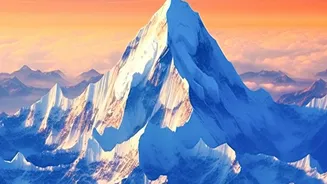
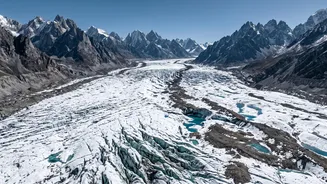
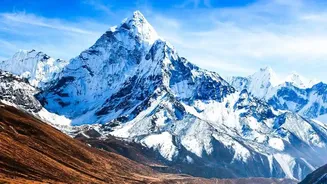
The Hindu Kush Himalaya region holds the largest volume of ice outside the polar regions, earning it the nickname the 'Third Pole'. But this critical cryosphere is in crisis. According to a landmark 2026 report from the International Centre for Integrated
Mountain Development (ICIMOD), glaciers across the region are melting at an alarming pace, with the rate of ice loss doubling since the year 2000. Nepal's mean annual temperature is rising faster than the global average, exacerbating the melt. This isn't just about receding ice lines; it's about the very stability of the mountainous landscape. As glaciers shrink, the mountains themselves become more fragile.
From Melting Ice to Inland Tsunamis
The most significant and immediate danger comes from events known as Glacial Lake Outburst Floods (GLOFs). As glaciers retreat, they leave behind large depressions that fill with meltwater, forming vast, unstable lakes. These lakes are often dammed by nothing more than loose rock and debris known as moraines. When these fragile dams fail, they can release millions of cubic metres of water in an instant, creating a catastrophic downstream flood. More recently, scientists are also concerned about complex 'cascading hazards'. A recent tragedy on August 26, 2026, on the Nepal-Tibet border was not a classic GLOF but an even more unpredictable ice-rock avalanche, where a massive part of a mountainside collapsed, turning into a fast-moving torrent of mud, water, and debris that buried entire villages. This highlights that the threat is multi-faceted, encompassing not just lake bursts but the very disintegration of the high-altitude landscape.
The Human and Economic Cost
For the people of Nepal, these developments are not abstract scientific findings but a matter of life and death. The August 2026 disaster claimed over a thousand lives, with thousands more missing, and destroyed an estimated 20,000 homes. Beyond the immediate human tragedy, the economic implications are staggering. The floodwaters wiped out critical infrastructure, including roads, bridges, and numerous hydropower facilities—the backbone of Nepal's economy. Nepal relies on its glacier-fed rivers for over 95% of its electricity and has ambitions to export power to its neighbours. The increasing frequency and intensity of these climate-induced disasters jeopardise the country's development path, trapping it in a cycle of destruction and costly reconstruction.
A Region on High Alert
In response to the growing threat, there is an urgent push for better monitoring and early warning systems. However, the sheer scale of the Himalayas makes this a monumental challenge. While classic GLOFs from expanding lakes can sometimes be monitored, the sudden nature of ice-rock avalanches makes prediction nearly impossible with current technology. Efforts are underway, supported by international partners like the Green Climate Fund and UNDP, to identify the most hazardous lakes, map downstream risk zones, and build resilience in vulnerable communities. This includes engineering solutions like controlled draining of glacial lakes and building stronger, more resilient infrastructure. However, experts agree that these are adaptive measures, not a cure.
Why It Matters Beyond Nepal's Borders
The instability of Himalayan glaciers is not just Nepal's problem. The region is the source of ten major river basins that provide water for nearly two billion people across Asia, including in India, Bangladesh, and China. Accelerated melting initially increases water flow, but as glaciers continue to shrink, it will eventually lead to severe water shortages, threatening food security and livelihoods downstream. The disasters also have cross-border implications, as a flood originating in one country can devastate communities in another. Ultimately, the plight of Nepal is a stark warning for the entire world. It demonstrates that the consequences of global climate change are not a distant future threat but a present-day reality, with the most vulnerable nations paying the heaviest price for a crisis they did little to create.