




The Final Dress Rehearsal
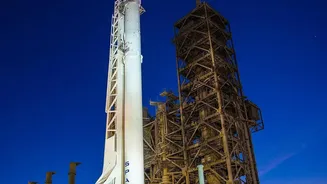
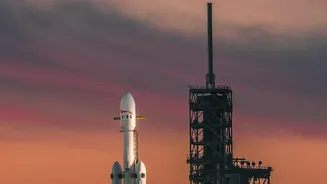
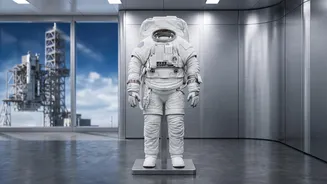
Before the thunderous roar of a Falcon 9 rocket propels them into orbit, every crewed mission undergoes a crucial simulation known as the dress rehearsal. On Tuesday, the Crew-13 astronauts donned their sleek, white SpaceX pressure suits, traveled to the launch
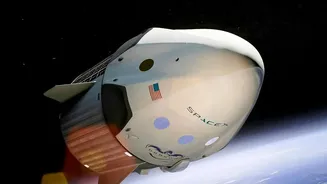
pad, and boarded their Dragon spacecraft, named Grace. This exercise, sometimes called a 'dry' rehearsal, allows the crew and the extensive ground support teams to walk through the entire launch day sequence, from suit-up to the final seconds of the countdown. It’s a vital practice that ensures every team member knows their precise role and that all procedures are flawless, helping to identify any potential issues before the rocket is actually fueled for flight. With this successful rehearsal completed, the mission has passed its last major operational test before liftoff.
Meet the International Crew-13
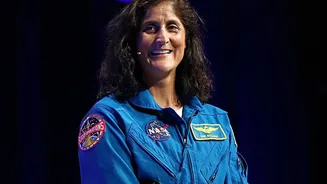
At the heart of this mission is a diverse, international crew of four astronauts who will live and work in space for the next six months. The mission is led by NASA astronaut Jessica Watkins, serving as spacecraft commander, with fellow NASA astronaut Luke Delaney as the pilot. In these roles, Watkins is responsible for the overall mission and crew, while Delaney is tasked with piloting the spacecraft. They are joined by two mission specialists: Joshua Kutryk of the Canadian Space Agency (CSA) and cosmonaut Sergey Teteryatnikov of Russia's Roscosmos. As mission specialists, Kutryk and Teteryatnikov are responsible for a wide range of tasks, including experiment support, onboard systems, and potential spacewalks. Together, they will become part of the station's Expedition 75 crew upon their arrival.
A Packed Six-Month Science Mission
Crew-13's home for the next half-year will be the International Space Station (ISS), a premier laboratory for scientific research that is not possible on Earth. Their mission is packed with experiments that will benefit life on our planet and pave the way for future long-duration flights to the Moon and Mars. The crew will work on studies aimed at treating diseases like Parkinson's and heart disease by observing how human stem-cell tissues develop in microgravity. They will also conduct research into crop production in space, which is essential for sustaining future deep-space missions. Further investigations will explore how spaceflight affects blood flow and test new medical diagnostic tools to better monitor astronaut health on long journeys.
The Journey to the Orbiting Laboratory
The launch is scheduled for no earlier than 11:10 a.m. EDT on Thursday, October 1, from Cape Canaveral Space Force Station in Florida. Weather is a key factor, with officials currently forecasting a 60% chance of favorable conditions. After lifting off on the Falcon 9 rocket, the Crew Dragon 'Grace' will separate and begin a series of carefully timed engine burns to raise its orbit. The journey to the ISS is expected to take just under eight hours. Docking is scheduled for around 7:00 p.m. EDT the same day, followed by the hatch opening about two hours later, when the Crew-13 astronauts will officially join the crew already aboard the station, continuing humanity's more than 25-year-long continuous presence in space.