



A World of Chewy Delights
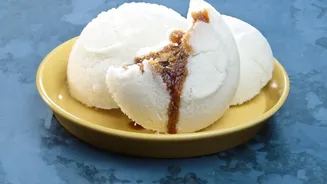
Steamed rice-flour cakes are a beloved treat found in many forms across Asia. In Vietnam, they are known as 'Bánh Bò Hấp', often colored with pandan and featuring a honeycomb-like interior. In Kerala, India, they are called 'Vattayappam', a fluffy, savory
or sweet cake often enjoyed for breakfast. In China, you'll find 'Bai Tang Gao', a slightly sweet, chewy white sugar sponge cake. Despite regional variations, the core concept remains the same: a batter made primarily from rice flour is leavened, often with yeast, and then steamed to create a wonderfully light and spongy delicacy. The unique texture, a pleasant chewiness that is both soft and satisfying, is what makes these cakes so special.
The Simplicity of the Batter
The beauty of these steamed cakes lies in their elemental nature. At its heart, the batter requires only a few key ingredients. The star is, of course, rice flour, which provides the signature texture. This is typically combined with a liquid, which can be water or, for a richer flavour, coconut milk. Sugar provides the sweetness, and a leavening agent is needed to give the cakes their lift and airy structure. Traditionally, this is active dry yeast, which ferments the batter, creating bubbles that translate into a spongy crumb. Some modern recipes might use baking powder for a quicker rise, but yeast provides a more complex flavour and a distinctive honeycomb texture.
Step 1: Activating the Yeast and Mixing
The first step in many traditional recipes is to activate the yeast. This is done by dissolving it in a small amount of warm water (not hot, as that can kill the yeast) with a pinch of sugar. After about ten minutes, the mixture should become frothy, indicating the yeast is alive and ready. In a separate large bowl, whisk together your rice flour, sugar, and any additional starches like tapioca starch if the recipe calls for it. Pour in the activated yeast mixture and the remaining liquid, such as coconut milk or water, and whisk until you have a smooth, lump-free batter. The consistency should be pourable but not too thin.
Step 2: The Crucial Fermentation
Once your batter is mixed, it needs time to ferment. Cover the bowl with plastic wrap or a clean cloth and leave it in a warm spot for one to two hours, or until the batter has risen and is full of bubbles. This fermentation period is essential for developing both the flavour and the characteristic airy, honeycomb-like structure inside the cake. The time required can vary based on the temperature of your kitchen; a warmer environment will speed up the process. You'll know it's ready when the surface is bubbly and the batter has visibly increased in volume.
Step 3: The Art of Steaming
To steam the cakes, prepare a steamer by bringing water to a rolling boil over high heat. Lightly grease your molds—small bowls, ramekins, or muffin cups work well. Once the water is boiling and your batter is fermented, give the batter a gentle stir and pour it into the prepared molds, filling them about three-quarters full. Carefully place the molds into the steamer. It's a good idea to wrap the lid of the steamer with a cloth to prevent condensation from dripping onto the cakes, which can make them dense. Steam for about 15-20 minutes for larger cakes, or 5-10 minutes for smaller, individual ones, until a skewer inserted into the center comes out clean. Allow them to cool slightly before removing from the molds.
Serving and Customisation
These steamed rice cakes are wonderful when served warm on their own, allowing their subtle sweetness and unique texture to shine. For a classic Vietnamese treat, they are sometimes served with a sprinkle of toasted sesame seeds or a rich coconut sauce. You can also introduce flavours directly into the batter. A few drops of pandan extract will give the cakes a beautiful green hue and a fragrant, vanilla-like aroma. For an Indian 'Vattayappam' style, you might add a pinch of ground cardamom. Feel free to experiment with different extracts or simple garnishes to make this versatile dessert your own.