






The Next Great Observatory
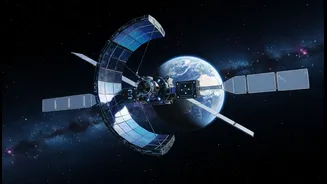
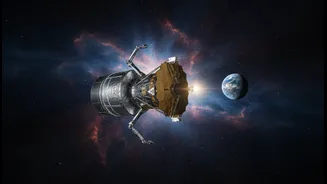
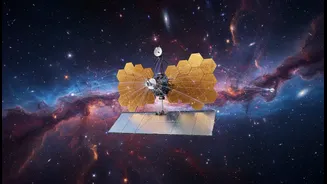
Set to launch in the 2040s, the Habitable Worlds Observatory (HWO) is NASA's next great flagship mission. Its primary goal is ambitious: to directly image and analyze at least 25 Earth-like exoplanets, searching their atmospheres for chemical hints of
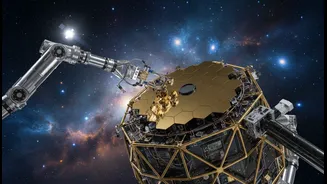
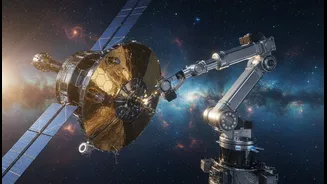
life, such as oxygen and methane. This powerful telescope will scan the universe in infrared, optical, and ultraviolet light, building on the legacies of the Hubble and James Webb space telescopes. But beyond its advanced scientific instruments, HWO represents a fundamental shift in engineering philosophy. NASA has mandated that the observatory must be serviceable—not by astronauts, but by robots.
A Lesson From Webb and Hubble
The James Webb Space Telescope (JWST) is an undisputed marvel of engineering. However, it was designed as a single-shot mission. Orbiting at the distant second Lagrange point (L2), 1.5 million kilometers from Earth, it is far beyond the reach of human servicing missions that were possible for the Hubble Space Telescope in low-Earth orbit. Because of this, JWST was not designed to be repaired; every one of its components had to work perfectly with no possibility of a fix. In contrast, Hubble was famously saved from a flawed mirror and upgraded over five separate astronaut missions, dramatically extending its life and capabilities. HWO will also operate at the remote L2 point, but NASA is taking the lessons from both predecessors to create a new paradigm.
Designing for Robotic Repair
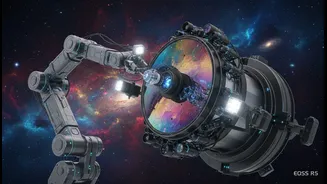
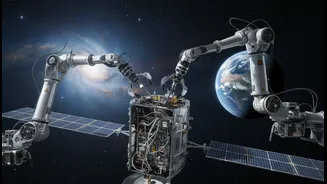
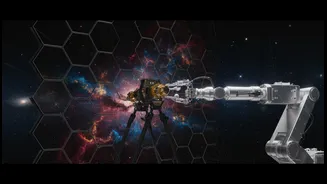
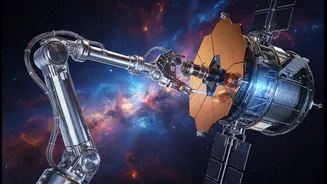
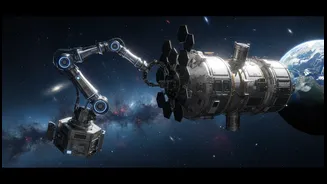
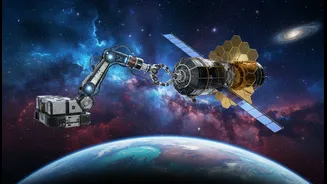
From its very inception, HWO is being engineered for in-space servicing, assembly, and maintenance (ISAM). This means critical systems like computers, sensors, and scientific instruments will be built as standardized, modular blocks called line-replaceable units (LRUs). These modules will feature common docking interfaces, self-aligning connectors, and guide pins, all optimized for a robot to grab, detach, and replace. It’s a bit like building with high-tech LEGO bricks. This approach ensures that a robotic servicing spacecraft, either autonomous or remotely operated from Earth, can perform complex procedures—from swapping out an old camera for a next-generation version to fixing a malfunctioning component.
What Makes It More 'Durable'?
When the headline mentions durability, it’s not about being physically tougher. It’s about longevity and scientific resilience. The JWST's lifespan is finite, limited by its fuel and the eventual failure of components that can't be replaced. The HWO’s robotic serviceability fundamentally changes that equation. A servicing mission could refuel the observatory, replace aging gyroscopes, or repair unforeseen damage. More excitingly, it could allow for major science upgrades. Imagine, 15 years into its mission, a new, more sensitive detector is invented on Earth. Instead of launching an entirely new multi-billion dollar telescope, a robotic servicer could fly up and install the new instrument on HWO, keeping it at the cutting edge of science for decades. This adaptability could extend HWO’s operational life far beyond that of any previous great observatory, maximizing the scientific return on its immense investment.