

A Primer on Ocean Iron
In many vast stretches of the open ocean, there are plenty of nutrients for marine life to thrive, yet they remain biological deserts. The reason is often a lack of one crucial ingredient: iron. Just as iron is vital for life on land, it is a key micronutrient
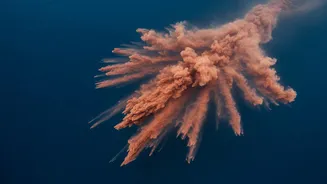
for phytoplankton, the microscopic plants that form the base of the marine food web. When iron becomes available, these tiny organisms bloom spectacularly, a process observable even from space. Naturally, this happens when iron-rich dust from deserts or volcanic ash settles on the ocean. This has led scientists to wonder: could we mimic this process on a larger scale to help fight climate change?
The Promise and Peril of Fertilization
The theory behind ocean iron fertilization (OIF) as a climate solution is straightforward. By adding iron to iron-poor regions, we could stimulate huge phytoplankton blooms. Through photosynthesis, these blooms would draw down massive amounts of carbon dioxide from the atmosphere. When the phytoplankton die, they sink, ideally taking the captured carbon with them into the deep ocean, where it could be sequestered for centuries. This process is known as the biological carbon pump. However, the potential risks are significant. Early studies and models raised concerns about unintended consequences, such as triggering harmful algal blooms, creating oxygen-depleted 'dead zones', and disrupting the delicate balance of the food web.
Insights From the Latest Research
A new wave of research, including a key modeling study published recently, is providing a much more nuanced view of these risks. Scientists are using advanced ocean models to simulate large-scale fertilization and its long-term consequences. One recent study published in Nature found that the location of fertilization is critical. Deploying iron in higher latitudes, like the Southern Ocean, could maximize carbon removal while minimizing negative ecological impacts, such as the depletion of essential nutrients in other parts of the ocean. In contrast, fertilizing equatorial waters could have a more pronounced negative effect, potentially reducing the biomass of larger marine life in those zones.
Modeling the Ripple Effects
The real breakthrough of these new studies is their ability to look beyond the initial carbon capture and model the entire ecosystem's response. The models suggest large-scale fertilization in one area can have distant and delayed consequences, a phenomenon known as "nutrient robbing". For instance, stimulating a bloom in the Southern Ocean could use up nutrients that would have naturally flowed towards the tropics, impacting fisheries that coastal communities rely on. One model showed that large-scale OIF could amplify the decline in animal biomass caused by climate change by about a third, with the most severe impacts in low-latitude regions. This demonstrates the interconnectedness of the global ocean system and highlights that OIF cannot be viewed in isolation.
From Theory to Informed Decisions
This detailed risk analysis is arriving at a crucial moment. With climate change accelerating, there is renewed interest in marine carbon dioxide removal strategies. Scientists are now calling for a new generation of carefully controlled, small-scale field trials to validate these model predictions. The goal is no longer just to prove that iron makes plankton grow, but to precisely measure the efficiency of carbon sequestration and meticulously monitor for any negative environmental effects. This research is essential for creating a code of conduct for any future geoengineering projects, ensuring that decisions are based on rigorous science, not wishful thinking. It's about understanding the full suite of consequences before we even consider intervening in ocean ecosystems at scale.