







The Green Menace Under the Panels
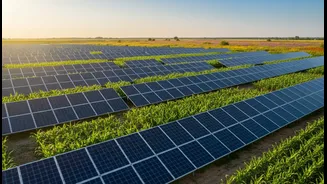
Large-scale solar installations are crucial to India's renewable energy targets, but they come with a significant operational challenge: managing the vegetation that grows underneath and around the panels. Overgrown grass and weeds can cast shadows on the photovoltaic
cells, which reduces the amount of electricity generated. This makes effective vegetation control essential for a solar farm's efficiency and bottom line. Traditionally, operators have relied on mechanical mowing and chemical herbicides to keep the growth in check. However, these methods are costly, labour-intensive, and can have negative environmental consequences. Mowers use fossil fuels and run the risk of kicking up rocks that could damage the expensive solar panels, while herbicides can harm local soil and water quality. For an industry built on sustainability, these conventional solutions present a clear contradiction.
Enter the Four-Legged Mowing Crew
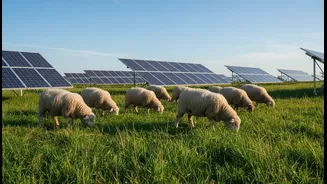
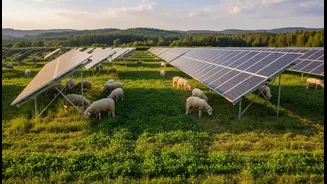
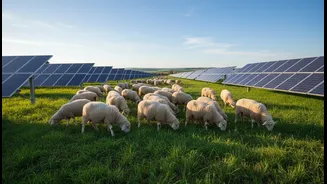
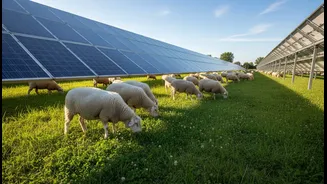
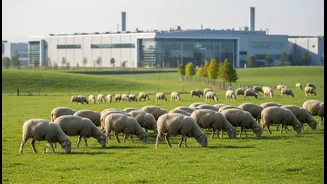
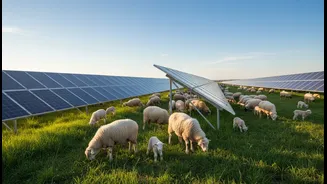
A growing number of solar farm operators are turning to a centuries-old technology to solve this modern problem: livestock. The practice, known as solar grazing or agrivoltaics, involves using animals, primarily sheep, to manage the vegetation on-site. Sheep are considered the ideal candidates for the job. They are nimble enough to navigate around the panel supports and graze in areas that are difficult for machines to reach. Unlike goats, which are prone to climbing and chewing on wires, or cattle, which can rub against and damage the panel structures, sheep are generally content to focus on the grass and weeds. The shade from the panels also provides a significant benefit to the animals, offering relief from the hot sun, which can improve their overall health and welfare.
A Triple-Win for Business and Environment
Solar grazing creates a symbiotic relationship that benefits the energy company, the farmer, and the local ecosystem. For solar developers, it dramatically lowers vegetation management costs, eliminating expenses related to fuel, equipment maintenance, and labour. It also boosts their green credentials by reducing the carbon footprint of their operations. For local farmers and shepherds, it provides a new and reliable revenue stream through grazing contracts and offers access to additional pasture land, which is often a significant barrier for expanding their flocks. This dual-use of land is particularly critical in a country like India, where balancing agricultural needs with ambitious renewable energy goals is paramount. Environmentally, the benefits are numerous. The practice improves soil health as the sheep's hooves aerate the ground and their manure acts as a natural fertiliser. This leads to better water retention, reduced soil erosion, and increased biodiversity, as a wider variety of plants can thrive.
Making Agrivoltaics Work in India
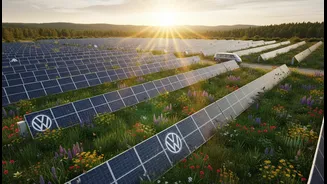
While the concept is simple, successful implementation requires careful planning. Proper fencing, access to water, and a well-managed rotational grazing plan are essential to ensure the health of the animals and the effectiveness of the vegetation control. The model is a key part of the broader agrivoltaics movement, which refers to the co-location of agriculture and solar energy production. India is actively exploring this potential. The government's PM-KUSUM scheme, for instance, encourages farmers to adopt solar technology, creating opportunities for such integrated land use. With an estimated 60% of India's land under cultivation, combining solar infrastructure with farming and grazing could help the nation meet its clean energy targets without sacrificing vital agricultural land. Already, over 25 pilot projects and hundreds of demonstration sites are operational or planned across the country, proving the model's viability.