




Beyond Probes and Flags
For decades, space exploration meant sending robots and a handful of astronauts to plant flags and collect rocks. Elon Musk's objective for SpaceX is fundamentally different: to create a self-sustaining city on Mars. This isn't just about survival; it's
about building a thriving outpost of civilization that can continue to grow and prosper even if supply ships from Earth stop arriving. The ultimate test, as Musk has stated, is whether a Martian city can stand on its own feet. This requires moving beyond simple exploration and into the realm of off-world industry, agriculture, and infrastructure development. The goal is to establish a permanent, growing human presence on another planet, complete with its own economic engine.
The Starship Economic Engine
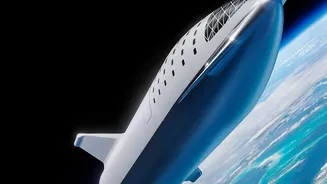
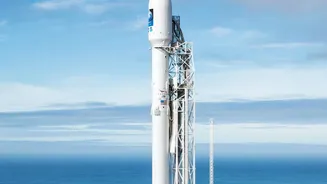
The entire vision hinges on one piece of technology: Starship. This fully reusable transportation system is designed to be the world's most powerful launch vehicle, capable of carrying over 100 metric tonnes to orbit in a single trip. Its reusability is the key to radically lowering the cost of access to space. Musk's plan requires an exponential increase in the amount of cargo sent to Mars during the launch windows that open every 26 months. By making launches affordable and frequent, Starship is intended to be the logistical backbone that makes building an entire city—requiring millions of tonnes of cargo and eventually a million people—economically feasible rather than a fantastical dream.
What an Off-World Economy Looks Like
What kind of jobs would exist on Mars? The foundation of a Martian economy would be built on 'in-situ resource utilization' (ISRU) — using local resources to survive and thrive. This starts with essentials like generating power, mining for water ice, and producing propellant for return trips. Starship's engines are designed to run on methane and oxygen, which can be manufactured from Mars's atmospheric carbon dioxide and subsurface water. From there, new industries would emerge: construction, communications, food production, and even advanced manufacturing like producing microchips. This creates a circular economy where the planet itself provides the raw materials for expansion, reducing the dependency on Earth.
The Quadrillion-Dollar Ambition
The long-term economic vision is staggering. Musk has recently suggested that if SpaceX achieves its goals, the company could be worth 'orders of magnitude more' than the current global economy, which stands at over $100 trillion. While he clarified this is a potential path and not a certainty, the statement reveals the perceived scale of the opportunity. The logic is that creating entirely new industries like orbital manufacturing, asteroid mining, and interplanetary transport unlocks value that is not limited by Earth's resources. If humanity becomes a multi-planetary species, the company that builds the foundational infrastructure could capture value on a scale never before seen.
The Steep Climb Ahead
The path from vision to reality is fraught with immense challenges. The technological hurdles of landing humans on Mars, building habitats, and developing reliable resource-extraction technologies are monumental. Uncrewed missions must first deliver essential infrastructure and test systems before any human sets foot on the planet. Beyond the engineering, the financial and logistical challenges are enormous, requiring sustained investment over decades to achieve a goal that might not see a return for 25 to 30 years. The entire endeavor rests on the successful and routine operation of Starship, a vehicle that, while making progress, is still in its development phase. The scale of the ambition is matched only by the scale of the difficulty.