

Instead of Fushimi Inari Shrine, Try Nezu Shrine
The endless vermilion gates of Kyoto's Fushimi Inari Shrine are world-famous for a reason. But its fame means a constant, dense crowd, making a peaceful stroll or a clean photo nearly impossible. For a similar visual impact with a fraction of the visitors,
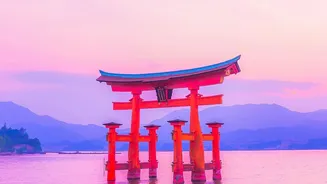
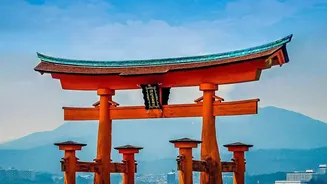
head to Tokyo's Nezu Shrine. Nestled in the quiet Bunkyo ward, Nezu features a stunning hillside path lined with its own tunnel of red torii gates leading to a smaller Inari shrine. It offers the same mesmerising visual effect and spiritual atmosphere but allows for quiet contemplation. Established around 1,900 years ago, this shrine is one of Tokyo's oldest and most beautiful, providing a dose of history and tranquillity right in the capital city.
Instead of Arashiyama Bamboo Grove, Try Hokokuji Temple
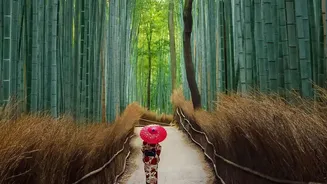
Kyoto's Arashiyama Bamboo Grove is another bucket-list spot that can feel more like a packed marketplace than a tranquil forest. The towering bamboo is breathtaking, but the experience is often spoiled by the sheer volume of people. For a truly serene bamboo experience, take a day trip from Tokyo to Kamakura and visit Hokokuji Temple. Often called the "Bamboo Temple," Hokokuji features a beautiful grove of over 2,000 dark green bamboo stalks. Narrow pathways wind through the grove to a small teahouse where you can enjoy a cup of matcha while gazing into the forest—a peaceful moment you won't find at Arashiyama. It provides the awe without the agony of crowds.
Instead of Dotonbori's Neon Chaos, Try Yanaka Ginza's Old-World Charm
Osaka's Dotonbori district is a dizzying spectacle of neon lights, giant mechanical crabs, and incredible street food. While exciting, it can also be a sensory overload. For a taste of vibrant local life that feels more nostalgic and less commercial, visit Yanaka Ginza in Tokyo. This charming 170-metre shopping street transports you back to the Showa era with its old-fashioned, family-run shops. Here, you can sample cheap and delicious street food, from freshly fried croquettes to traditional sweets, while observing daily local life. It’s a glimpse into a quieter, more authentic side of Tokyo, often called "cat town" for its many feline residents and souvenirs. It delivers the energy and flavour of a classic Japanese street, but on a more human, relaxed scale.
Instead of Shibuya Crossing, Try Shinjuku's Omoide Yokocho
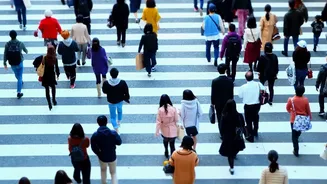
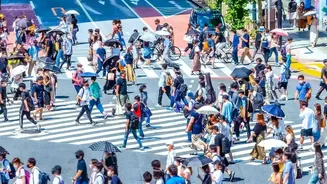
The famous scramble at Shibuya Crossing is a symbol of modern Tokyo's organised chaos. Watching thousands of people cross at once is a spectacle, but being in it can be intense. For a different kind of immersive Tokyo energy that feels more historic and intimate, find your way to Omoide Yokocho in Shinjuku. Translating to "Memory Lane," this cluster of narrow alleys is packed with tiny yakitori bars and food stalls, many of which have been operating since the postwar years. Smoke from charcoal grills fills the lantern-lit lanes, creating a uniquely atmospheric and nostalgic scene. Instead of the impersonal rush of Shibuya, you can sit shoulder-to-shoulder with locals, enjoy grilled skewers, and experience a grittier, more convivial side of Tokyo nightlife.
Instead of Kinkaku-ji (Golden Pavilion), Try Hiraizumi's Chuson-ji Konjikido
The shimmering gold leaf of Kyoto's Kinkaku-ji is undeniably beautiful, but its popularity makes it one of the city's most crowded temples. For an equally stunning—and arguably more profound—golden hall experience, travel to Hiraizumi in Iwate Prefecture. Here you'll find Chuson-ji Temple, a UNESCO World Heritage site, which houses the Konjikido (Golden Hall). Built in 1124, this hall is completely covered in gold leaf inside and out and is preserved in its original 12th-century form. Unlike Kinkaku-ji, which is a 20th-century reconstruction, the Konjikido is a national treasure that was built to create a peaceful Buddhist Pure Land on earth. Its remote location means far fewer visitors, allowing you to appreciate its intricate beauty and historical significance in a truly tranquil setting.