




An Eye in the Sky That Fell Short
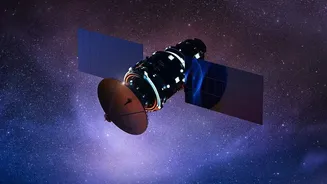
In August 2021, the Indian Space Research Organisation (ISRO) launched a cutting-edge satellite designated EOS-03. Also known as Geo-Imaging Satellite-1 (GISAT-1), it was designed to be a game-changer. Unlike typical remote sensing satellites that orbit
the Earth every 90 minutes or so, EOS-03 was destined for a geostationary orbit, approximately 36,000 kilometres high. From this fixed position, it would have provided near real-time imagery of the Indian subcontinent, a powerful tool for monitoring natural disasters like cyclones and floods, as well as for agricultural and security purposes. However, the mission was not to be. Shortly after a seemingly perfect liftoff aboard the GSLV-F10 rocket, a technical anomaly in the cryogenic upper stage prevented the engine from igniting. The satellite was lost, leaving a significant gap in India's strategic observation capabilities.
Understanding the Failure
In the aftermath, ISRO did what it always does: it formed a Failure Analysis Committee to conduct a thorough investigation. The cause was traced back to a seemingly minor component—a leak in a valve within the cryogenic stage’s liquid hydrogen tank. This leak resulted in lower-than-required pressure, preventing the engine's fuel booster pump from functioning correctly at the critical moment of ignition. While a setback, this forensic analysis is a crucial part of the process in space engineering. Understanding precisely what went wrong is the only way to ensure it does not happen again. The findings prompted ISRO to implement corrective measures and fortify the GSLV rocket for its future flights, turning a costly failure into an invaluable engineering lesson.
A Programme That Didn't Stand Still
While the loss of EOS-03 was a blow, ISRO’s Earth observation programme did not grind to a halt. The agency continued to strengthen its satellite constellation with a series of successful launches using its reliable Polar Satellite Launch Vehicle (PSLV). In 2022 alone, ISRO successfully placed two other earth observation satellites, EOS-04 and EOS-06, into orbit. EOS-06, also known as Oceansat-3, was particularly significant. It now provides vital data on ocean colour and sea surface temperature, aiding in weather forecasting, climate studies, and identifying potential fishing zones for fishermen. These successful missions demonstrated the depth and robustness of ISRO’s broader capabilities, proving that the programme's momentum was not defined by a single launch failure.
Redemption: The Rise of EOS-05
The freshest angle, and the true culmination of this story, arrived in September 2026 with the launch of EOS-05. This mission is the direct successor to the failed EOS-03, designed to finally fulfill the original goal of a 'watchful eye' in geostationary orbit. Launched aboard a GSLV rocket, the very same class of vehicle that had previously failed, its success marks a moment of redemption for ISRO. EOS-05 carries advanced imaging payloads capable of scanning the entire Indian landmass every 30 minutes, with the ability to revisit areas of interest in as little as five minutes. This capability for rapid, repeated observation is invaluable for tracking fast-moving weather events, managing disaster response, and providing strategic surveillance. The successful launch of EOS-05 is not just another addition to India's satellite fleet; it's a testament to the agency's ability to learn, adapt, and overcome.