





Earth's Engine Room: The Tropical Warm Pool
At the intersection of the western Pacific and eastern Indian Oceans lies a vast expanse of seawater known as the Indo-Pacific Warm Pool. With surface temperatures consistently above 28°C, it is the largest and warmest body of open ocean on the planet.
This immense warmth makes it a critical engine for global weather. The heat and moisture it pumps into the atmosphere can influence everything from Asian monsoons to weather patterns in North America. In recent decades, scientists have observed that this warm pool is expanding, a change linked to our warming climate that has far-reaching consequences for global rainfall patterns.
A Shocking Finding From the South Pole
For years, the narrative surrounding Antarctica has been one of consistent and accelerating ice loss. However, a new study published in the journal Nature has added a fascinating twist. Researchers analyzing satellite data discovered that between 2021 and 2023, the Antarctic Ice Sheet experienced a temporary net mass gain of approximately 695 billion tons—the largest such event since records began in 2003. The investigation into what caused this unexpected reversal led scientists thousands of kilometers away, straight to the tropical warm pool.
An Atmospheric Bridge Across the Globe
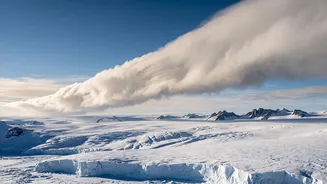
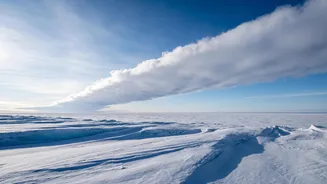
The study revealed a previously underrecognized teleconnection, or long-distance climate link, between the tropics and Antarctica. Sustained warming in the tropical warm pool from 2021-2023 triggered a large-scale atmospheric wave pattern, known as a Rossby wave train, that propagated south. This disturbance altered atmospheric pressure over East Antarctica, creating a circulation pattern that acted like a giant siphon. It pulled enormous amounts of moisture from the mid-latitude Indian Ocean and funneled it toward the continent via long, narrow corridors of water vapor known as atmospheric rivers.
More Snow, But a Complicated Picture
These atmospheric rivers resulted in persistent and heavy snowfall over a specific region of East Antarctica, leading to the substantial gain in ice mass. While this sounds like good news, the researchers are quick to add crucial context. This event does not reverse the long-term trend of ice loss. The West Antarctic Ice Sheet, which is considered more vulnerable to collapse, continues to lose mass as it is melted from below by warming ocean waters. The study highlights that while the tropical warm pool can act as a remote "regulator" of snowfall in East Antarctica, the overall health of the continent remains precarious.
Why This Connection Matters
This discovery is more than just a climatic curiosity; it has profound implications for our ability to predict future sea-level rise. The Antarctic Ice Sheet is one of the biggest uncertainties in climate models. Understanding this powerful link between the tropics and the poles helps explain multiyear variations in the ice sheet's mass balance. It reveals that our planet's systems are interconnected in complex ways we are only just beginning to fully appreciate. Events that occur roughly once a decade in the tropical oceans can have a significant, albeit temporary, impact on the polar regions, a factor that must now be incorporated into future climate projections.