



The World After Dinosaurs
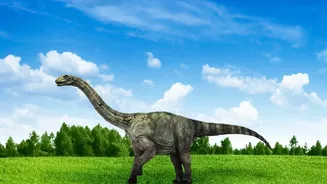
For millions of years, dinosaurs ruled the Earth, while our mammalian ancestors remained small, scurrying in the shadows. The popular story begins 66 million years ago, when a massive asteroid impact wiped out the giant reptiles, leaving a void. The long-held
assumption was that this event was the starting gun for the "Age of Mammals." With the terrestrial tyrants gone, mammals were supposedly free to take over, rapidly diversifying and growing in size to fill all the newly available ecological roles, or niches. This narrative paints a picture of an open field, where our ancestors could finally flourish without fear of being stomped or eaten by a T-rex. But science is a story that is constantly being revised, and new evidence suggests the path to mammalian dominance was not quite so straightforward.
A Surprising Discovery
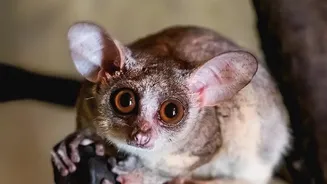
The headline's mention of a "tiny-dinosaur" study points to a fascinating new area of research, though the creature in question isn't a dinosaur at all. Recent paleontological work has focused on how other animal groups fared during the Mesozoic era and after the great extinction. A new study published in the journal Evolution highlights a curious gap in the fossil record: the almost complete absence of very small dinosaurs. The smallest non-avian dinosaurs known were still hundreds of times heavier than the smallest mammals, birds, or reptiles today. This has led scientists to question what was occupying those tiny niches, and the answer appears to be our own distant relatives. Mammals may have been so good at being small, they prevented dinosaurs from ever evolving into miniature forms.
The Real Competition
The recent study proposes a major twist on the old story. Instead of a clear field after the dinosaurs were gone, mammals may have faced intense competition from an unexpected quarter: other mammals. The research suggests that during the age of dinosaurs, early mammals had already become experts at living small. They cornered the market on the insect-eating, nocturnal, and burrowing lifestyles. This competitive advantage meant that when dinosaurs were evolving, the 'tiny' jobs were already taken. There was no room for a mouse-sized dinosaur because mouse-sized mammals were already there. So, while giant dinosaurs kept mammals from getting big, it seems small mammals may have kept dinosaurs from getting small. This ecological stand-off paints a much more complex picture of life during the Mesozoic.
Rewriting the Evolutionary Playbook
This new understanding has significant implications for how we view the rise of mammals. It wasn't a simple case of them inheriting the Earth after the dinosaurs vacated it. Mammals were already diversifying and carving out their existence millions of years before the asteroid hit. Their success was not just a lucky break; it was earned through fierce competition. The study used energetic fitness models to show that, based on biology, tiny dinosaurs should have existed. The fact that they didn't strongly suggests an external pressure, and the most likely candidates are the highly successful small mammals that already dominated those niches. This means the story of mammal evolution is less about filling empty shoes and more about outcompeting rivals in a complex and ever-changing world.