


Redrawing Our Cosmic Backyard
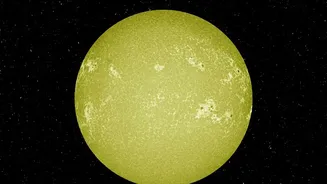
Traditionally, the edge of the solar system has been defined by the heliopause. This is the boundary where the solar wind, a stream of charged particles flowing out from our Sun, is no longer strong enough to push back against the wind from distant stars.
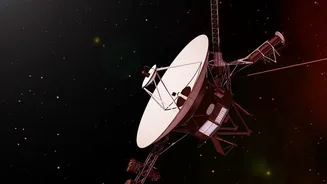
It’s a bubble that marks the end of the Sun's direct influence. Our most distant probes, Voyager 1 and 2, crossed this boundary years ago, entering interstellar space. But according to a new theory from Jim Green and Ed Belbruno, the true edge of our solar system is much, much farther out, defined not by solar wind, but by gravity and the unseen influence of dark matter.
The Minds Behind the Idea
The proposal comes from two heavyweights in space science. Jim Green is NASA's former chief scientist and the longest-serving director of its Planetary Science Division, overseeing missions like New Horizons to Pluto and the Curiosity rover on Mars. Ed Belbruno is a mathematician at Yeshiva University and a research associate at Princeton, renowned for his work on low-energy transfers that use complex gravitational pathways to move spacecraft with minimal fuel, a concept used to save Japan's Hiten mission in 1991. Their combined expertise in planetary science and celestial mechanics gives significant weight to this new, galaxy-brained idea.
The Galactic Force
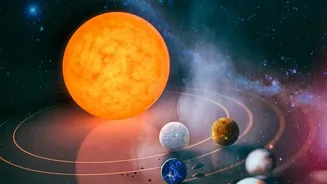
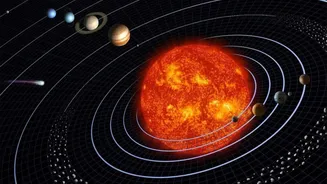
Their central argument, published in ROOM - The Space Journal of Asgardia, is that we've been ignoring a bigger player: the 'galactic force'. This is the combined gravitational pull of everything in the Milky Way galaxy. The duo calculated that within our solar system, this force is split almost evenly between normal matter (stars, planets, gas) and dark matter. Farther from the Sun, the pull of our star weakens, and the galactic force, dominated by dark matter, takes over. They calculate this gravitational handover happens around 30,000 astronomical units (AU) from the Sun—hundreds of times farther than Pluto. This new boundary extends the solar system to nearly 3.8 light-years away.
A Quick Primer on Dark Matter
So, what is this mysterious substance? In short, we don't really know. Scientists call it 'dark' because it doesn't absorb, reflect, or emit any light, making it completely invisible to our instruments. We only know it exists because of its gravitational effects. Galaxies spin faster than they should, and light from distant objects bends as it passes through space. The only explanation is a massive amount of unseen 'stuff' providing extra gravity. It's believed that dark matter makes up about 95% of the mass in our galaxy.
A New Path for Interstellar Objects
This theory could explain some recent cosmic mysteries. Take 'Oumuamua, the strange, cigar-shaped object that visited our solar system in 2017. Its trajectory and high speed were unusual. Green and Belbruno's model suggests that dark matter's gravitational influence over millions of years could have played a role in its path. Their theory posits that interstellar objects could be 'ballistically captured' by the solar system's extended gravitational field. This means objects from other star systems could be drawn in and set on new paths through our neighbourhood, influenced by this vast, dark matter-dominated region. Even the hypothetical Planet 9's orbit could be affected by this force.
How to Test the Theory
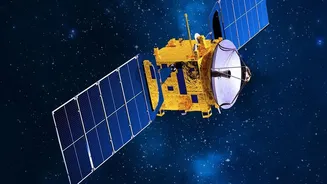
A theory is one thing, but proving it is another. Green and Belbruno propose a future mission that could directly measure dark matter's influence. A spacecraft could travel to a distance of around 100 AU and release a reflective sphere. By tracking the sphere's trajectory with extreme precision, scientists could measure the tiny deviations caused by the galactic force. Green is even in discussions with the New Horizons team to see if their spacecraft, currently in the outer heliosphere, could detect accumulated dust at these key gravitational points, which would help verify their calculations.