





A New Era of High-Speed Commuting
The Delhi-Ghaziabad-Meerut corridor, India's first Regional Rapid Transit System (RRTS), is now faster than ever. The National Capital Region Transport Corporation (NCRTC) has rolled out eight new 'fast train' services during peak morning and evening
hours, specifically designed to reduce travel time for daily commuters. Unlike the regular services which stop at all stations, these limited-stop trains cover the entire 82-kilometre stretch in less than 50 minutes, a significant reduction from the usual 55-60 minutes. This makes the journey nearly three times faster than travelling by road, which can take up to three hours depending on traffic.
The Fast-Track Route and Timings
So, how does it work? These new services are operational during morning and evening peak hours to cater to the office-goer rush. Trains depart from both ends of the corridor — Sarai Kale Khan in Delhi and Modipuram in Meerut — at 8:00 AM and 8:30 AM, and again at 6:00 PM and 6:30 PM. To achieve this impressive speed, the fast trains halt at only five key stations: Sarai Kale Khan, Anand Vihar, Ghaziabad, Begumpul, and Modipuram. This express model drastically cuts down transit times on crucial segments; the journey between Anand Vihar and Ghaziabad now takes a mere eight minutes. Passengers heading to other stations can continue to use the regular Namo Bharat services, which run at a frequency of every 10-15 minutes.
Inside the Namo Bharat Experience
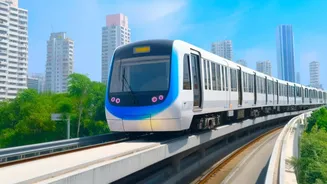
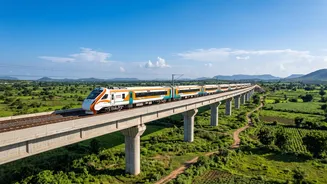
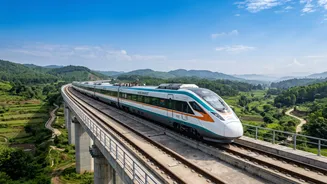
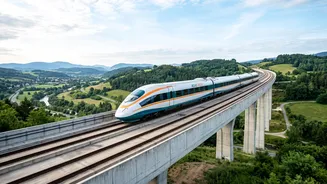
The Namo Bharat trains are a leap forward in public transport technology. Designed to travel at a maximum speed of 180 km/h, they operate at a brisk 160 km/h, making them the fastest transit system in the country. The average speed, including stops, is around 100 km/h. The six-car trainsets, manufactured by Alstom in India, are fully air-conditioned and feature modern amenities. Passengers can choose between standard and premium coaches. The premium coach offers wider, reclining seats, more legroom, and charging ports for every passenger. For safety, the trains are equipped with CCTV cameras, fire and smoke detectors, and an advanced automatic train protection system.
Fares, Ticketing, and Connectivity
Despite the high speed and premium features, the fare structure remains accessible. A journey across the entire corridor in a standard coach costs approximately ‘210, with fares for shorter trips starting as low as ‘20. Premium class tickets are priced about 20-25% higher. NCRTC has not announced a separate fare structure for the new fast services. Ticketing is streamlined through the 'Namo Bharat Connect' mobile app, which offers a 10% discount, and the National Common Mobility Card (NCMC). The corridor is also seamlessly integrated with other transport networks, with major interchanges at Sarai Kale Khan (Pink Line Metro, ISBT, and railway station) and Anand Vihar (Blue and Pink Lines Metro, ISBT, and railway station).
The Broader Impact on the NCR
The Delhi-Meerut RRTS is more than just a transportation project; it's an economic catalyst. By making Meerut a viable 'bedroom community' for professionals working in Delhi, the corridor is reshaping the region's real estate landscape. Property values near RRTS stations in Ghaziabad, Modinagar, and Meerut have already seen appreciation between 12% and 22%. This model of transit-oriented development (TOD) encourages the growth of mixed-use communities with residential, commercial, and retail spaces, reducing dependency on private vehicles. With ridership crossing the five crore mark and daily footfalls of around 1.1 lakh, the corridor is a testament to the growing demand for efficient, reliable public transport.