



The Dark Side of the Problem
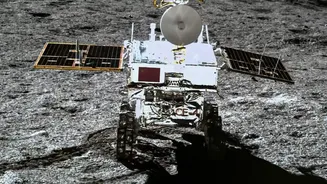
For decades, lunar exploration has been tethered to a simple limitation: line of sight. Missions on the near side of the Moon can communicate directly with Earth. However, the Moon's far side is perpetually blocked, creating a total communication blackout.
The same is true for the deep, permanently shadowed craters of the lunar south pole, which are of immense scientific interest as they may hold water ice. During the Apollo era, this meant missions were restricted to relatively safe, well-connected landing zones. For future astronauts and robotic rovers under the Artemis program, being out of touch is not an option; it’s a critical safety and operational failure.
Introducing LunaNet: An Internet for the Moon
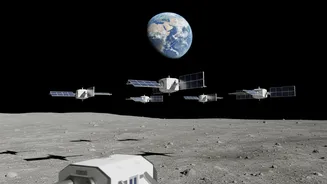
To solve this, NASA is architecting LunaNet, an ambitious framework designed to create an internet-like network for the Moon. Think of it as a celestial combination of GPS, mobile phone towers, and an internet service provider, all orbiting our natural satellite. This system is not just one network, but a 'network of networks' designed to be scalable and interoperable. This means that satellites and ground assets from NASA, international partners like the European Space Agency (ESA), and commercial companies can all work together to provide seamless service. The goal is to give lunar missions an operational environment similar to what we experience on Earth, with constant connectivity and precise location data.
How the Lunar Relay Works
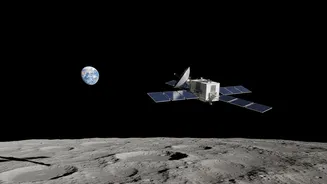
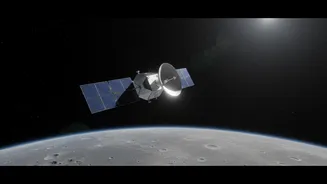
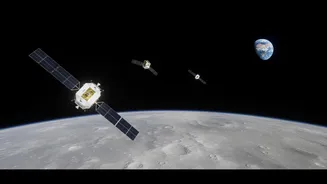
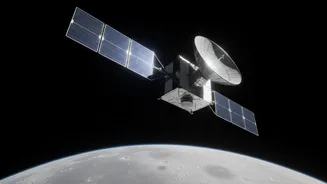
The core of this plan involves a constellation of relay satellites placed in various lunar orbits. When a rover descends into a crater on the south pole or an astronaut explores the far side, their signals won't travel directly to Earth. Instead, they will be beamed up to the nearest relay satellite. That satellite will then route the data—be it high-definition video, scientific readings, or an astronaut's voice command—either to another satellite in the network or directly back to a deep space network antenna on Earth. This system eliminates communication blackouts that occurred during Apollo-era missions when the spacecraft went behind the Moon. The system provides not just communication but also crucial Position, Navigation, and Timing (PNT) services, essentially a lunar GPS, allowing for precise tracking and maneuvering on and around the Moon.
Unlocking the Moon's Most Alluring Secrets
With reliable communication and navigation, the most challenging and scientifically rewarding parts of the Moon are suddenly within reach. Artemis astronauts will be able to explore the rugged terrain of the lunar south pole, a region thought to contain vast deposits of water ice in craters that haven't seen sunlight in billions of years. This resource is considered the key to establishing a sustainable long-term human presence, as it can be used for drinking water, breathable air, and even rocket fuel. The relay network will support rovers, landers, and a future lunar base, enabling complex scientific experiments and safer, more flexible human exploration.
A Commercial Highway to the Moon
Significantly, NASA isn't building this entire infrastructure alone. Through its Commercial Lunar Payload Services (CLPS) initiative and other contracts, the agency is partnering with private industry to build and operate these services. Companies like Intuitive Machines have been contracted to develop and deploy the first relay satellites. For instance, NASA recently delivered a compact navigation system, NavCube3-mini, to Intuitive Machines for integration into its Altus-1 satellite. This commercial approach is designed to lower costs, accelerate development, and create a competitive marketplace for lunar services. NASA becomes an anchor customer, paving the way for a bustling lunar economy where multiple users, both governmental and private, can access these essential utilities.