

A Landmark Collaboration in Space
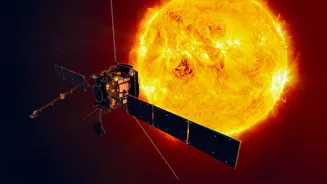
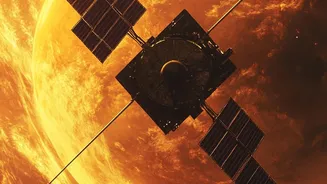
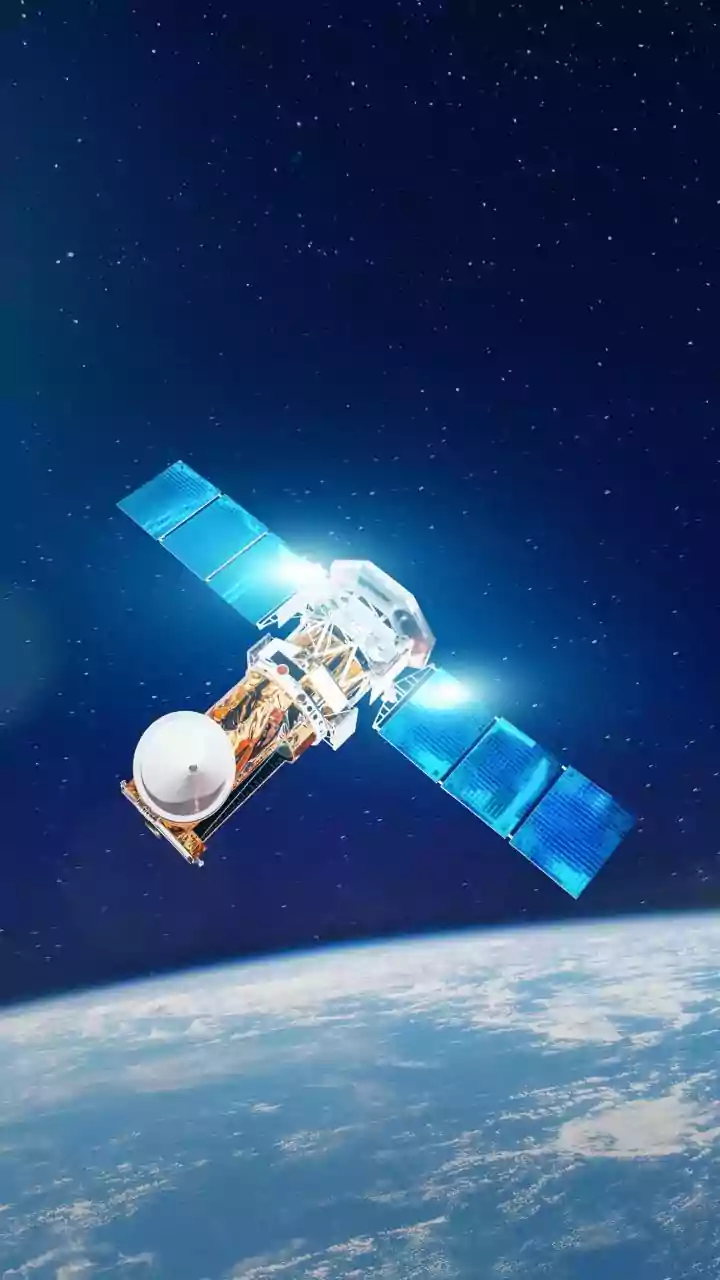
In a remarkable display of international cooperation, India's flagship solar mission, Aditya-L1, has partnered with the European Space Agency's (ESA) Proba-3. This collaboration brings together two of the world's most advanced solar observation platforms
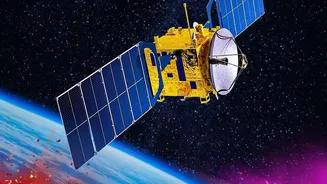
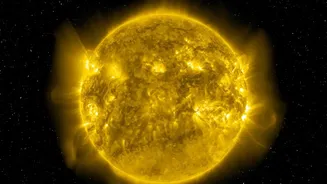
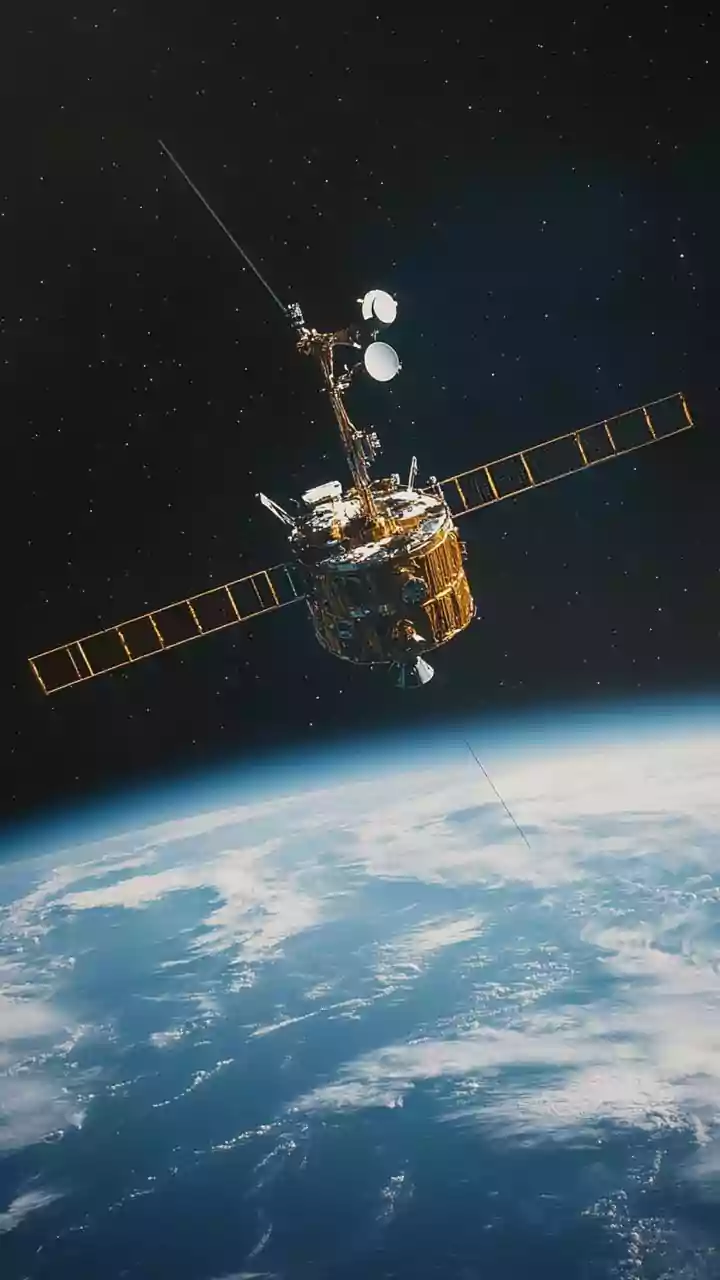
to achieve what neither could do alone. Aditya-L1, positioned at the strategic Lagrange point 1 (L1), maintains a constant, uninterrupted watch over the Sun. Proba-3, a unique mission, involves two satellites flying in precise formation 150 metres apart to create a perfect artificial solar eclipse, allowing it to view the Sun's faint, inner corona without the blinding glare of the solar disk. The partnership, announced by ISRO, combines the strengths of both missions, pairing Aditya-L1's spectroscopic data with Proba-3's high-resolution imaging to create a comprehensive picture of solar events.
Seeing the Unseen Sun
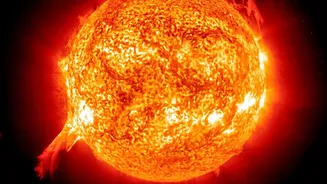
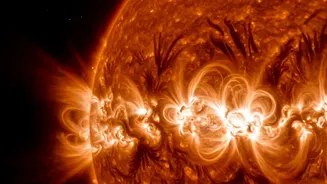
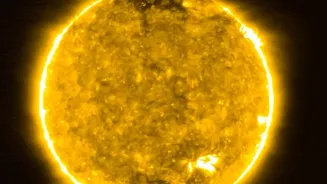
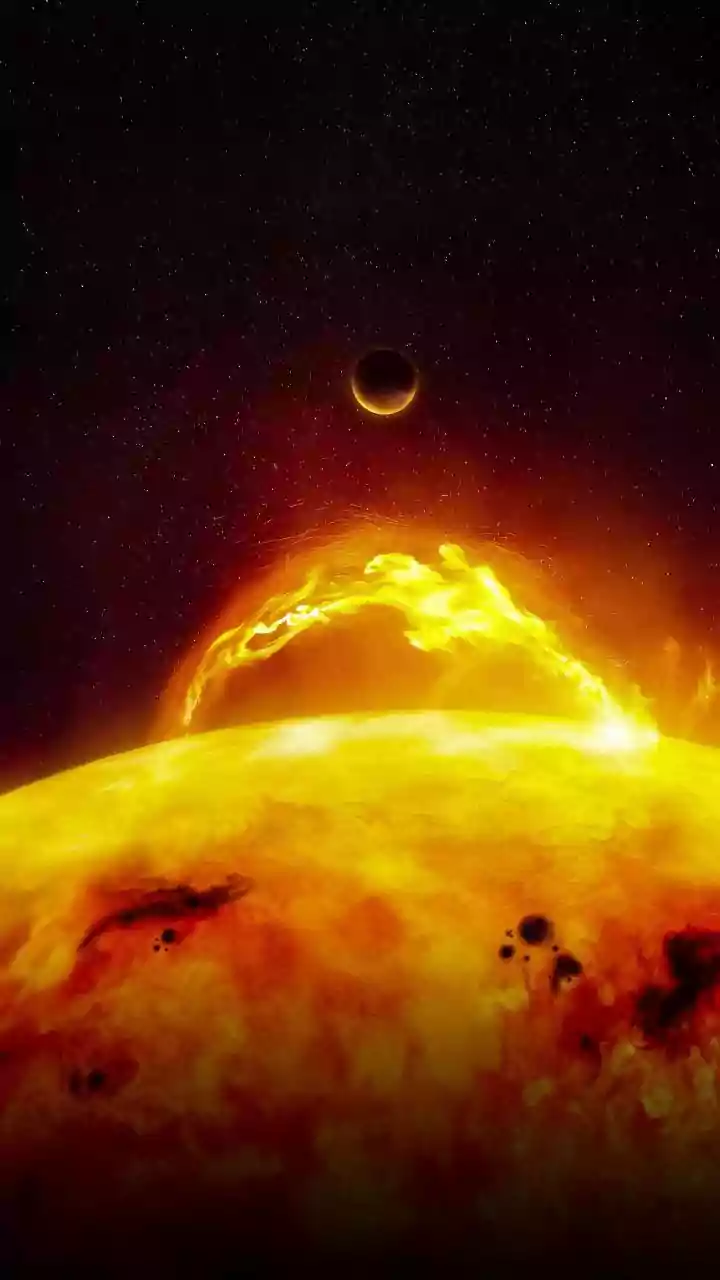
The primary target of this joint effort is to understand Coronal Mass Ejections (CMEs), which are powerful explosions of plasma and magnetic fields from the Sun. Observing the birth of a CME has always been a major challenge for scientists. The Sun's overwhelming brightness makes it incredibly difficult to see the crucial early moments of these eruptions in the inner corona. The genius of the Aditya-L1 and Proba-3 partnership lies in how their instruments complement each other. Proba-3's artificial eclipse effectively blocks the Sun's bright face, allowing its ASPIICS instrument to capture crisp images of a CME's shape and structure as it erupts. Simultaneously, Aditya-L1's Visible Emission Line Coronagraph (VELC) provides spectroscopic data, measuring the temperature, density, and speed of the ejected material. This combined approach allows scientists to track a CME from its first moments, providing a complete and cross-checked view of its evolution close to the source.
What Are Coronal Mass Ejections?
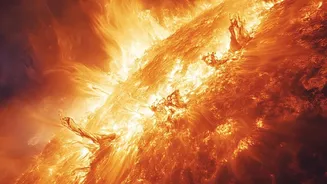
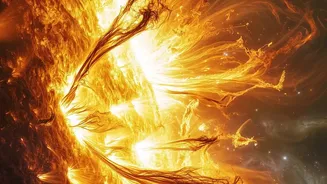
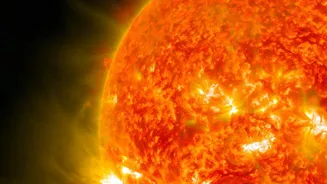
Coronal Mass Ejections are among the most violent events in our solar system. These are not just flashes of light, but massive expulsions of solar material, weighing billions of tons, hurtling through space at speeds of hundreds or even thousands of kilometres per second. They happen when the Sun's complex magnetic fields become unstable, break, and reconnect, flinging vast clouds of charged particles into space. While many CMEs miss our planet entirely, those directed towards Earth can have serious consequences. They can trigger intense geomagnetic storms that disrupt our planet's magnetic field. These storms can damage critical satellites used for communication and GPS, cause widespread power blackouts by inducing currents in electrical grids, and pose a radiation risk to astronauts in space. The infamous 1989 blackout in Quebec, which left millions without power for hours, was caused by a powerful geomagnetic storm.
A New Era for Solar Forecasting
This new ability to observe the very beginning of a CME is a game-changer for 'space weather' forecasting. By understanding how a CME's energy is distributed between speed, heat, and magnetic force right at the start, scientists can make much more accurate predictions about its potential impact on Earth. Previously, scientists could only get partial data, making it harder to forecast the severity of an incoming solar storm. The joint observations, recently detailed in the journal 'Astronomy & Astrophysics', analysed two specific CMEs and successfully measured their mass, density, and energy near the Sun. This detailed information is crucial for building better predictive models. Improved forecasting gives satellite operators, power grid managers, and space agencies more time to take protective measures, safeguarding the vital technological infrastructure that our modern world depends on.
India's Moment in the Sun
For India, this achievement marks a significant moment. The success of Aditya-L1, ISRO's first dedicated solar observatory, on the international stage highlights the country's growing prowess in space science and exploration. The data from its sophisticated VELC instrument, developed by the Indian Institute of Astrophysics, is proving indispensable. This collaboration with ESA is not just a technical success but also a diplomatic one, strengthening India's position as a key partner in global scientific endeavours. By contributing essential data to a critical field like space weather, India is not only advancing human knowledge but also playing a vital role in protecting global infrastructure. The mission demonstrates ISRO's capability to execute complex, high-stakes science missions and deliver world-class results that have a direct impact on our lives.