

The Glacier at the End of the World
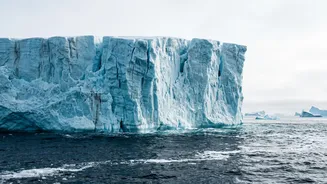
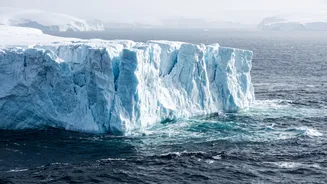
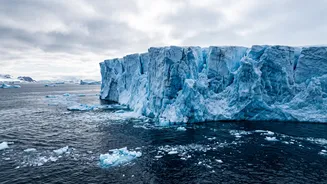
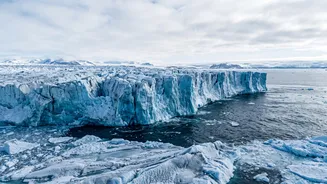
In the vast, remote expanse of West Antarctica sits a river of ice so large it’s hard to comprehend. Thwaites Glacier, roughly the size of the state of Gujarat, is one of the widest and fastest-melting glaciers on Earth. It has earned the ominous nickname
'Doomsday Glacier' because of its enormous potential to raise global sea levels. It currently contributes about 4% of annual sea-level rise, but it also acts as a natural dam, holding back the rest of the colossal West Antarctic Ice Sheet. If Thwaites were to collapse entirely, it could raise sea levels by over two feet on its own. More worrisomely, its failure could destabilise neighbouring glaciers, leading to a potential sea-level rise of around 10 feet in the long term, redrawing maps and threatening coastal communities globally.
What the New Research Uncovered
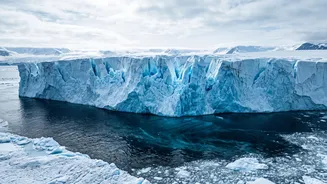
Recent studies from October 2026 have provided a critical, and concerning, update. Research published in the journal Nature Communications reveals that warm ocean water is penetrating much farther beneath the glacier than previously thought. Scientists traditionally focused on a clear 'grounding line' where the ice meets the seabed. New models, however, show that tidal movements create a much wider 'grounding zone', allowing seawater to be pumped kilometres inland beneath the ice. This process of 'tidal pumping' is causing vigorous melting from below. As a result, new projections suggest Thwaites could contribute up to 30 millimeters (1.2 inches) to sea-level rise by 2100, even with no further global warming. This is double what previous models had estimated for the century.
An Unavoidable Retreat?
The headline of the new research isn't just that the melting is worse, but that it may be locked in. A separate study led by the British Antarctic Survey (BAS) ran a stark experiment: what if ocean melting stopped completely? Using computer models, they turned off the effect of warm oceans. While a neighbouring glacier began to recover in the simulation, Thwaites continued to lose ice for the entire 150-year period. According to the researchers, this shows that past warming has already committed the glacier to a state of unavoidable ice loss. This grim outlook is compounded by findings that there is a 60% chance the glacier will become unpinned from a crucial undersea ridge by 2100, which would dramatically accelerate its retreat.
More Questions Than Answers
While the findings are alarming, they also highlight the profound complexity of the situation. The headline of the research is not one of certain doom, but of new and urgent questions. The new models don't predict a complete, sudden collapse within this century, but they introduce significant uncertainty. Scientists are now grappling with how to incorporate these newly understood processes, like tidal pumping and grounding zones, into their long-term forecasts. The data suggests that previous 'worst-case scenarios' of rapid ice cliff collapse might be less likely, but the steady, accelerated melt from underneath presents a different, but equally serious, challenge. This forces a shift in focus from a single catastrophic event to a faster, more prolonged process of disintegration that is harder to predict.
What This Means for India's Coastline
A melting glacier thousands of kilometers away can feel like a distant problem, but its consequences are very real for India. With a 7,500-kilometer coastline and numerous low-lying cities, India is highly vulnerable to sea-level rise. Major metropolitan areas like Mumbai, Kolkata, Chennai, and Visakhapatnam are at significant risk. Even a few inches of sea-level rise can lead to more frequent and severe coastal flooding, worsen erosion, and contaminate freshwater sources with saltwater. The accelerated melt from Thwaites means that timelines for these impacts may need to be revised. It underscores the urgent need to bolster coastal defences, update infrastructure planning, and prepare for the displacement of communities in the most vulnerable regions like the Sundarbans.