






1. North Kolkata’s Bonedi Bari Pujas
Step away from the dazzling, theme-based pandals and into the quiet courtyards of North Kolkata's 'Bonedi Baris' or ancestral homes. These are the traditional family pujas of the city's old aristocratic families, some of which have been celebrated for
centuries. Places like Sovabazar Rajbari, which started its puja in 1757, offer a glimpse into the festival's origins. Here, the focus is not on modern themes but on age-old rituals, the traditional 'ekchala' (one-frame) idol, and an atmosphere thick with heritage. Many of these homes, clustered around areas like Shyambazar and Bagbazar, open their doors to visitors, providing a peaceful and deeply authentic alternative to the crowded streets. It's a chance to see a side of the festival that is rooted in history and family tradition.
2. The Grandeur of South Kolkata’s Themed Pandals
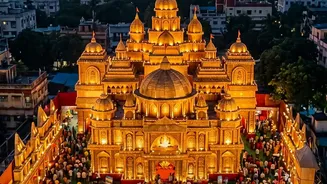
In sharp contrast to the north, South Kolkata is the battleground for the city's most innovative and spectacular themed pandals. This is where puja committees compete to create the most breathtaking art installations, drawing massive crowds year after year. Pandals like Ekdalia Evergreen Club, Suruchi Sangha, and Tridhara Sammilani are famous for their artistic brilliance and scale. Suruchi Sangha, for example, often bases its theme on a different Indian state each year, complete with replica art and craft. While queues can be long, especially in the evenings, the sheer creativity and artistic vision on display make it an unmissable part of the modern Durga Puja experience. To manage your time, it's best to group visits by neighbourhood, such as the Gariahat or Rashbehari areas.
3. The Artisans’ Colony of Kumartuli
To truly understand the heart of Durga Puja, a visit to Kumartuli is essential. This is the traditional potters' quarter where, for months leading up to the festival, skilled artisans mould clay from the Hooghly river into divine idols. Walking through the narrow lanes, you can witness the entire creative process, from the crafting of bamboo and straw frames to the final, delicate brushstrokes that bring the Goddess's eyes to life. While the workshops are busiest in the weeks before Puja, visiting during the festival offers a unique perspective on the artistry and devotion that underpin the celebrations. It reveals the human stories and immense effort behind the thousands of idols worshipped across the city and the world.
4. A Culinary Pilgrimage Through the Streets
Durga Puja is as much a feast for the stomach as it is for the eyes. During the festival, Kolkata transforms into a massive, open-air food court, with stalls popping up on every corner. It’s the perfect time to embark on a street food tour. Must-try items include the legendary Kathi Roll, a flaky paratha filled with kebab, egg, and onions, which is said to have originated at Nizam's. Another essential is Phuchka, Kolkata's version of pani puri, which offers a burst of tangy, spicy flavour. Beyond these, you can find everything from street-style Chowmein and Ghugni to a variety of chops and cutlets. And no Puja experience is complete without indulging in Bengali sweets like Rosogolla and Mishti Doi from a local sweet shop.
5. The Farewell Spectacle at the Ghats
The festival culminates on Vijaya Dashami with the immersion of the Durga idols, a poignant and spectacular farewell. Large processions, filled with people dancing to the beat of dhak drums, make their way to the city's ghats along the Hooghly River. Babughat is one of the most prominent and accessible ghats to witness this event, where idols of all sizes are brought for their final journey. The atmosphere is a mix of celebration and melancholy as families bid goodbye to the Goddess, wishing for her return the following year. In recent years, authorities have implemented measures like using cranes and even conveyor belts to quickly retrieve the idols from the water to prevent pollution, adding a modern, mechanical element to the ancient ritual.