








A Discovery for the Ages
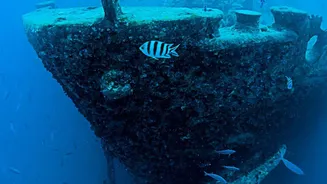
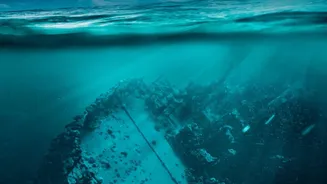
In the waters near Kekova Island in Antalya, a team of underwater archaeologists has made a monumental discovery: the scattered remains of a merchant ship that sank as far back as 4,700 years ago. The find, led by Professor Hakan Öniz of Akdeniz University,
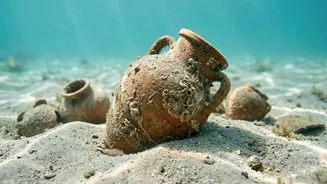
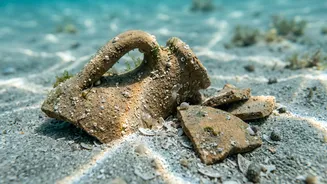
consists of more than 30 ceramic storage jars, known as amphorae, and three large stone anchors resting on the seabed about 30 metres below the surface. Although the wooden hull of the roughly 10-metre-long ship has long since disintegrated, the cargo it carried provides powerful evidence of its age, potentially making it the oldest shipwreck ever found. This surpasses the previous record-holder, a 4,200-year-old wreck discovered off the Greek island of Dokos.
A Time Capsule from the Bronze Age
Dating a find this ancient without the ship's timbers requires careful detective work. Researchers determined the wreck's age by analysing the distinctive style of the amphorae—flat-bottomed jars with two handles that were initially mistaken for much later Ottoman-era pottery. However, comparison with pottery found at archaeological sites in Egypt and the Middle East confirmed that the vessels belong to the Early Bronze Age, around 2700 BCE. To put that in perspective, this ship was sailing the Mediterranean around the time the Great Pyramid of Giza was being built in Egypt. It’s a stunning reminder of just how long humans have been navigating the seas for trade and exploration.
Unpacking the Ancient Cargo
The amphorae are more than just ancient pottery; they are clues to the ship's journey and purpose. Clay analysis suggests the jars were produced in workshops in the Jordan Valley. Archaeologists believe they were used to transport valuable commodities like olive oil or wine. The ship was likely travelling from the Levantine coast (the area of the modern-day Middle East) and heading toward major trade hubs such as Troy or the island of Crete when it sank in the notoriously treacherous waters around Kekova. Even more fascinating, some of the jars still contain a thick, glossy residue, which is now undergoing laboratory testing to confirm its contents.
Rewriting Maritime History
This discovery provides rare physical proof of the extensive maritime trade networks that connected civilisations across the eastern Mediterranean during the Bronze Age. While historical texts hinted at such commerce, finding an actual shipwreck from this period is incredibly rare. It confirms that long-distance trade routes were active nearly five millennia ago, facilitating the movement of not just goods, but also ideas and and cultures. One unique amphora found at the site, featuring nine distinct markings and two holes, may have been used as a churn to make butter or cheese, suggesting sailors might have kept live goats on board for long voyages. It's a personal detail that brings the lives of these ancient mariners into sharp focus.