





A disaster in the high Himalayas is often seen as a single, tragic event. But new research confirms a more alarming reality: these are not isolated incidents but complex and devastating chain reactions known as 'cascading hazards'.
Beyond a Single Disaster
When a Himalayan disaster
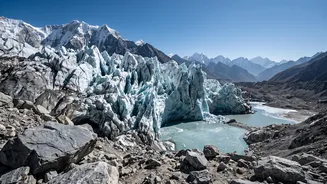
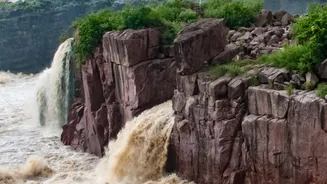
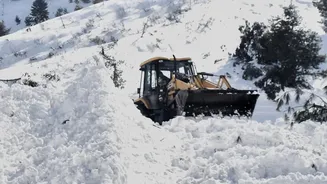
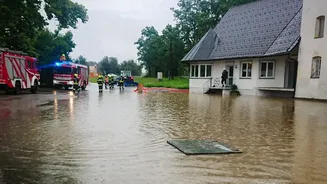
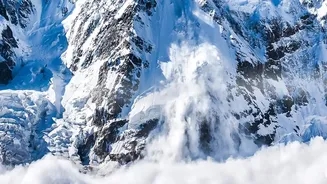
strikes, the initial event is often just the beginning. A new wave of research highlights the growing danger of 'cascading hazards', where one crisis triggers a sequence of others, amplifying the destruction far beyond the original site. Imagine a rock and ice avalanche high on a mountain slope. As it crashes down, it can block a river, forming a temporary lake. This dam can then burst, unleashing a catastrophic flood that picks up debris and evolves into a destructive flow, wiping out villages, roads, and critical infrastructure like hydropower plants hundreds of kilometres downstream. This domino effect is what scientists mean by a cascading disaster. Recent events, like the 2021 Chamoli incident in Uttarakhand and the 2023 South Lhonak glacial lake outburst flood in Sikkim, are grim examples of this phenomenon. They underscore a critical warning from scientists: our traditional approach of assessing risks one by one is no longer sufficient for the complex threats facing the Himalayan region.
A Ticking Clock Warmed by Climate Change
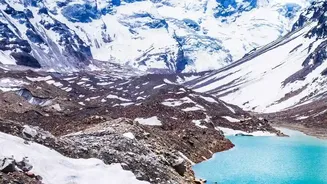
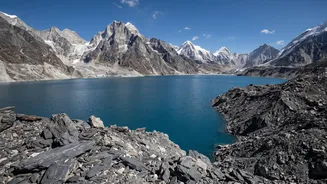
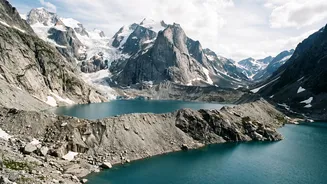
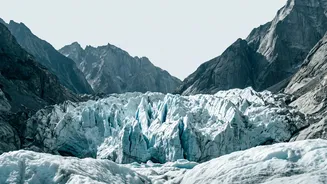
The Himalayas, often called the 'Third Pole', are acutely sensitive to climate change. Rising global temperatures are accelerating glacier melt and thawing permafrost—the frozen ground that acts like glue for mountain slopes. This widespread thaw destabilises the terrain, making rockfalls and landslides more frequent. As glaciers retreat, they leave behind vast lakes, often held in place only by unstable natural dams of rock and debris. The number and size of these glacial lakes have increased significantly, creating what is effectively a new, high-altitude threat. Studies confirm that climate change is a key factor, creating conditions not seen in historical records and increasing both the frequency and severity of these mountain hazards. The result is a landscape primed for disaster, where a single trigger can set off a devastating chain reaction.
A Domino Effect of Destruction
The real-world impact of these cascading events is terrifyingly swift and destructive. A recent disaster in the Nepal-China border region in August 2026 provided a stark case study. An initial ice-rock collapse triggered a debris flow that travelled at speeds approaching 170-190 kilometres per hour, generating seismic waves and obliterating everything in its path. The flood wave destroyed bridges, hydropower projects, and the vital Gyirong border crossing, a key trade route. The event demonstrated that the consequences of a high-altitude failure can ripple through entire river basins, affecting communities and economies far from the source. This has profound implications for India, where rapidly growing infrastructure—including roads, hotels, and hydropower plants in states like Uttarakhand and Himachal Pradesh—is increasingly being built in vulnerable river valleys. Experts warn that project planning and environmental assessments must now account for these interconnected, basin-wide risks, not just site-specific threats.
A New Playbook for Mountain Safety
In response to this growing threat, researchers are calling for a fundamental shift in disaster management. Simply reinforcing infrastructure against a single type of hazard is no longer enough. The focus must move toward a 'cascade-aware' approach. This involves multi-hazard risk assessments that analyse the entire potential chain of events, from slope instability high in the mountains to flood risks downstream. Key recommendations include enhancing monitoring systems using a combination of satellite imagery, remote sensing, and on-ground instrumentation to detect early signs of instability. Furthermore, creating robust early warning systems that can rapidly disseminate alerts in local languages is crucial. Since many Himalayan rivers cross international borders, greater transboundary cooperation on sharing realtime hydrological and meteorological data is also essential to provide timely warnings and save lives.