







For several hours, the skies over America fell unusually silent. A nationwide halt to air travel stranded hundreds of thousands of passengers, grounding thousands of flights and sending ripples of chaos across the country. This was not a storm, but a systemic
failure.
What Exactly Happened?
On Friday, November 13, 2026, the U.S. Federal Aviation Administration (FAA) took the rare step of issuing a nationwide ground stop, halting all domestic departures for nearly five hours. While aircraft already in the sky were allowed to land safely, the sudden shutdown caused a cascading failure throughout the air travel system. Over the following three days, more than 18,000 flights were canceled as airlines struggled to recover their schedules, reposition aircraft and crews, and rebook stranded passengers. The disruption, the longest of its kind since the September 11 attacks, threw airports into chaos just ahead of the busy Thanksgiving travel period.
The Technical Culprit: A Faulty Router
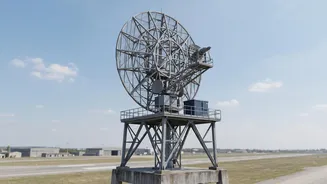
Investigators quickly ruled out a cyberattack, instead pointing to a failure deep within the FAA's telecommunications network. The problem began during what officials called routine maintenance at a remote facility in Arkansas, where a contractor was upgrading the network from old copper wires to modern fiber-optic cables. According to initial reports, a newly installed router began flooding the network with an overwhelming amount of data—roughly 1,000 connection attempts every few seconds. This data storm overloaded legacy systems, causing instability in radar and communication feeds at 17 of the FAA's 22 major air traffic control centers. The agency was forced to pause the system to prevent potential safety issues, effectively pressing 'pause' on American aviation.
A System Under Decades of Strain
While a single router may have been the trigger, the incident exposed a much deeper vulnerability: America's air traffic control system is running on dangerously outdated technology. Government watchdogs and aviation experts have issued warnings for years. A 2024 government assessment found that over 75% of the FAA's air traffic control systems were either unsustainable or potentially unsustainable. Much of the infrastructure relies on technology and software that is decades old, making it difficult to maintain and prone to failure. This recent disruption was not the first; a similar, though smaller-scale, failure of the FAA's NOTAM (Notice to Air Missions) system grounded flights in January 2023. These events highlight a pattern of underinvestment and the immense challenge of modernizing critical infrastructure without causing major disruptions.
The Human and Economic Fallout
The immediate impact was felt by hundreds of thousands of passengers, many of whom were left sleeping in airports or scrambling for rental cars and train tickets. But the economic consequences extend far beyond individual travel plans. The U.S. Chamber of Commerce has previously estimated that a single-day shutdown of the nation's airspace could cost the economy billions. The incident shook public confidence in the reliability of air travel, a vital component of the national economy. For an industry still finding its footing after years of volatility, the shutdown was a significant blow, forcing airlines into a costly and complex recovery effort.
The Urgent Call for Modernization
In the wake of the crisis, the focus has shifted to a question of 'what now?'. The U.S. Transportation Secretary quickly called on Congress for $50 billion in emergency funding to overhaul the air traffic control system, a significant increase from a $30 billion request made just before the outage. Lawmakers have launched investigations, demanding to know how such a critical system could have a single point of failure and why backup systems were not sufficient. While officials have paused further router installations pending a full review, the debate over funding, oversight, and the pace of modernization is now at the forefront. Critics point out that billions already allocated for upgrades have been slow to be spent, suggesting the problem involves not just money but also execution and management.