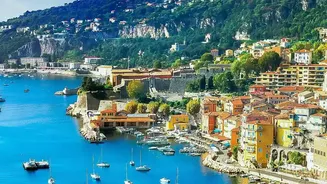








A Land Without Income Tax
For most individuals living in the tiny, glamorous principality of Monaco, the concept of filing a personal income tax return is a foreign one. Since a royal decree in 1869, residents of Monaco have been exempt from paying tax on their income, capital
gains, and wealth. This applies whether their income comes from salaries, investments, or business profits. The rule holds true for residents of any nationality, with one major exception: French citizens. Due to a bilateral treaty signed in 1963, French nationals who reside in Monaco are generally still subject to French income tax, preventing the principality from becoming a simple tax-avoidance haven for its much larger neighbour.
A History Forged in Crisis
Monaco's tax-free status was not a stroke of luck, but a calculated survival strategy. In the mid-19th century, the principality was facing bankruptcy after losing 80% of its territory—and its primary agricultural revenue from lemons and olives—to France. In a bid to attract wealthy foreigners and rebuild the economy, Prince Charles III made a bold move. He commissioned the creation of the now-famous Monte Carlo Casino and luxury hotels to cater to aristocratic tourists. The venture was so successful that by 1869, the state's revenues from its businesses were enough to abolish income taxes for its citizens, a policy designed to ensure their loyalty and attract new, affluent residents.
How the State Pays Its Bills
If citizens don't pay income tax, how does the government fund its public services, infrastructure, and world-class security? The answer lies in a diversified stream of indirect and corporate taxes. The single largest source of revenue is Value Added Tax (VAT), which is levied at the same rate as in France (currently a standard rate of 20%) and accounts for roughly half of the state's budget. Significant income also comes from a tax on corporate profits for businesses that generate more than 25% of their turnover outside Monaco. Other key revenue streams include state monopolies on tobacco and postage, taxes on real estate transactions, and income from state-owned enterprises, including the company that manages the casino.
The Catch: Becoming a Resident
Gaining the right to live tax-free in Monaco is, unsurprisingly, not a simple process. The residency requirements create a high barrier to entry, ensuring that the principality attracts financially stable individuals. Prospective residents from outside the EU must secure a long-stay visa from French authorities first. All applicants must prove they have accommodation in Monaco, which involves either buying property or leasing an apartment for at least a year in one of the world's most expensive real estate markets. Furthermore, applicants must demonstrate financial self-sufficiency. This is typically done by depositing a substantial sum—often starting at €500,000—into a Monaco bank account. Finally, a clean criminal record is non-negotiable.
A Tale of Two Systems
While the Monaco model is fascinating, it’s a product of its unique circumstances. A city-state with a population of under 40,000 can sustain itself on high-end tourism, finance, and consumption taxes in a way that a nation of over 1.4 billion people cannot. India's tax system is designed to fund vast infrastructure projects, extensive social welfare programs, and the administration of a diverse and complex economy. Monaco's system is tailored to a tiny, dense, and exceptionally wealthy population. The absence of income tax is supported by an economic model that relies on attracting high-net-worth individuals who then contribute heavily through spending (VAT) and large-scale investment.