




What is PUFFINS?
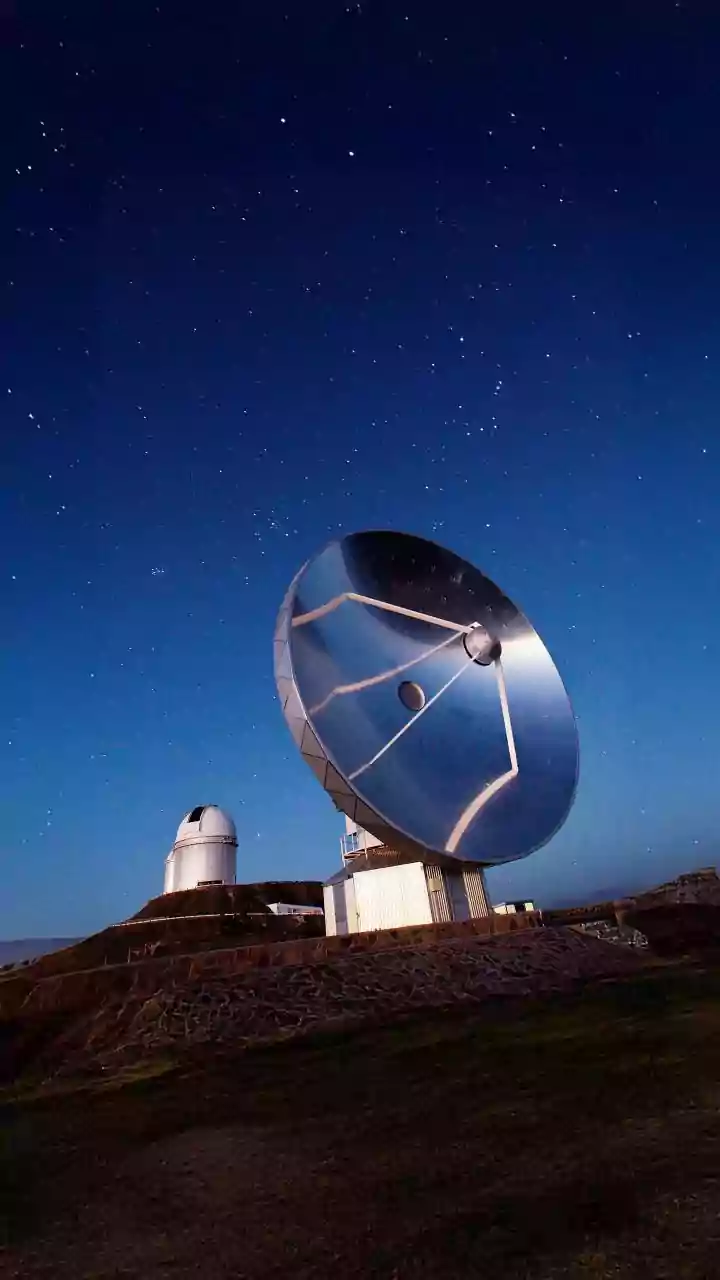
PUFFINS stands for Polarimetry in the Ultraviolet to Find Features in INterStellar dust. It's a NASA-funded mission to launch a small satellite, or SmallSat, equipped with a specialized 10-inch telescope. From low-Earth orbit, it will observe the ultraviolet
(UV) light from at least 70 different stars to see how that light is changed by the interstellar dust it passes through. The mission is a joint effort between the University of Arizona and McDonald Observatory, among others, and is part of NASA's competitive Astrophysics Pioneers program. A key figure is its principal investigator, Dr. Ramya Anche, an astronomer who was born in Bengaluru.
Why Study Interstellar Dust?
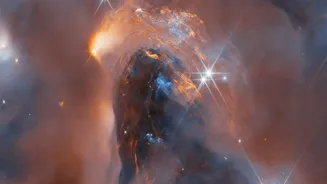
For a long time, astronomers considered cosmic dust an annoyance because it obscures the view of distant objects. However, scientists now know that this dust is a vital component of the universe. These tiny grains, often smaller than the width of a human hair, are where star and planet formation begins. They are made of elements like carbon, silicon, and iron forged inside stars and scattered into space. These particles clump together, growing from pebbles to rocks to the building blocks of planets, often called 'planetesimals'. Understanding the properties of this dust is essential to building a complete picture of how galaxies, stars, and planets, including our own, come to be.
How Will PUFFINS See the Dust?
The PUFFINS mission will focus on the smallest dust particles, some smaller than 50 nanometers, which are roughly the size of a common cold virus and invisible to most optical and infrared telescopes. To see them, PUFFINS will use a technique called ultraviolet spectropolarimetry. It measures a property of light called polarization, which is the direction in which light waves vibrate. Some interstellar dust grains align with the Milky Way’s magnetic field, acting like microscopic compass needles. As starlight passes through these aligned grains, its polarization changes. By analyzing these changes in UV light, scientists can learn about the dust's composition, size, and behaviour. This technique hasn't been deployed in space for nearly thirty years, making PUFFINS a pioneering effort.
What Are the Mission's Goals?
The primary goal is to create a detailed map of how interstellar dust varies across different parts of our galaxy, from nearby stellar nurseries to our galactic neighbours, the Magellanic Clouds. This will help answer fundamental questions about how these tiny grains form and evolve in the harsh environment of space. The mission aims to bridge critical gaps in our current understanding, particularly regarding the properties of the smallest dust particles. With a planned launch in 2030, PUFFINS is also seen as a crucial stepping stone. The data it gathers will help inform and define the scientific goals for NASA's next flagship space telescope, the Habitable Worlds Observatory, which is planned for the 2040s.