




The Golden Rule of Ingredient Lists
The fundamental principle of any ingredient list is simple: ingredients are listed in descending order by weight. The ingredient that makes up the most of the product is listed first, and the ingredient that weighs the least is last. This means the first three
to five ingredients give you the most accurate picture of what you're actually eating. If the first ingredient is sugar, the product is mostly sugar. If it's a whole grain, you're on the right track. This single rule allows you to cut through confusing health claims on the front of the box and see the product for what it truly is.
Beware the Great Sugar Split
Here’s where it gets tricky. Food manufacturers know you might be looking for sugar in the top spot. To make products appear healthier, they often use a technique called 'ingredient splitting'. Instead of using a large amount of one type of sugar, they use smaller amounts of several different types. You might see sugar, corn syrup, fructose, and honey all in the same list. Individually, they each weigh less and appear further down the list. But when you add them all together, sugar can easily become the real number one ingredient. When scanning a label, look for multiple words that mean sugar, especially those ending in '-ose' like dextrose, sucrose, and maltose. The more you find, the more likely the product is a sugar bomb in disguise.
A Tale of Two Cereals
Let’s put this into practice. Imagine two boxes of 'healthy' oat cereal. Cereal A’s ingredient list starts with: 'Whole Grain Oats, Sugar, Corn Syrup, Salt'. Cereal B’s list begins with: 'Whole Grain Oats, Oat Bran, Barley Malt Extract, Dried Fruit (Raisins, Dates), Salt'. At a glance, Cereal A seems okay because oats are first. But sugar and corn syrup are the second and third ingredients. Cereal B, on the other hand, uses barley malt and dried fruit for sweetness. While still forms of sugar, they are further down the list and come with some nutritional benefits like fibre. The ingredient order clearly shows Cereal B is the less processed, more nutrient-dense option, even if the calorie counts on the front are similar.
Whole Grains vs. Refined Grains
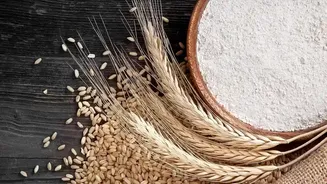
The order is crucial when it comes to grains. 'Whole wheat flour' and 'wheat flour' sound similar, but they are worlds apart. A whole grain contains the entire kernel—bran, germ, and endosperm—which provides fibre, vitamins, and minerals. A refined grain has had the bran and germ removed, stripping it of most of its nutrients. For a product to be truly whole grain, a whole grain like 'whole wheat' or 'whole oats' must be the first ingredient. Be wary of labels that say 'multigrain' or 'made with whole grain'. These can be misleading, as the product might contain only a small amount of whole grains and be composed mostly of refined flour.
What About Everything Else?
This logic extends beyond just sugar and grains. The same principle applies to fats and oils. Seeing 'palm oil' or 'partially hydrogenated vegetable oil' near the top of the list is a red flag for high levels of saturated or trans fats. Salt also has many names, like sodium benzoate or monosodium glutamate (MSG), so watch for where these appear. Finally, pay attention to the length of the list. Generally, a shorter ingredient list with recognizable, whole-food ingredients suggests a less processed and often healthier product. If the list is a paragraph long and filled with chemical names you can't pronounce, it’s a good sign the food is highly processed.