

The Universe as a Digital Photo
Our modern understanding of the universe is built on two powerful but incompatible theories: general relativity and quantum mechanics. General relativity, Einstein’s masterpiece, describes gravity as the result of mass curving a smooth, continuous fabric
of spacetime. It works perfectly on large scales. Quantum mechanics, however, governs the bizarre world of the very small, suggesting that energy and matter are fundamentally 'quantized' or divided into discrete chunks. To unite these two ideas into a single 'theory of everything' or 'quantum gravity', many physicists predicted that spacetime itself must also be quantized. At the tiniest possible level, known as the Planck scale—a distance so small it makes an atom look like a solar system—they expected spacetime to be a seething, chaotic 'quantum foam'. Instead of a smooth highway, reality would be a gravel path, with a fundamental graininess or pixelation.
Using Cosmic Explosions as a Test
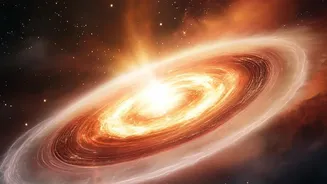
How could we possibly test such a mind-bending idea? The Planck scale is about a trillion trillion times smaller than a proton, far beyond the reach of any microscope. Scientists realised they needed a different tool: light that has travelled for billions of years across the cosmos. The theory was that if spacetime is grainy, it should affect light travelling through it. Specifically, higher-energy light (like gamma rays) and lower-energy light (like radio waves) would be nudged and jostled by the 'foam' at slightly different rates. Over a journey of billions of light-years, this tiny difference in speed would add up. Photons of different energies, all released from the same event at the same time, should arrive at Earth at slightly different times. To conduct this test, astronomers turn to gamma-ray bursts (GRBs). These are the most powerful explosions in the universe, briefly outshining entire galaxies and sending floods of particles across the electromagnetic spectrum toward us. They are the perfect cosmic flashbulbs for this experiment.
A Shockingly Smooth Result
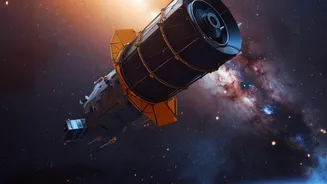
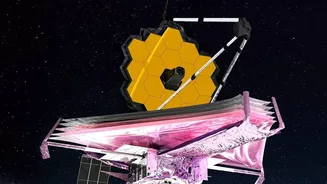
In a recent analysis, researchers examined light from some of the most distant and powerful gamma-ray bursts ever detected. Using data from advanced observatories, they meticulously timed the arrival of photons at different energy levels. After accounting for all other possible delays, they searched for the tell-tale time lag that would signal the graininess of spacetime. They found nothing. The high-energy and low-energy photons arrived in a dead heat, just as Einstein’s theory of a smooth, continuous spacetime would predict. The light travelled across billions of light-years as if on a perfectly polished surface, with no evidence of the expected quantum bumps or jitters. This doesn’t definitively prove that spacetime foam doesn't exist, but it pushes the scale at which such graininess could occur to a much, much smaller level than many popular theories of quantum gravity had predicted. Essentially, the universe is far smoother than we thought.
What This Means for Physics
This result sends physicists back to the drawing board, but in the most exciting way. A 'null result' like this is incredibly valuable in science because it rules out possibilities and refines our search for the truth. The simplest models predicting a 'pixelated' spacetime now seem unlikely. Theories like string theory and loop quantum gravity, which are leading candidates for a theory of quantum gravity, are complex enough that they may still be compatible with these findings, but the new data provides strict new constraints they must satisfy. This discovery deepens the central mystery of modern physics: how to reconcile the smooth, geometric world of gravity with the chunky, probabilistic world of quantum mechanics. It’s a puzzle that has fascinated scientists since it was first posed by John Wheeler in 1955. While the expected graininess didn't show up, the search has given us a new, clearer picture of the fundamental nature of reality.