






The Current Bloom: Is It Happening Now?
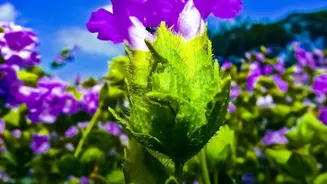
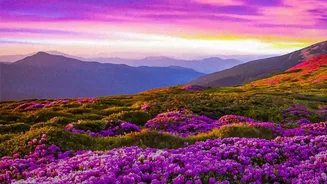
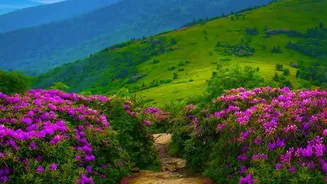
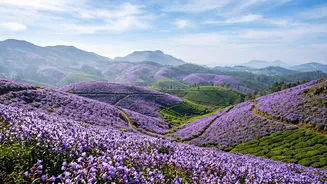
Yes, the Neelakurinji is genuinely blooming in parts of Munnar as of September 2026. If your social media feed is suddenly awash with images of purple-blue hills, it's for a good reason. Recent reports confirm that a significant flowering event is underway
across the slopes of Chokramudi and the Mattupetty-Korandakkad hills in Idukki district. However, this isn't the famous mass bloom that covered Eravikulam National Park in 2018. That event is still on schedule for its next appearance around 2030. The current spectacle is thanks to a different population of Neelakurinji shrubs that follows its own distinct 12-year cycle, which happened to align with 2026.
Understanding the 12-Year Cycle
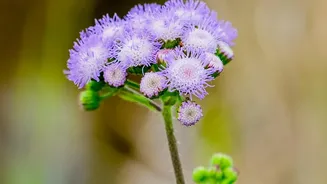
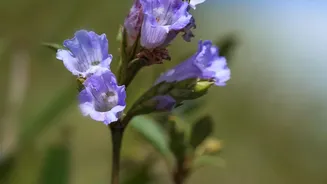
Neelakurinji (Strobilanthes kunthiana) is a monocarpic plant, meaning it flowers only once in its lifetime, sets seed for the next generation, and then dies. This synchronized mass flowering, known as gregarious blooming, is an evolutionary strategy. For most of its 12-year life, the plant focuses on vegetative growth, quietly building up resources. When it finally blooms, it does so en masse, overwhelming pollinators and ensuring successful seed production. It’s a common misconception that all Neelakurinji plants across the Western Ghats flower in the same year. In reality, different hill populations are synchronized to different 12-year schedules. The Mattupetty-Kannimala population, for instance, previously bloomed in 1990, 2002, and 2014, making 2026 its scheduled year to shine.
Where to Witness the Blue Carpet
For travelers hoping to see the flowers this season, the main locations are Chokramudi and the Korandakkad hills near Mattupetty. Chokramudi, one of Munnar’s highest peaks, offers a stunning trek through grasslands transformed by the bloom. The Forest Department manages access here to protect the fragile ecosystem, with visiting hours typically from 7:00 AM to 4:00 PM. The other prime spot is the Korandakkad region, accessible via the Munnar-Mattupetty road. Entry tickets are available, costing around ₹250 for adults. It's important to note that the intensity of the bloom can vary from one patch to another, as it's a natural phenomenon, not a manicured garden.
A Flower of Cultural and Ecological Importance
The Neelakurinji is more than just a beautiful flower; it’s deeply woven into the region's culture and ecology. The name 'Nilgiris,' or 'Blue Mountains,' is widely believed to have originated from the purplish-blue haze that these blooms cast over the hills. For the indigenous Paliyan tribe, the 12-year flowering cycle was historically used as a natural calendar to mark their age and significant life events. Ecologically, the plant is an indicator species for the health of the high-altitude shola grasslands, a unique and threatened ecosystem in the Western Ghats. Its deep root system also helps in soil conservation, maintaining the stability of the hilly terrain.
A Fragile Spectacle: Conservation Is Key
Witnessing this bloom is a privilege, and it comes with a responsibility. The Neelakurinji plant is listed as a threatened species by the IUCN and is protected under India's Wildlife Protection Act. Plucking the flowers or damaging the plants is a serious offense that can result in hefty fines and even imprisonment. The shola grasslands where they thrive face threats from habitat loss, invasive species like eucalyptus and wattle, and poorly managed tourism. Officials urge visitors to stick to designated paths, avoid trampling the flowers, and appreciate the spectacle without disturbing the fragile environment. This ensures that future generations, and the ecosystem itself, can continue to benefit from this incredible natural event.