






Adani Reclaims the Summit
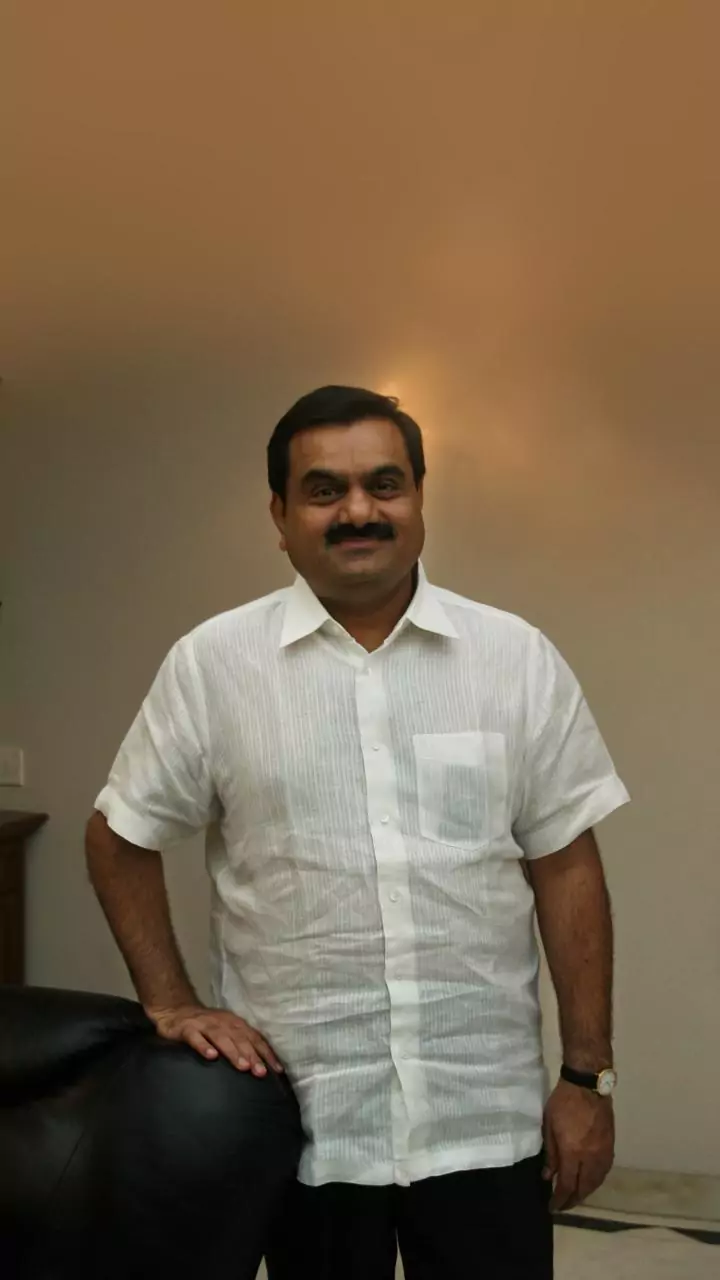
Gautam Adani and his family have reclaimed the title of India's wealthiest, according to the 2026 list, with a staggering net worth of ₹9.23 lakh crore. This represents a 13% increase in his wealth over the past year, placing him ahead of Mukesh Ambani,
who saw a 10% decline in his fortune to ₹8.63 lakh crore. Adani's dominance is largely fuelled by his expansive interests in crucial sectors like infrastructure, energy, and logistics. The report highlights that his lead over the second-place Ambani now stands at ₹59,400 crore, underscoring a significant shift in the wealth landscape at the very top. This resurgence puts a spotlight on the capital-intensive sectors that are becoming powerful engines of wealth creation in the country.
The New Class of Billionaires
The headline figure of 27 new dollar billionaires brings India's total to a record 391. This surge in new ultra-high-net-worth individuals comes even as the broader stock market has shown weakness, indicating that wealth creation is happening in specific, high-growth pockets of the economy. Overall, the list identifies 1,810 individuals with a net worth of ₹1,000 crore or more, an increase of 128 people from the previous year. The combined wealth of everyone on the list grew by 12.8% to ₹187.5 lakh crore, a sum equivalent to roughly half of India's GDP. This demonstrates a robust, if concentrated, expansion of private wealth.
AI and Industry Lead the Charge
For the first time, Artificial Intelligence (AI) has been recognised as a standalone sector for wealth creation. It has made a dramatic entrance with 19 entrants who collectively hold ₹3.07 lakh crore, 15 of whom are new to the list entirely. This signals a major pivot towards tech-driven fortunes. Alongside AI, more traditional industrial sectors are also booming. Industrial Products contributed the highest number of new entrants to the list, with 44 new names. Other sectors showing immense wealth growth include Aerospace & Defence, Green Energy, and Metals & Mining. This suggests a dual-track wealth story: one driven by cutting-edge technology and another by a renewed focus on manufacturing and infrastructure development.
Self-Made and Global Fortunes
A remarkable trend is the dominance of self-made entrepreneurs, who account for a record 70% of the list, or 1,266 individuals. This is a significant increase from five years ago and points to a dynamic and evolving business environment. Another key shift is the globalisation of Indian wealth. Of the ten wealthiest new entrants on this year's list, eight are based outside of India, primarily in the US and Dubai. Their fortunes have been built in global sectors like technology, data centres, and retail. For example, the biggest new entrant is Renuka Jagtiani of the Dubai-based Landmark Group, with a wealth of ₹70,500 crore. This highlights a growing trend of Indian entrepreneurs building and scaling their businesses on the world stage.
A Concentrated Picture of Wealth
While the list celebrates growth, it also paints a picture of significant wealth concentration. The combined wealth of the 1,810 individuals on the list is more than the GDP of nations like Switzerland or Singapore. At the top, the wealth pyramid is particularly steep; just 23 individuals, each worth over ₹1 lakh crore, hold nearly 29% of the list's total wealth. While sectors linked to industrial investment are thriving, areas tied to household spending, such as consumer durables and retail, have seen a decline in wealth. This disparity suggests that the current wealth boom is not uniform across all sectors of the economy, raising important questions about the broader distribution of economic gains.